
Brazil Posts $7.82bn May Trade Surplus as New US Tariff Threat Clouds Strong Export Run
Brazil’s trade surplus widened to $7.82 billion in May 2026, an increase of 10.8 percent from a year earlier and above market expectations of $7.65 billion, according to the Ministry of Development, Industry, Trade and Services. The result lands as President Luiz Inácio Lula da Silva faces a fresh diplomatic confrontation with Washington after the Trump administration announced new 25 percent tariffs on certain Brazilian imports, prompting Lula to say he could not “accept the treatment” his country had received. europa
The Trade Numbers
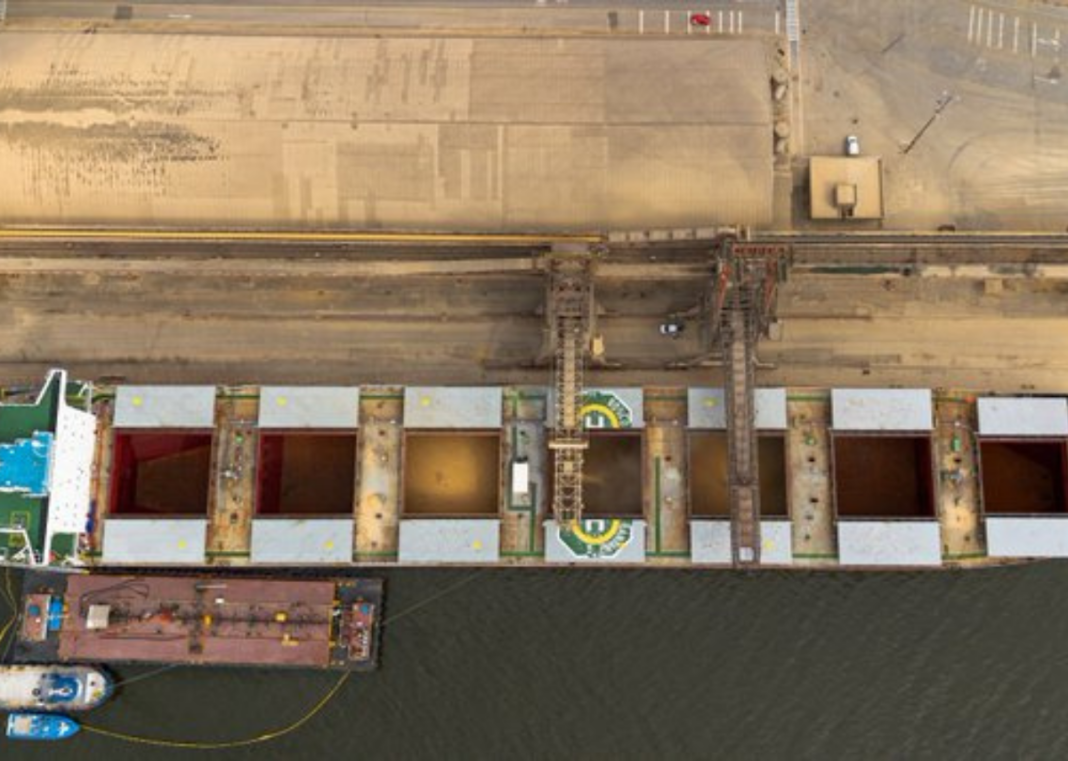
Exports grew 6.6 percent year-on-year to $31.90 billion, supported by stronger sales from agriculture, up 9.8 percent, and manufacturing, up 9.0 percent, which more than offset a 1.9 percent decline in the extractive industries. The export expansion was driven by higher shipments of corn, soybeans, cotton, beef, fuel oils and gold, while exports of coffee, iron ore, crude oil, sugar and cellulose declined. europa
Imports rose 5.3 percent to $24.08 billion, largely reflecting a 6.3 percent increase in manufacturing purchases, led by fuel oils, semiconductors and passenger vehicles. europa
Over the January-to-May period, exports increased 8.7 percent year-on-year, while imports rose 3.2 percent. The cumulative surplus heading into June stands well ahead of the same period in 2025, putting Brazil on track toward its full-year government target. europa
The trade ministry projects a full-year 2026 surplus of $72.1 billion, based on exports of $364.2 billion and imports of $292.1 billion. Euromaidan Press
The Tariff Confrontation
The strong May figures arrive at a fraught moment in US-Brazil relations. The Trump administration announced 25 percent tariffs on certain Brazilian imports on Tuesday, June 2, appearing to roll back an emerging detente between the two countries. Xinhua
Lula said he was surprised by the newly proposed tariffs, adding that US-Brazil trade talks were still ongoing. He said Brazil could not “accept the treatment” it had received but added that Brazil still wanted to build institutional relations with the US and would seek other trade partners if needed. Xinhua
US Trade Representative Jamieson Greer said the latest tariff proposal followed an investigation into alleged unfair trade practices. The probe focused on issues including illegal deforestation, ethanol market access and anticorruption enforcement, concluding that Brazil’s trade practices “are unreasonable and burden or restrict US commerce.” Xinhua
Public data contradicts the US framing. The US maintains a trade surplus with Brazil — in March 2026, Brazil bought more goods from the US than it exported, representing a $420 million surplus in America’s favour. Xinhua
Several key Brazilian products are exempt from the new tariffs, including beef, coffee, rare earths, other metals, energy and aircraft parts. Xinhua
The Section 301 Strategy
Experts noted that the Trump administration appears to be pursuing a new strategy for tariffs after the US Supreme Court in February struck down the White House’s sweeping global tariffs, which had been imposed under the International Emergency Economic Powers Act. The new tariffs are instead imposed under Section 301 of US trade policy, which gives the US government broad authority to impose trade sanctions based on alleged violations of trade agreements, and allows penalties for trade practices deemed “unfair” under the Trade Act of 1974. Xinhua
The latest tariff proposal will be subject to a public comment period ending in early July. Xinhua
Political and Diplomatic Context
The tariff announcement came as Lula is facing a tight race for re-election in November against Senator Flávio Bolsonaro, the eldest son of former President Jair Bolsonaro. Xinhua
Lula said he had left a May meeting at the White House with Trump optimistic that relations were improving. Trump, meanwhile, has attacked the Brazilian government for allegedly censoring right-wing voices and has close connections to the Bolsonaro family. Xinhua
Last year, after federal prosecutors brought Jair Bolsonaro to trial for attempting to subvert Brazil’s democracy, Trump responded by imposing several rounds of tariffs on Brazil, reaching 50 percent on many goods. Bolsonaro was ultimately convicted and sentenced to 27 years in prison for efforts to overturn his 2022 election defeat to Lula. Xinhua
Brazil also faces a separate US tariff exposure stemming from its trade with Iran. Brazil ran a $2.9 billion trade surplus with Iran in 2025, with Brazilian exports to Iran consisting mainly of corn and soybeans. Trump said in January 2026 that any country doing business with Iran would face a 25 percent tariff rate on trade with the US. The Standard
The Iran War Effect on Brazilian Commodities
The Middle East conflict has had a mixed effect on Brazilian trade flows. Higher oil prices, which Iran-related disruptions have helped sustain above $100 per barrel for much of 2026, have boosted revenues for Brazil’s petroleum exports where volumes have increased. At the same time, corn and soybean exports to Iran — which was Brazil’s largest single destination for corn in 2025 — face uncertainty given the ongoing US-Israeli military campaign and Washington’s pressure on countries trading with Tehran.
Brazil’s Vice President and trade minister Geraldo Alckmin said in January 2026 that “we are optimistic that even in a scenario of greater geopolitical instability, foreign trade will grow,” adding that the government remains hopeful of concluding a deal between Mercosur and the European Union and expects the South American bloc to seal a free trade agreement with the United Arab Emirates. europa
Background
Brazil posted a $68.3 billion trade surplus in 2025, down from $74.2 billion in 2024 as imports grew faster than exports. The figure still beat the ministry’s most recent forecast of $61 billion. Export gains in 2025 were driven by higher shipments of soybeans, beef, coffee and corn, offsetting annual declines in crude oil and iron ore amid falling commodity prices. China remained Brazil’s top trading partner, with exports up 6 percent at $100 billion — nearly 30 percent of total overseas sales. The US decision to levy punitive 40 percent tariffs on Brazil’s imports in 2025 provided a revealing lesson: US trade pressure strengthened rather than weakened Lula’s domestic political position, an outcome noted within the Trump administration and contributing to a partial withdrawal of the tariffs. Bloomberg + 2
What Happens Next
The public comment period on the new 25 percent tariffs closes in early July 2026, after which the Trump administration will determine whether and how to proceed. US-Brazil trade talks were described by Lula as still ongoing as of Wednesday, suggesting diplomatic channels remain open despite the breakdown in tone. The trade ministry’s projections put Brazil on track for a full-year surplus of $72.1 billion, though ministry officials have cautioned the outcome depends on how exports evolve by sector and on the pace of import growth. Lula’s re-election campaign faces the tariff dispute as a live domestic issue heading into November, with the opposition Bolsonaro camp positioned to benefit from any perception that the Lula government mishandled US relations. Xinhua + 2