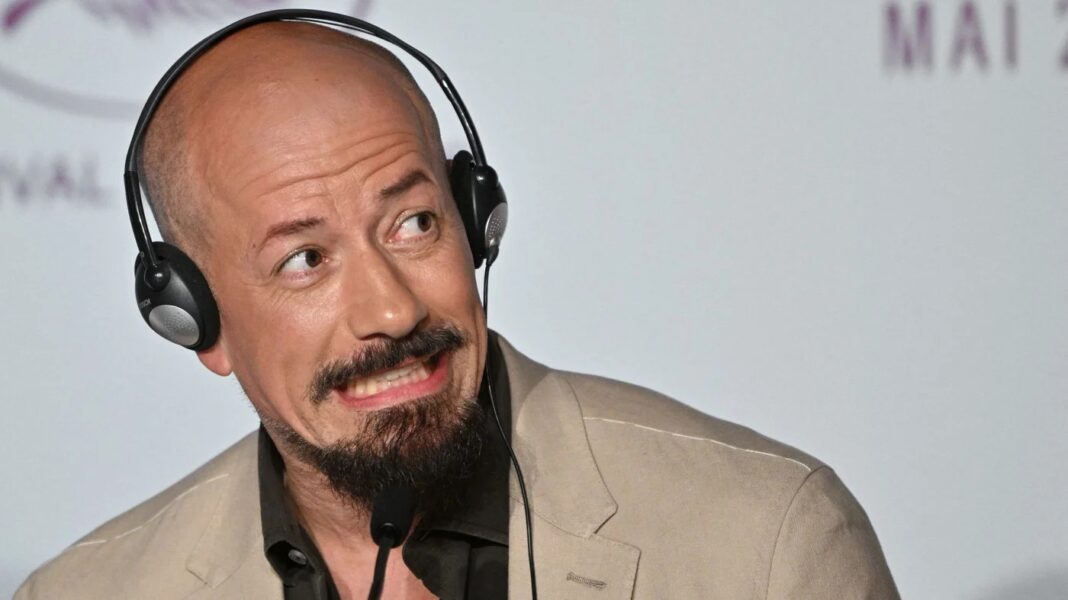

Egyptian-Swedish director Tarik Saleh has completed his Cairo trilogy — a three-film series set in Egypt and made entirely outside its borders — after the Egyptian state exiled him and banned his work. The third film, Eagles of the Republic, premiered in competition at the 2025 Cannes Film Festival, where it was nominated for the Palme d’Or. Speaking to Middle East Eye on June 5, 2026, Saleh said his films remain unavailable to Egyptian audiences.
“My dream is to have a screening of this trilogy in a freer Egypt, 10 to 15 years from now,” he told Middle East Eye.
The trilogy spans nearly a decade of filmmaking and covers Egypt’s political landscape from the eve of the 2011 revolution through to the present day, examining state censorship, religious authority, and military propaganda under President Abdel Fattah el-Sisi’s government.
Saleh described his Cairo Trilogy in an interview with Variety as being about “men trying to defeat a city that cannot be defeated.”
The first film, The Nile Hilton Incident, was released in 2017 and set on the eve of the 2011 uprising. The neo-noir was inspired by the murder of Lebanese singer Suzanne Tamim at the hands of real-estate tycoon and Mubarak ally Hisham Talaat Moustafa. It won the World Cinema Grand Jury Prize at the Sundance Film Festival and drew more than 400,000 admissions in France alone, according to Middle East Eye.
The film’s international success opened doors in Hollywood. Between 2018 and 2022, Saleh directed episodes of HBO’s Westworld and Showtime’s Ray Donovan, and helmed the action film The Contractor starring Chris Pine.
He returned to his Egypt-set work in 2022 with Boy from Heaven, also released as Cairo Conspiracy. The film examined the relationship between Al-Azhar University and the Sisi regime, won Best Screenplay at the Cannes Film Festival, and sold more than 460,000 tickets in France, according to Middle East Eye. Sweden later submitted it as its entry for the Academy Awards.
Eagles of the Republic, the trilogy’s final chapter, centres on a fictional Egyptian film star coerced by the state into playing the president in a government propaganda production. According to Deadline, the storyline was inspired by the real case of actor Yasser Galal, who played el-Sisi in the state-backed television series El Ekhteyar (The Choice), produced by United Media Services — a real company established in 2017 with documented links to Egypt’s General Intelligence Service.
Saleh was exiled from Egypt prior to shooting his 2017 film and has since continued to set his films in the country while shooting in Turkey instead, according to IMDb.
Despite his ban from the country, the cast is predominantly Egyptian. Saleh told Africanews he was surprised by how many Egyptian actors wanted to participate, knowing the film would likely be banned in Egypt. Around 90 percent of the cast is Egyptian. French-Algerian actress Lyna Khoudri and Moroccan actress Zineb Triki also appear in the film, alongside a score by two-time Oscar-winning composer Alexandre Desplat, Africanews reported.
Cohen Media Group acquired Eagles of the Republic for U.S. theatrical release. Robert Aaronson, executive vice president of Cohen Media Group, said in a statement: “Tarik Saleh has crafted a gripping and emotionally rich political thriller that showcases remarkable performances and a story that will resonate strongly with U.S. audiences.” The film was released in the United States in April 2026.
Regional and Global Impact
The trilogy’s completion draws renewed attention to Egypt’s record on artistic freedom. All three films remain banned inside Egypt, where Saleh holds persona non grata status. Sweden submitted Eagles of the Republic as its entry for the 98th Academy Awards, according to Variety.
The films have found their largest commercial audiences in France, where both The Nile Hilton Incident and Boy from Heaven each sold in excess of 400,000 tickets. Their reception in Western markets has amplified international scrutiny of Egypt’s censorship apparatus at a time when press freedom and cultural suppression remain active concerns for human rights organisations tracking the Sisi government.
Background
Saleh was born to a Swedish mother and Egyptian father and moved to Alexandria in 1991 to study at the Academy of Arts, living between Cairo and Mansoura in the Nile Delta over four years, according to Middle East Eye. He first gained international recognition with his 2009 animated film Metropia, which premiered at the Venice Film Festival, and later directed the music video for Lykke Li’s I Follow Rivers, which has amassed nearly 100 million views on YouTube. Before filmmaking, Saleh began his artistic career as one of Sweden’s most prominent street artists, according to Variety. Egypt banned him from the country in the years prior to The Nile Hilton Incident‘s 2017 release, and none of his trilogy films have received official Egyptian distribution.
What Happens Next
Saleh has stated his aspiration to screen the trilogy in Egypt in what he called “a freer Egypt, 10 to 15 years from now,” though no such screening has been announced or sanctioned by Egyptian authorities. Eagles of the Republic is currently in U.S. theatrical release through Cohen Media Group, with further international distribution ongoing. No formal change to Saleh’s status in Egypt has been reported by any government or diplomatic source.