
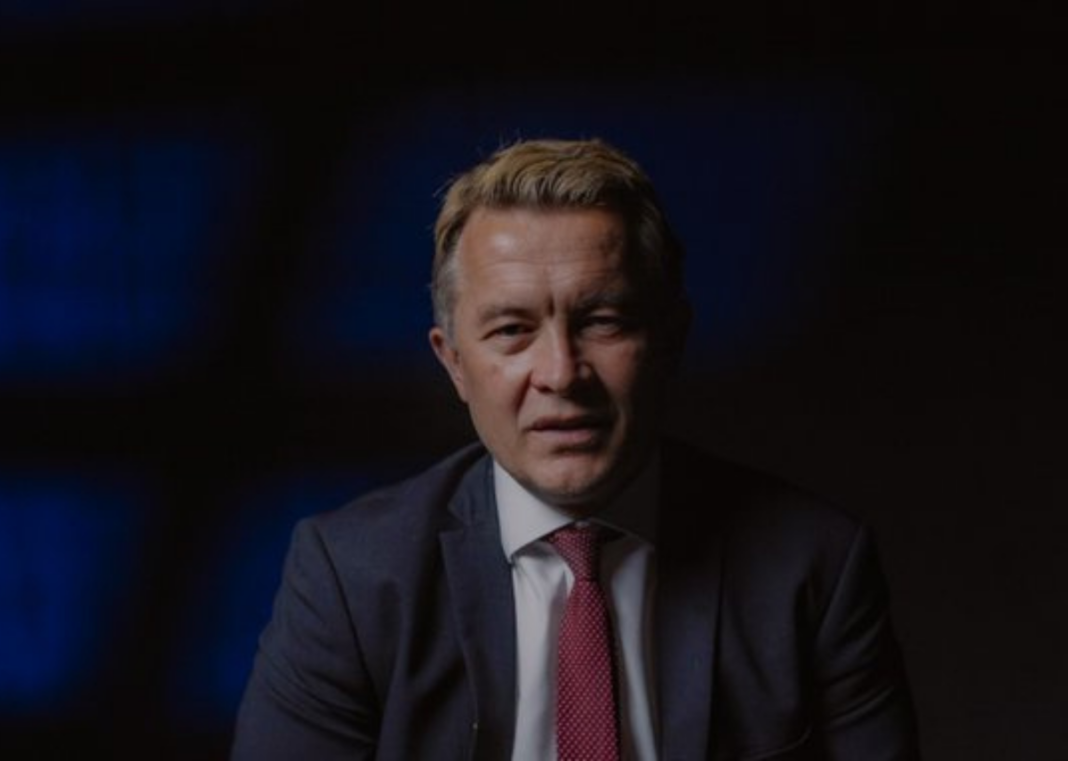

Norway Warns That Disregarding ICC Judges’ Khan Report Risks Politicising the Court
Norway’s Deputy Foreign Minister Andreas Kravik has urged member states of the International Criminal Court to follow established procedures when voting on the fate of Chief Prosecutor Karim Khan, warning that any move to bypass the court’s own judicial findings risks creating “a perception of politicisation” that would damage the institution’s credibility at a moment when it is already under intense external pressure. Kravik made the remarks in an exclusive interview with Middle East Eye at the Norwegian foreign ministry in Oslo on Thursday, ahead of Monday’s deadline for the ICC’s Assembly of States Parties bureau to vote on Khan’s future.
“What we have said is that the ICC needs to look at this case in conformity with the procedures that have been established for examining such allegations of misconduct,” Kravik told Middle East Eye. CNN
“Because otherwise, there will be at least a perception of politicisation of the process. And that would hurt the integrity of the court,” he added. “That’s something that we cannot afford, especially in this time when the court is under real pressure by other states and where certain states are trying, at the best of their ability, to portray the court as a politicised entity not operating in conformity with core principles of international law.” CNN
The intervention comes at a pivotal moment for the court’s governance structure. Middle East Eye reported in March that a panel of judges appointed by the bureau concluded that a United Nations investigation had not established any wrongdoing by Khan. But a few weeks later, a majority of bureau members backed a motion to disregard the judges’ report, suggesting that Khan may have committed some form of misconduct. CNN
The procedural sequence now in motion has significant consequences. If the 21-member bureau recommends a finding that Khan is guilty of serious misconduct, the larger 125-member ASP will vote on the case, with a two-thirds majority required to uphold the decision. A second vote would then take place on whether to remove him. CNN
Kravik set out what he understood the judicial findings to have shown. “The conclusions of that report have been transferred to a legal panel comprising three judges, and they have looked at it, and their conclusion is that there are no grounds for taking certain actions against the prosecutor, at least in terms of alleviating him from his responsibilities as prosecutor,” he said. “From my vantage point, without getting ahead of the curve, it seems that that is a sensible conclusion.” CNN
Norway sits outside the bureau and has not received the confidential reports directly. Kravik was explicit about the limits of his knowledge. “We haven’t seen the full reports. But we understand that there has been an investigation by the UN entity responsible for carrying out such investigations,” he said. Despite that caveat, his public stance that the judges’ conclusions carry legal weight represents a clear signal to bureau members before Monday’s vote. CNN
Khan himself has made his position on potential removal equally clear. Khan told Middle East Eye in an interview last month that, if the ASP sought to remove him, he would appeal to the Administrative Tribunal of the International Labour Organization, the body to which ICC staff may appeal employment decisions. A former International Court of Justice judge, Abdul Koroma, warned last month in a legal opinion shared with ICC member states that the court could be ordered by that tribunal to reinstate Khan and pay up to €1.5 million in compensation if his removal were found to be procedurally flawed. CNN
The misconduct probe against Khan has run in parallel with a separate and sustained campaign by the United States to disrupt the prosecutor’s office. The allegations against Khan have unfolded in parallel with a campaign by the US and its allies to disrupt his office’s efforts to pursue a war crimes investigation into Israeli officials over the genocide in Gaza. Khan’s work has prompted retaliatory US sanctions by the Trump administration in February 2024, as well as a trial in absentia and an arrest warrant issued by Russian courts. CNN
The sanctions were later expanded to target two deputy prosecutors and eight ICC judges involved in the Palestine and Afghanistan investigations, the UN special rapporteur on Palestine, as well as Palestinian NGOs that provided evidence to the court. CNN
Kravik condemned the sanctions without equivocation. “The fact that some third states who aren’t party to the court have decided to sanction court officials for just doing their jobs is unconscionable,” he said. “We are in close discussions with our European partners, but also partners beyond Europe, about how we should oppose these actions taken primarily by the US.” CNN
Norway’s commitment to enforcing the court’s decisions extends to the arrest warrant issued for Israeli Prime Minister Benjamin Netanyahu. Kravik reiterated Norway’s support for the court’s sanctions and its commitment to enforcing arrest warrants for state leaders, including Netanyahu. CNN
Regional and Global Impact
The vote on Khan’s future is taking place at a moment of acute institutional vulnerability for the ICC. The court is simultaneously pursuing investigations into Israeli officials, Afghan and Taliban conduct, Russian actions in Ukraine, and Myanmar’s military leadership — all of which have generated political pressure from powerful non-member states. A removal of Khan that is seen to have bypassed the court’s own judicial findings would provide precisely the narrative that the court’s critics — most vocally the United States, Russia, and Israel — have sought to advance: that the ICC is a politically driven institution rather than an independent legal body. For European ICC member states, which include the court’s largest financial contributors, the Monday vote carries direct reputational stakes.
Legal experts have warned that the bureau’s disregard for the judges’ opinion risks politicising the misconduct probe. If the ASP ultimately votes to remove Khan on grounds that a judicial panel found insufficient, the court’s ability to claim procedural legitimacy in its prosecutorial decisions — including the Netanyahu warrant — would be materially weakened. CNN
Background
Allegations of sexual misconduct, which Khan has strenuously denied, emerged in May 2024. The complainant refused to cooperate with the ICC’s own investigative body, prompting the ASP to commission an outsourced UN-led investigation. The findings of that investigation were delivered to a panel of three judges tasked with advising the bureau on the severity of any misconduct. In a report seen by Middle East Eye, the panel concluded unanimously that the facts presented in the UN investigation “do not establish misconduct or breach of duty under the relevant framework.” Despite that finding, a majority of bureau members voted to press ahead with proceedings against Khan — a step that Kravik and legal experts have publicly described as procedurally irregular. Khan, a British barrister, was elected in February 2021 by the ASP as the ICC’s chief prosecutor. Norway has been a member state of the ICC since the court was established by the Rome Statute in 2002 but does not currently hold a seat on the 21-member bureau. CNN + 2
What Happens Next
Monday’s bureau vote will determine whether the case against Khan advances to the full 125-member Assembly of States Parties, where a two-thirds majority would be required to uphold a finding of serious misconduct. A second vote on removal would follow if the first threshold is met. Khan has signalled he will challenge any removal through the Administrative Tribunal of the International Labour Organization. Kravik said Norway, as a non-bureau member, will make its determination “based on an assessment of the facts of the case” if and when the matter reaches the full Assembly of States Parties. No date for a full ASP session has been publicly confirmed. Norway’s calls for coordination with European partners against US sanctions on ICC officials indicate that a broader multilateral response to those measures is being considered, though no joint statement has been issued. CNN


