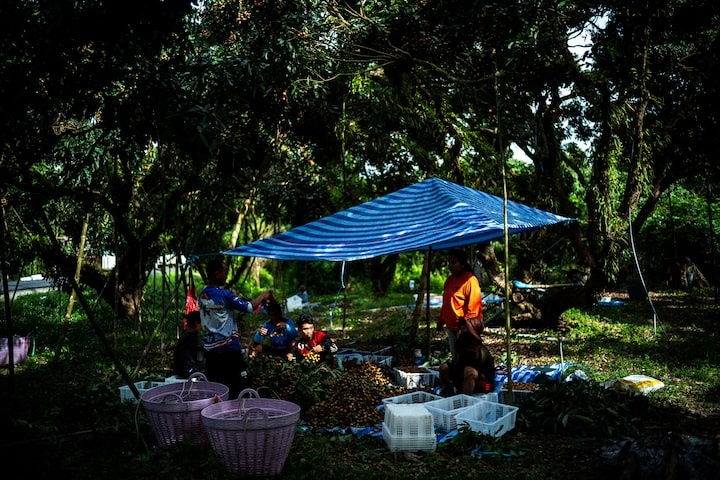

More than 5,500 Myanmar refugees living in camps along Thailand’s border have secured employment since Bangkok lifted decades-long work restrictions last year, Reuters reported on June 9. The United Nations refugee agency has now called the programme a potential model for other Asian nations struggling with large, long-term refugee populations.
Raouf Mazou, UNHCR Assistant High Commissioner for Operations, said the Thai approach could be replicated across Southeast Asia. “If it works here, it will have an impact on the region,” Mazou told Reuters in an interview.
Thailand’s cabinet approved the policy on August 26, 2025. The resolution allows approximately 80,000 refugees registered with the Thai government to work legally — an estimated 42,000 of whom are of working age. Refugees can now work in 43 of Thailand’s 77 provinces and in most sectors, with the programme initially set to run for one year.
The refugees are predominantly Karen and Karenni ethnic groups who have lived inside nine government-administered camps along the Thai-Myanmar border, in some cases for decades. Nearly half of the roughly 108,000 people across the nine camps were born there.
Two forces pushed Bangkok to act. Global humanitarian funding dropped sharply, in part because U.S. President Donald Trump cut foreign aid, while Thailand simultaneously faced growing labour shortages worsened by armed clashes with Cambodia. Faced with both a funding gap and a workforce deficit, the government found that extending work rights addressed both problems at once.
Since the programme launched in October, Thai authorities have worked with employers to ensure refugee workers receive legal protections, healthcare coverage, and at least the minimum wage, Mazou said. Eligible refugees must apply for permission to leave controlled zones, undergo mandatory health checks, and register for social security or public health insurance before submitting electronic work permit applications. Permits are valid for up to one year.
The results, eight months in, show early traction. More than 5,500 refugees have taken jobs — a number UNHCR describes as meaningful given the logistical and psychological barriers involved. Refugees still face challenges including restrictions on freedom of movement and adapting to life outside the camps after decades spent dependent on aid, Mazou acknowledged.
Mazou framed the broader purpose plainly. “Self-reliance prepares people to be part of the country they’re from… helps them if they are resettled elsewhere or helps them integrate where they are,” he said.
Regional and Global Impact
The approach could offer lessons for countries such as Bangladesh and Malaysia, which host large refugee populations, showing how refugees can contribute to the economy while remaining under legal protections and government oversight.
In the Center for Global Development’s 2022 Global Refugee Work Rights Report, Thailand and Malaysia ranked among the lowest-scoring countries in terms of refugees’ labour market access, both in law and in practice. Despite being the top refugee-hosting countries in the Association of Southeast Asian Nations (ASEAN), neither is a signatory to the 1951 Refugee Convention. Thailand’s decision to move ahead anyway gives the model added weight: it demonstrates that meaningful reform is possible without formal convention membership.
Thai lawmakers also welcomed the shift. Kannavee Suebsang, a list-MP from the Fair Party, said: “I am delighted Thailand has shown humanitarian courage by unlocking employment opportunities for Myanmar refugees. This converts a societal burden into a productive force.”
UNHCR said the policy addresses labour shortages while promoting human rights, as international organisations and NGOs have scaled back refugee support largely because of sweeping U.S. foreign aid cuts, increasing the financial burden on Thailand.
Background
Myanmar refugees began arriving in Thailand in the 1980s, fleeing military offensives against ethnic minority communities. Some 81,000 forcibly displaced people — largely Karen and Karenni, as well as other ethnic groups — are hosted in temporary shelters along the Thai-Myanmar border. For most of that period, formal employment was illegal for camp residents, leaving them entirely dependent on international humanitarian assistance. The UN Country Team in Thailand called the August 2025 cabinet resolution a landmark step toward social cohesion and economic inclusion, benefiting both refugees and host communities. Thailand is not a signatory to the 1951 Refugee Convention, making this domestic policy decision the primary legal basis for the work rights expansion.
What Happens Next
Although the resolution is initially set to run for one year, UNHCR said it has the potential to become a regional benchmark for rights-based solutions to refugee situations. Thailand’s government has not yet announced whether it will extend the programme beyond its current term. UNHCR is actively citing the Thai experience in conversations with other Southeast Asian governments, including Bangladesh and Malaysia, according to Mazou’s remarks to Reuters. The agency’s public endorsement on June 9 places the programme firmly on the regional policy agenda ahead of any renewal decision in Bangkok.