
Vingroup Accelerates Construction of Planned World’s Largest Stadium in Hanoi Despite Demand Questions
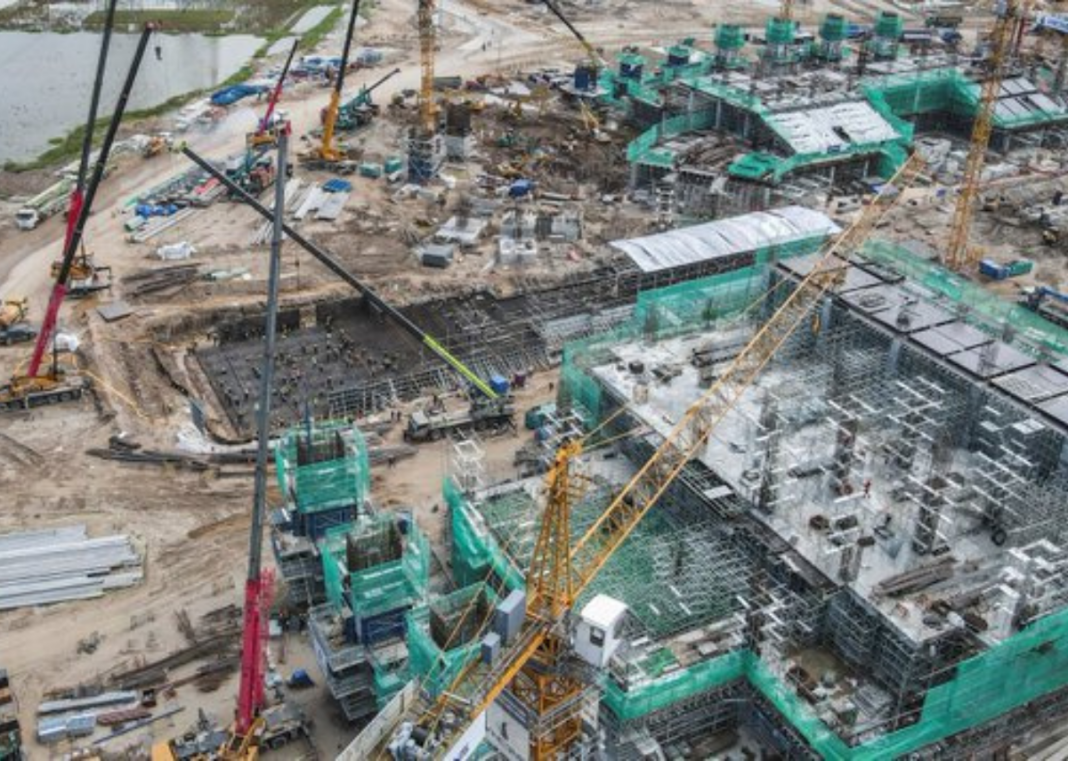
Vietnam’s Vingroup is accelerating construction in Hanoi of what it says will be the world’s largest stadium, betting that future demand will emerge to make the 135,000-seat venue financially viable over the long term. Thousands of workers are operating around the clock at the site, about 25 kilometres south of central Hanoi, to complete the venue by July 2027, a Vingroup representative told Reuters during a site visit this week. Center for Strategic and International Studies
The completion date would be a year ahead of the initial plan unveiled in December. The stadium will have the world’s largest seating capacity and will also feature the biggest fully retractable roof, Vingroup said. Center for Strategic and International Studies
Scale and Design
The stadium, known as Hung Vuong Stadium — renamed twice since its initial announcement — sits on 73.3 hectares in Thuong Phuc commune, southern Hanoi, four times the footprint of Vietnam’s current largest stadium, My Dinh National Stadium. Vingroup aims to complete the roof structure by May 2027 before the full project finishes in July, meaning the entire build will have taken just 20 months from groundbreaking — a pace the company says will make it the fastest-built stadium in world history. StadiumDB
The facade is patterned after the Dong Son drum, a symbol of ancient Vietnamese civilisation, with architectural elements inspired by the Lac bird. The project was originally named Lac Viet, then renamed Trong Dong to reflect the drum design, before being given its current name in April 2026 in honour of the founders of Vietnam’s first state. Domus
In June, construction crews are installing the steel roof support structure — described as the most complex phase of the build. StadiumDB
The Demand Question
The scale of the venue has drawn scrutiny from independent analysts. “While football is hugely popular in Vietnam, it is unlikely that a 135,000-seat stadium could be justified on domestic football demand alone,” said James Walton, sports business group leader at Deloitte Asia Pacific. He noted Vietnam’s top-tier V.League 1 averaged fewer than 6,000 spectators per match in the 2023-24 season. Center for Strategic and International Studies
Walton added that being part of a broader urban development can improve the project’s long-term financial sustainability, and noted that many modern national stadiums typically have a 60,000- to 80,000-seat capacity. Ahavietnam
Vingroup said the project’s scale reflects plans to host large sporting and cultural events, including concerts. The company declined to give financial targets, but said it expected the facility to be commercially sustainable over the long term. Center for Strategic and International Studies
Vingroup’s Financial Position
The company faces broader pressures from its financial liabilities, which stood at $36.7 billion in 2025, accounting for more than 4% of Vietnam’s total private debt. That figure excludes additional debt in private affiliated companies. Center for Strategic and International StudiesAhavietnam
From 2021 to 2024, Vingroup’s revenue grew at a compounded annual rate of 14.58%, while liabilities grew more than twice as fast at 36.44%. By mid-2025, the company’s total liabilities represented 86% of its total assets, with short-term liabilities alone comprising more than $19.5 billion, or 63% of total debt. Wikipedia
Vingroup is also navigating exposure through its electric vehicle arm, VinFast, which has never turned a profit since its founding in 2017 and continues to report widening losses. In December 2025, the company withdrew its bid for Vietnam’s $67-billion North-South high-speed railway project, citing the need to concentrate resources on projects it had already been awarded — including the Olympic Sports City development.
The Broader Olympic Sports City
The stadium is the centrepiece of a Vingroup-led $35-billion development of an Olympic Sports City covering more than 9,000 hectares on the outskirts of the capital, designed to host major global events. The wider precinct will include several other stadiums, a purpose-built esports venue, hospitals, research facilities, hotels, and shopping centres, positioned to host events such as the Asian Games or the Olympic Games. The development is planned to house approximately 750,000 residents. Ahavietnamaol
Vietnam announced or began work on approximately 550 infrastructure projects in 2025 alone, with a combined value exceeding $280 billion. The Olympic Sports City is among the most prominent of those initiatives. Domus
Background
Vingroup, founded by Vietnam’s wealthiest individual, Pham Nhat Vuong, is the country’s largest listed firm by market capitalisation and its largest private taxpayer. Groundbreaking took place on December 19, 2025, as one of 234 infrastructure projects inaugurated nationally on Vietnam’s National Resistance Day. The current record holder for largest stadium capacity is North Korea’s Rungrado 1st of May Stadium, with approximately 114,000 seats. The Hung Vuong Stadium would surpass it by more than 20,000 seats. The project would also displace the planned Grand Stade Hassan II in Casablanca, Morocco, which itself has aspirations to become the world’s largest. Vietnam’s football national team has grown significantly in regional standing, qualifying for multiple Asian Cup competitions, but the domestic club league has not attracted the attendance or commercial revenues that would underpin a venue of this scale on sport alone. InSight Crimeaol
What Happens Next
Vingroup aims to complete the retractable roof by May 2027, with the full stadium finished by July 2027, which would mark 20 months from groundbreaking. The company has not disclosed the stadium’s construction cost separately from the wider Olympic Sports City investment, and has not published financial projections for the venue’s operations. The test of commercial viability will come once the stadium opens and large-scale concerts and international sporting events must be booked at sufficient frequency to service the venue’s operating costs — a question that analysts say only time and programming decisions will answer. StadiumDB