
Hungary’s Ruling Tisza Party Tables Legislation to Dismantle Orbán’s State Media System
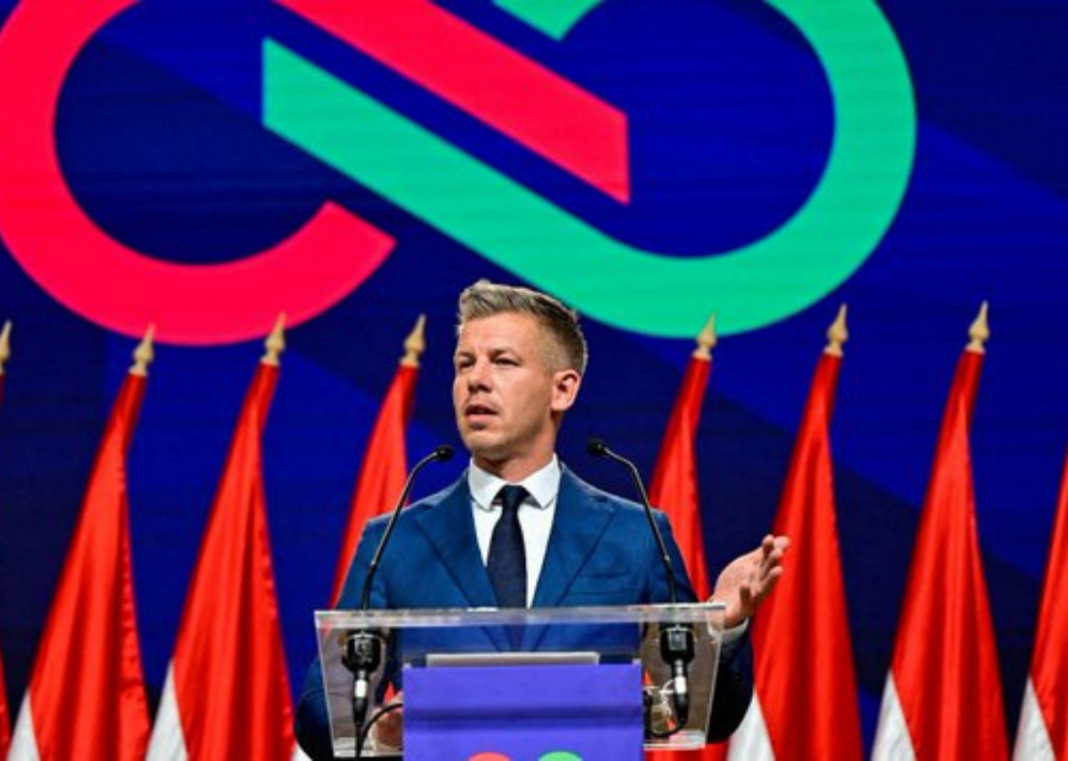
Hungary’s ruling Tisza party submitted a comprehensive 54-page bill to parliament on Friday, June 12, to overhaul the country’s public media system — which critics at home and abroad say was turned into a government propaganda machine during former Prime Minister Viktor Orbán’s 16-year rule. The legislation was submitted by Tisza MPs István Hantosi, Márton Melléthei-Barna, and Krisztián Kulcsár, and presented publicly by Zoltán Tarr, the minister responsible for social affairs and culture in Prime Minister Péter Magyar’s government.
The bill would represent the most extensive restructuring of Hungary’s public media in more than a decade, fundamentally changing how state-funded broadcasting organisations are governed, financed, and supervised.
What the Bill Would Do
The central stated aim of the proposed legislation is to restore independent, transparent, and accountable public-service broadcasting. It would break up MTVA — the centralised holding company Orbán established in 2011 to consolidate all public media under a single political structure — splitting it into a separate company responsible for radio and television broadcasting and reinstating the national news agency MTI as a standalone entity. MTI had lost its limited remaining autonomy in a 2015 reorganisation that subordinated it to MTVA’s politically directed editorial framework.
The bill would also establish an Independent Public Media Committee — known in Hungarian as the Független Közmédia Testület — to replace the current Public Service Foundation. The new body would be tasked with protecting public media independence, overseeing operations, and appointing senior editorial leadership through open, competitive processes.
Tarr said the reform’s core objective is to “return public media” to citizens, and that the bill would ensure leadership appointments are made on merit rather than through political patronage.
The MTVA Chief’s Resignation
The bill’s submission follows the resignation of Dániel Papp, MTVA’s chief executive, on June 5. Papp cited the new government’s intention to carry out a comprehensive restructuring of public media as his reason for stepping down, initiating the termination of his employment with András Koltay, chairman of the Media Council of the National Media and Infocommunications Authority. Papp said he would continue performing his duties during his notice period.
Magyar welcomed the resignation in a Facebook post, calling Papp a “fabricating” head of MTVA who had left his position “later than expected.” He called on the leadership of Duna Médiaszolgáltató and other remaining figures associated with the previous administration to follow suit.
Magyar announced a day after Papp’s resignation that his government would submit a public media reform bill the following week — a commitment fulfilled with Friday’s parliamentary submission.
Magyar’s Early Campaign Against State Media
Magyar had moved against state broadcasting even before formalising legislation. Shortly after his election victory in April, he appeared on state television for the first time in a year and a half and clashed openly with anchors he accused of years of biased coverage, later describing the interview on X as witnessing “the last days of a propaganda machine.” He told Facebook followers that MTVA employees had “worked under total intimidation and political terror.”
Shortly after that television appearance, Magyar announced he would suspend public media news broadcasts as one of his first acts in government. He outlined four priority reform areas for his administration: anti-corruption measures including joining the European Public Prosecutor’s Office, restoring judicial independence, and rebuilding media and academic freedoms. The public media bill is part of the third of those four pillars.
“Public media reform was a key pledge by Prime Minister Peter Magyar’s Tisza party,” Reuters reported on Friday.
How Orbán Built the System Being Dismantled
The structure the new legislation targets was assembled methodically over 16 years. A year after Orbán’s return to power in 2010, Hungary’s state-owned television channels, radio stations, and national news agency were merged into MTVA under Act CLXXXV on Media Services and Mass Media. The legislation created a politicised governance structure in which management and senior editorial positions became appointments controlled by the ruling party.
Within that framework, MTVA functioned as what Reporters Without Borders described as “an audiovisual state propaganda tool.” Journalists at public broadcaster M1 told Human Rights Watch that reporters were instructed by editors what to report on, which terms to use and which to avoid, and that M1 reporters were required to use stories featured in pro-government outlets including Origo and Magyar Nemzet.
Orbán’s control over the media extended well beyond public broadcasting. In 2018, nearly 500 pro-government media companies were merged into a private holding company — the Central European Press and Media Foundation (KESMA) — to centrally coordinate their coverage. Orbán had been placed on Reporters Without Borders’ list of enemies of press freedom in 2021, the first EU head of government to appear on that list alongside figures such as North Korea’s Kim Jong-un and Russia’s Vladimir Putin. Hungary ranked 57th out of 180 countries in the 2026 RSF World Press Freedom Index — an improvement from its low during the Orbán years, but still among the lowest rankings for an EU member state.
Regional and Global Impact
The bill carries significance well beyond Hungary’s borders. In April, the European Parliament’s Committee on Civil Liberties, Justice, and Home Affairs formally cleared Hungary of the Article 7 procedure — the EU’s mechanism for protecting democratic values in member states — after Magyar’s election victory ended the conditions that had triggered the probe. Hungary’s frozen EU funds, withheld over rule-of-law concerns under Orbán, are under review for release.
Media freedom analysts at Balkan Insight noted that unwinding Fidesz’s media capture model will be complex, drawing comparisons to Poland’s post-Law and Justice media reform process — where courts and entrenched Fidesz-aligned executives have contested changes at every step. The European Centre for Press and Media Freedom urged the incoming Tisza administration to ensure that reforms are carried out through lawful, proportionate, and democratic means, noting that speed must not come at the cost of procedural legitimacy.
Tisza holds a constitutional majority in parliament following April’s election, which gives the party the votes to pass the bill without coalition support — but also raises questions from civil liberties groups about whether reform can be implemented in a way that insulates the new public media structure from the next government’s political influence, regardless of its complexion.
Background
Orbán’s Fidesz party governed Hungary continuously from 2010 to April 2026, using successive supermajorities in parliament to entrench political control across public institutions including the courts, electoral system, and media. Tisza won the April 12, 2026 parliamentary election in a landslide, ending Orbán’s rule. Magyar was sworn in as prime minister shortly after. The MTVA system was created in 2011 by merging Hungary’s public service broadcaster, news agency, and media fund into a single entity governed by a Media Council whose chairman was appointed by Fidesz. The council structure was designed so that appointments ran through election cycles, with a term running until 2030 — a feature intended to prevent an incoming government from quickly replacing Fidesz loyalists in media oversight positions.
What Happens Next
The bill has been submitted to parliament and must now pass through committee review and floor debate before a final vote. Tisza’s constitutional majority means parliamentary passage is not in question, though the timeline for debate has not been set. Magyar has also called on remaining MTVA-era leadership figures to resign voluntarily, with the bill’s institutional framework set to replace them through open leadership competitions once enacted. The Media Council of the NMHH, whose chairman’s term runs until 2030, represents one of the structural obstacles to full implementation — a challenge Magyar’s government has acknowledged will require careful legal navigation. Reporters Without Borders has called on Tisza to withdraw Hungary’s existing complaint against the European Media Freedom Act and to launch a formal consultation on its implementation as part of the reform process.