
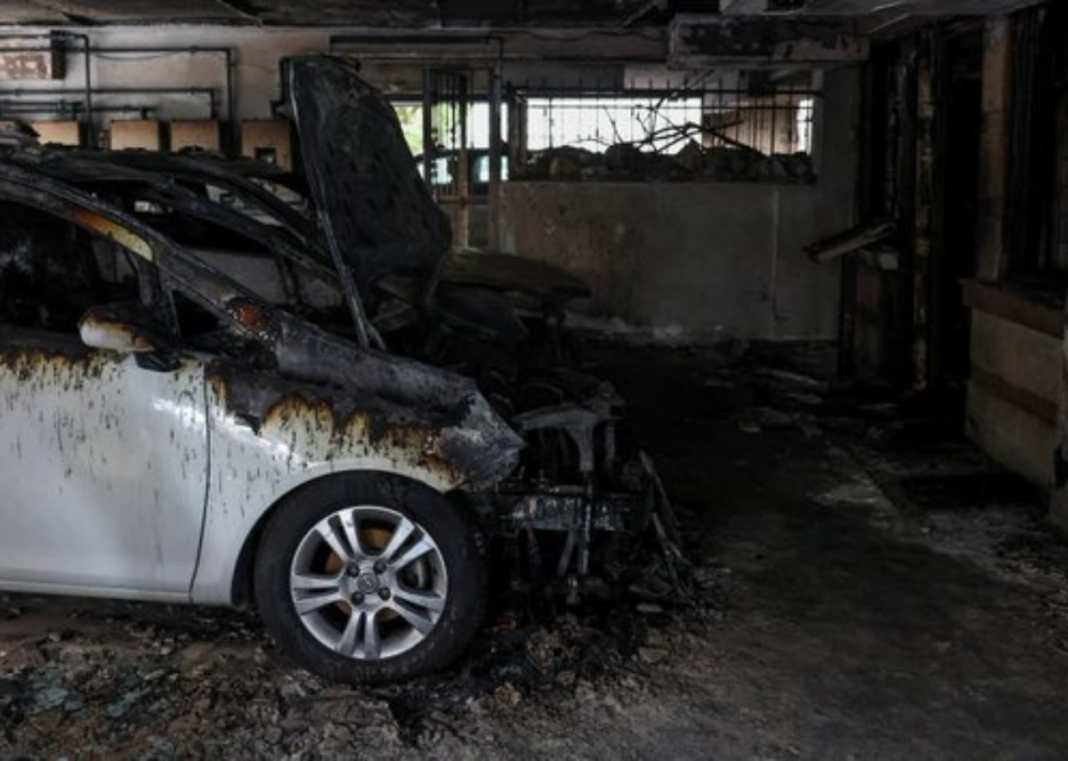

Greece’s Ruling Party Calls Supporters to Streets After Firebomb Attack Kills Candidate’s Mother
Greece’s governing New Democracy party called on Thursday, July 2, for its supporters to take to the streets in protest after the 72-year-old mother of one of its parliamentary candidates died of organ failure following a coordinated pre-dawn firebomb attack on three party-linked homes in Thessaloniki. Vagia Nestora, mother of New Democracy candidate Afroditi Nestora, died after suffering burns covering 80 percent of her body, a hospital statement confirmed. The attack marked the first time in more than a decade that a person has been killed in an assault targeting Greek politicians. Cyprus Mail
Unknown assailants placed gas canisters outside three residential buildings connected to New Democracy members in Thessaloniki before 5 a.m. on Tuesday, July 1. The first two explosions caused property damage, while the third blast injured five people and damaged two cars and two motorcycles. Afroditi Nestora and her mother were both among those burned in the third explosion. The Epoch Times
No group claimed responsibility for the attacks as of Thursday. Greek authorities have opened a criminal investigation and Greek Prime Minister Kyriakos Mitsotakis vowed “zero tolerance” for political violence, describing the attacks as a “cowardly act.”
A Death That Changed the Political Temperature
When the attacks first occurred early on Tuesday morning, all five injured were expected to survive. Vagia Nestora’s death on Thursday transformed what had already been a serious incident of political violence into a killing, the first of its kind in Greece in more than a decade, and sharply intensified the political response.
New Democracy’s call for supporters to take to the streets came in response to the death, which the party described as an unacceptable attack on democratic life. The party had responded on social media when the attacks first occurred with the message “We are not afraid of you,” accompanied by photographs of the three damaged buildings. Cyprus Mail
The government condemned the attacks in forceful terms from the outset. Interior Minister Nikos Panagiotopoulos called the firebombings “a terrorist act against democracy” and said they underscored the need for the state to take a firm stand against political violence. Police Minister Michalis Chrysochoidis said the perpetrators would be identified and prosecuted to the fullest extent of the law, adding that anyone who sought to intimidate elected representatives or party members through violence would face the full weight of the Greek state’s response.
Greece’s Long History of Political Violence
Greece has a decades-long history of political violence, including bombings and arson attacks, but assassinations became rare 20 years ago after leaders of left-wing militant groups were jailed. The July 1 attacks in Thessaloniki fit a pattern that security analysts say has never fully disappeared, even as the frequency of such incidents declined significantly after the imprisonment of 17 November, a Marxist-Leninist militant organisation responsible for a series of assassinations of Greek officials and foreign diplomats between 1975 and 2000. Cyprus Mail
Recent incidents have generally caused property damage rather than serious injuries. In July 2025, a bomb exploded outside the Thessaloniki home of the president of Greece’s prison guards association — an attack in the same city, one year earlier, that followed a broadly similar operational pattern of pre-dawn placement of an explosive device at a politically connected address. The Epoch Times
The attack came ahead of Greek parliamentary elections, during which Afroditi Nestora was standing as a New Democracy candidate. Greece under Mitsotakis has governed as a centre-right administration since 2019, and New Democracy has faced sustained opposition from a range of parties across the political spectrum. No political organisation has been linked to the Thessaloniki firebombings.
Political Violence in Context
The attack drew comparisons across Greek media and political commentary to a broader unease about the state of democratic norms and political tolerance in Europe, at a moment when several EU member states have experienced incidents of political violence or intimidation. The death of a 72-year-old woman — caught in an attack that targeted her daughter’s political affiliation — crystallised concerns that the line between property damage and lethal violence had been crossed in a way that demanded a more forceful political and law enforcement response than previous incidents had warranted.
Mitsotakis cut short engagements to address the situation and convened a security briefing with senior police officials following news of Vagia Nestora’s death. The prime minister said the Greek state would not allow intimidation to become a tool of political competition, and that identifying and prosecuting those responsible was now a national priority.
Regional and Global Impact
The killing of a politician’s family member in a coordinated multi-site firebombing is a significant escalation by the standards of political violence in Western Europe. While Greece’s political landscape has historically been more tolerant of militant street politics and left-wing direct action than some of its EU neighbours, the deliberate targeting of homes rather than offices or party premises — ensuring that family members would be at risk — marks a departure from the targeting logic that characterised previous incidents. European Union institutions, including the European Commission, are expected to note the incident as part of ongoing monitoring of democratic health and political violence trends across member states.
For New Democracy’s government, the attack complicates an electoral period by turning a candidate’s personal tragedy into a national political crisis, while simultaneously providing an opportunity to consolidate support around a law-and-order narrative and a public demand for accountability that the party’s opponents will find difficult to contest directly.
Background
New Democracy, led by Prime Minister Kyriakos Mitsotakis, has governed Greece since July 2019 and was re-elected in 2023. The party occupies the centre-right of the Greek political spectrum and has pursued economic liberalisation, foreign investment, and closer integration with EU and NATO partners during its time in power. Thessaloniki, Greece’s second-largest city and a major commercial and cultural centre in the north of the country, has been the site of several politically motivated violent incidents in recent years, reflecting tensions between the city’s diverse political factions. The militant group 17 November, whose imprisonment of its leadership in 2002 and 2003 effectively ended the era of high-profile political assassinations in Greece, carried out 23 killings over 27 years before its leaders were arrested following the accidental injury of one of its members during a botched attack in 2002.
What Happens Next
Greek police are continuing their investigation into the Thessaloniki firebombings, with authorities expected to use forensic evidence from the three blast sites, CCTV footage, and witness accounts to identify the perpetrators. New Democracy’s call for street protests is expected to produce demonstrations in Athens and other Greek cities in the coming days, with the timing and scale of those protests likely to be shaped by the public reaction to Vagia Nestora’s death. The Greek government has signalled it will pursue legislative or operational measures to strengthen protections for political candidates and their families, though no specific proposals had been announced as of Thursday.