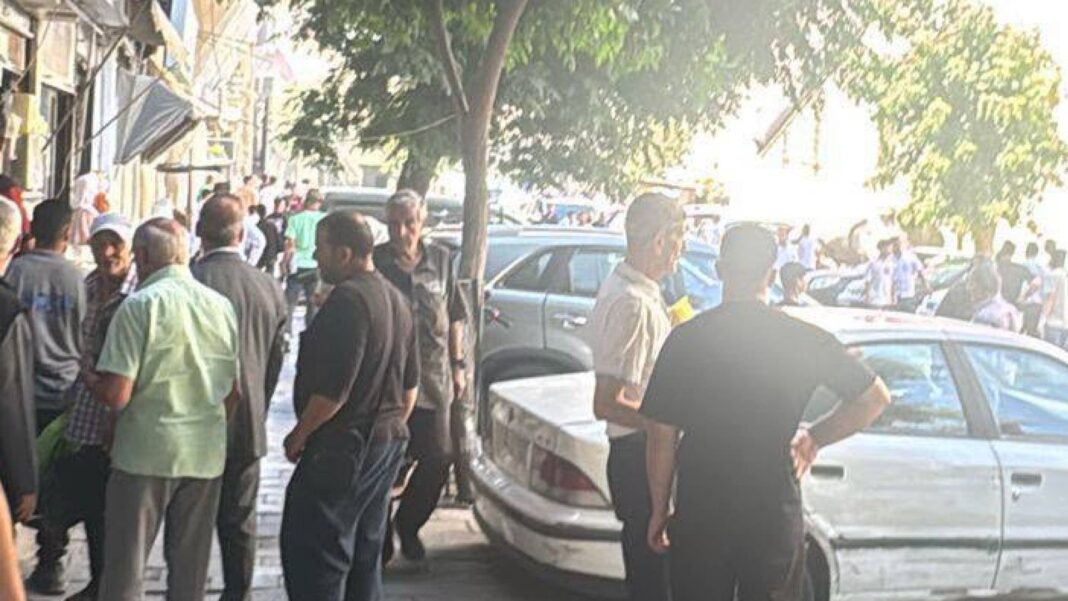

An explosive device detonated inside a café in central Damascus on Thursday, July 2, killing five people and wounding 16 others, according to Syria’s Ministry of Health. The blast occurred on Al Nasr Street in the Al Marjah district, close to the Justice Palace and the historic Hejaz railway station in one of the Syrian capital’s busiest commercial areas. State news agency SANA confirmed the explosion and said authorities have launched an investigation into its cause. No group had claimed responsibility as of the time of reporting.
Dr. Ahmad Al Bakour, Director of Ambulance and Emergency Services at Syria’s Ministry of Health, told SANA that the official death toll stands at five, with 16 others injured. He said health officials had confirmed that some of the wounded remain in critical condition.
Ten of the injured were transported to Al Mujtahid Hospital in Damascus, while one additional casualty was taken to the Syrian Red Crescent Hospital, according to Dr. Al Bakour. Medical teams and emergency responders from both the Ministry of Health and the Syrian Arab Red Crescent were dispatched to the scene immediately after the explosion. Hospitals across Damascus were placed on high alert to receive casualties and provide emergency surgical care.
State-run Al Ikhbariya television initially reported that the nature of the blast was not immediately clear. Syrian authorities subsequently confirmed that an explosive device caused the detonation rather than a gas leak or accident. No further details on the device, its placement or those responsible had been released by the time of publication.
Security context
Thursday’s explosion is the latest in a pattern of security incidents in Damascus that has intensified since the fall of Bashar al-Assad’s government in December 2024 and the assumption of power by Ahmad al-Sharaa’s transitional administration. A car bomb outside a Defence Ministry building in the Bab Sharqi area of Damascus wounded more than 20 people in May, with no immediate claim of responsibility, according to Al-Monitor. In the same month, a Shia cleric, Farhan Hassan al-Mansour, was killed by a sticky bomb placed inside his vehicle near the Sayyida Zeinab shrine south of the capital. The Islamic State, also known as ISIS or Daesh, claimed responsibility for that killing, describing it in its weekly al-Naba newspaper as a targeted operation, according to The New Region.
The deadliest single attack in Damascus since the change of government was the June 2025 assault on the Mar Elias Church in the Dweilaa neighbourhood, in which a gunman opened fire on worshippers and detonated an explosive vest, killing at least 30 people and injuring 54 others, according to Wikipedia’s account of the attack. Syria’s Interior Ministry attributed that attack to the Islamic State, while the extremist group Saraya Ansar al-Sunnah, led by a former official of Hay’at Tahrir al-Sham, separately claimed responsibility. Syrian authorities carried out a series of raids targeting extremist networks in the Damascus countryside in the days that followed.
Al Marjah Square and the surrounding streets, where Thursday’s explosion occurred, form the commercial heart of central Damascus. The Justice Palace at the northern end of Al Nasr Street is one of the Syrian capital’s most prominent government buildings, making the surrounding area a sensitive location for any attack.
Background
Damascus has experienced repeated bombings throughout Syria’s more than decade-long conflict, from coordinated car bombs during the civil war years to sporadic explosive device attacks since the transitional government took power. ISIS has maintained an active presence in parts of Syria, particularly in the desert regions of Deir ez-Zor and Homs governorates, and has continued to carry out attacks in urban areas including the capital. The new Syrian government under Ahmad al-Sharaa, whose movement originated from Hay’at Tahrir al-Sham, has faced the concurrent challenge of absorbing former rebel factions into a unified security structure while countering ISIS sleeper cells and remnant pro-Assad networks. Security officials have said the task of controlling armed groups across the country remains incomplete.
What happens next
Syrian authorities said an investigation into Thursday’s explosion is underway but provided no timeline or further details. Al Mujtahid Hospital and other Damascus medical facilities remain on high alert to manage the wounded, some of whom are in critical condition. No Syrian government minister had issued a public statement on the blast by the time of publication, and no militant group had claimed responsibility for the attack.