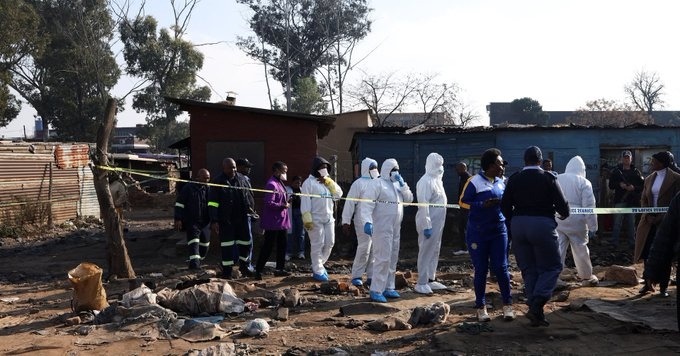

More than 10 armed suspects stormed a residential informal settlement in Cleveland, east of Johannesburg, on the night of Tuesday, June 10, shooting dead 12 people and wounding nine others. South African police said they believe the attackers were dropped off by a minibus, opened fire on residents at multiple locations, then fled in the same vehicle. No arrests had been made as of Wednesday morning.
According to the South African Police Service, officers responded at approximately 11:10 p.m. to a report of a shooting in progress at the Jumpers informal settlement. The victims were nine men and three women. Eleven died at the scene; the twelfth died in hospital. The nine wounded were transported for medical treatment.
Police spokesperson Athlenda Mathe confirmed that specialist crime intelligence officers were deployed to the scene. Provincial police commissioner Tommy Mthombeni condemned the killings but stopped short of attributing them to any specific criminal network. “We have deployed all required units,” he said, adding that crime intelligence officials were actively working the case.
Mthombeni described the attackers as “heartless” but refused to link the killings to illegal mining until the investigation was complete.
The attack bore the hallmarks of organized criminal violence, though the precise motive remains unclear. The Cleveland suburb is connected to illegal mining activity, a local councillor said, though he noted there were also tensions over land between different parts of the community, and it was not certain illegal mining gangs were responsible.
Councillor Neuren Pietersen told eNCA TV at the scene: “There are a lot of moving parts here so it’s hard to pinpoint exactly what is driving the issues.”
A Recurring Pattern
South Africa has seen several high-profile mass shootings in recent months, including two in December 2025 that killed more than 20 people combined. One of those attacks also involved multiple shooters.
The shootings are sometimes linked to illegal mining gangs that operate in and around Johannesburg. The city sits atop extensive gold reserves, and gangs have established operations in abandoned mines to extract and trade remaining deposits. Turf wars between competing groups have repeatedly spilled into nearby residential areas.
The phenomenon of illicit mining around Johannesburg was one of the concerns that led the government, in March 2026, to deploy the army to certain high-risk areas in a yearlong operation to stop violence linked to organized crime. That deployment was widely seen as an admission that police were losing the battle in areas where violent criminal gangs operate.
South Africa’s Violence Crisis
South Africa recorded more than 23,000 homicides in the last financial year, according to official crime statistics — an average of more than 60 per day. Firearms are by far the leading cause of death in homicides. Although the country of 62 million has comparatively stringent gun control laws, officials say many murders are carried out using illegal firearms.
The June 10 attack adds to a string of mass casualty events that have drawn repeated calls for a stronger government response. Informal settlements in South Africa are unplanned residential areas common in and around major cities, where residents live in shacks or other makeshift structures. These areas are frequently targeted in gang-related violence due to limited policing presence and high population density.
What Happens Next
Police have launched a manhunt for the more than 10 suspects and no arrests had been made as of Wednesday. Crime intelligence officials are working alongside provincial police to identify those responsible. The investigation into the motive remains open, and authorities have not formally linked the attack to any specific gang or illegal mining network. South Africa’s army deployment in high-risk Johannesburg areas, authorized in March 2026 for a period of one year, remains active as investigators pursue leads in the Cleveland area.