
Indian Rupee Poised to End Four-Day Losing Streak as Weak US Jobs Report Dents Dollar and Pushes Back Fed Hike Wagers
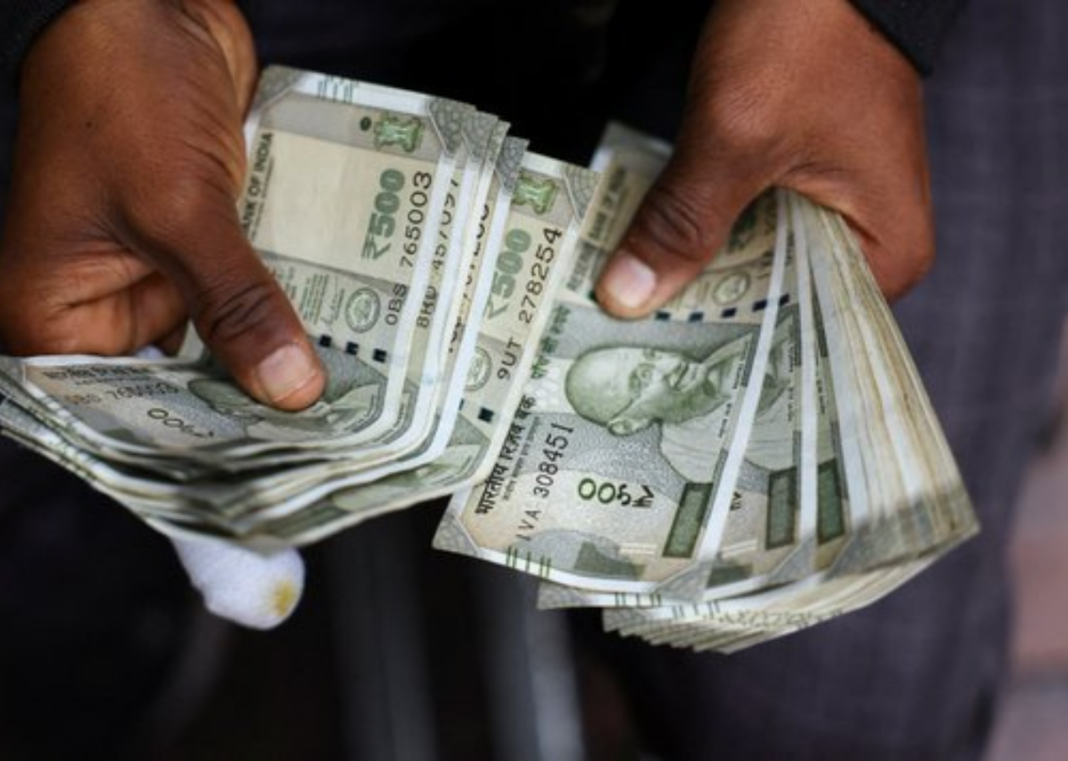
The Indian rupee was set to open stronger on Friday, July 3, and snap a four-day losing streak against the US dollar, after a sharply below-forecast American jobs report reduced market expectations for an imminent Federal Reserve rate hike and sent the dollar broadly lower, traders said. The rupee was expected to open in the 95.12–95.16 range per dollar, according to traders, having settled at 95.3925 on Thursday. The dollar index — which measures the greenback against a basket of currencies — fell 0.2% to 100.77 on Friday morning in Asia, extending a 0.5% decline on Thursday, and was on course for its biggest weekly drop since early April.
The Bureau of Labor Statistics reported on Thursday that the US economy added just 57,000 nonfarm payroll jobs in June — far below the consensus forecast of 110,000 to 115,000 from economists surveyed by Dow Jones, The Wall Street Journal, and Bloomberg, and sharply below May’s downwardly revised figure of 129,000.
The Jobs Report in Detail
Total nonfarm payroll employment changed little in June, with the 57,000 gain roughly in line with the average monthly change over the prior 12 months of 36,000. The unemployment rate dipped to 4.2% — its lowest level in a year — though the decline was driven in part by a fall in labour force participation, which slipped 0.3 percentage points to 61.5%, its lowest since March 2021, and a drop of 507,000 in household employment.
Leisure and hospitality was the biggest drag on June payrolls, shedding 61,000 jobs due to weaker than usual seasonal hiring — the same sector that had contributed to May’s stronger-than-expected result. Professional and business services led gains, adding 36,000 jobs, followed by social assistance at 25,000 and health care at 22,000.
Downward revisions to prior months darkened the picture further. April’s count was cut by 31,000 to 148,000, while May’s was trimmed by 43,000 to 129,000, leaving the two-month combined total 74,000 short of what had originally been reported.
Average hourly earnings for all employees on private nonfarm payrolls rose 13 cents, or 0.3%, to $37.64 in June. Over the year, wages are up 3.5%.
What the Data Means for the Fed
Weaker labour data has cooled expectations for aggressive Federal Reserve rate hikes in 2026, with the soft print likely to set back market expectations of a Fed rate hike as soon as this summer or early autumn.
The Federal Reserve held its target range at 3.50%–3.75% on June 17, the fourth consecutive hold and the first meeting chaired by Kevin Warsh, who turned more hawkish by removing the previous easing bias and updating the dot plot to point to a year-end rate near 3.8%, implying a possible hike rather than a cut in 2026. The next Fed decision is scheduled for July 28–29.
Across Wall Street, most major banks have abandoned forecasts for cuts in 2026. Several Fed policymakers have indicated they cannot support cuts with US inflation gauges exceeding the central bank’s 2% target by a widening margin and have in recent weeks begun to sound more open to higher rates. The June payrolls miss introduces the first significant data-driven pushback against that consensus in weeks.
The Rupee’s Recent Trajectory
The rupee weakened steadily through the first half of the year — from near 90 per dollar in January to a record low close to 96.6 on May 19, 2026 — before recovering around 2.8% to the mid-94s. The partial recovery reflected the easing of oil price pressure following the US-Iran memorandum of understanding signed on June 18 and a stabilisation in foreign portfolio flows into Indian bonds.
Foreign portfolio outflows from Indian equities have eased while bonds have seen inflows, and the next factor to watch will be the levels at which exporters choose to re-enter the market, an FX salesperson at a foreign bank told Reuters.
Cambridge Currencies forecasts the USD/INR rate to trade broadly in a 94–96 range in the near term, widening to a 93–98 range across the rest of 2026, with the rupee expected to stay weak and range-bound rather than staging a sharp recovery given the Fed’s hawkish posture and still-elevated crude prices.
The Oil Factor Remains Central
Because India imports roughly 85% of its oil, any sustained move in crude feeds almost directly into a weaker rupee within weeks. The June 18 Iran MoU initially eased crude prices, providing the rupee’s most significant relief in months. But Iran’s declaration on June 20 that it was closing the Strait of Hormuz — citing continued Israeli strikes in Lebanon as a breach of the MoU — reintroduced supply risk, with US Central Command saying commercially that traffic had continued to flow regardless of Tehran’s closure announcement.
Both the Reserve Bank of India and the Federal Reserve flagged the ongoing conflict in West Asia — and the risk around the Strait of Hormuz — as a live threat to energy prices. The RBI held its repo rate at 5.25% on June 5, a unanimous decision and its third straight hold, raising its FY27 inflation projection to 5.1% from 4.6% on higher energy costs and trimming its growth forecast to 6.6%.
Background
The dollar rate in India stood at approximately 94.4 rupees per US dollar in late June 2026, with Cambridge Currencies describing the rupee as range-bound rather than on a recovery trajectory, given the structural pressures from oil prices and the Fed’s pivot toward a more hawkish stance. The US-Iran ceasefire’s durability — and particularly whether the 60-day negotiating window starting June 18 produces a durable settlement — will be the single most consequential external variable for both oil prices and the rupee through the second half of 2026. India’s external vulnerability is well understood by markets: the country’s current account deficit widens mechanically when oil rises, putting pressure on the rupee through both the trade and capital account channels simultaneously.
What Happens Next
The Federal Reserve’s next scheduled policy decision is on July 28–29, at which point policymakers will have both the June jobs report and July’s early economic data to assess. The June jobs report leaves Fed officials with little additional guidance as they continue to debate the direction of interest rates. The RBI’s own next scheduled policy decision is in August, and whether Governor Sanjay Malhotra maintains the neutral stance or shifts toward tightening will depend on how the inflation trajectory develops through the monsoon season. Traders said the rupee’s ability to consolidate above 95 per dollar in the near term will depend on whether oil prices remain contained and whether the jobs data pushes US two-year yields — the most direct driver of the dollar’s near-term path — sustainably lower.