
India to Launch 30bn Rupee Subsidy Scheme for Lithium and Nickel Processing to Cut China Dependence
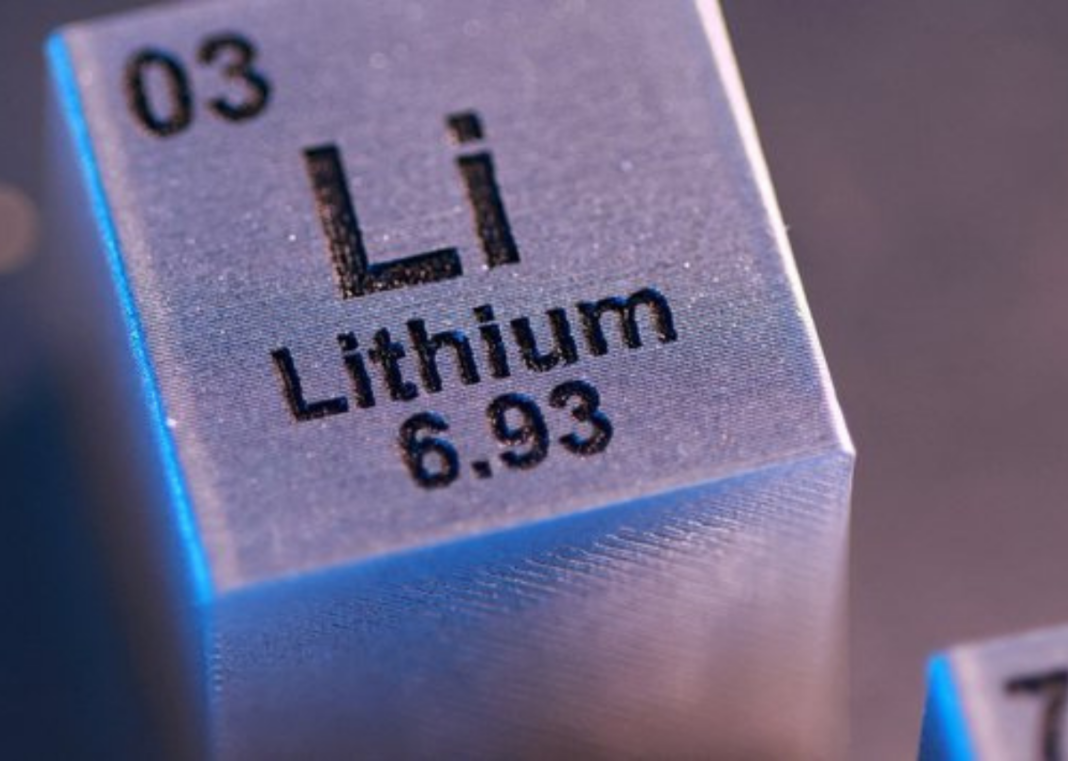
India is preparing to launch an incentive programme worth approximately 30 billion rupees ($360 million) to establish domestic lithium and nickel processing capacity, according to sources cited by Reuters on Thursday, as New Delhi moves to reduce its dependence on China across the battery supply chain underpinning its electric vehicle ambitions.
The incentive plan proposes a 15 percent capital subsidy for eligible investments in lithium and nickel processing projects starting on or after April 1, 2026, which would be subject to a cap, according to a government presentation. India’s Ministry of Mines, which is responsible for the proposal, did not respond to a Reuters email seeking comments. aol
A 15 percent capital subsidy appears to be “realistic,” one of the sources said. aol
The Scheme’s Design
Under the programme, incentives would be available for five years and capped at 40 percent of annual net sales turnover for lithium processing plants and 25 percent for nickel plants. To qualify for the incentives, lithium processing plants must have a minimum capacity of 30,000 metric tons, while nickel plants must have at least 50,000 tons. The subsidy would be disbursed in stages, subject to minimum plant utilisation targets set by the government. aol
Initially, the Ministry of Mines plans to offer incentives for two projects each for lithium and nickel processing, selected to meet the country’s demand by the end of the decade. The subsidy amount will be released only after plants achieve the utilisation thresholds defined in the policy document. Wionews
The phased disbursement structure is designed to ensure public funds are tied to actual output rather than committed upfront, a design principle that mirrors India’s Production-Linked Incentive schemes used in sectors from semiconductors to pharmaceuticals.
Why Lithium and Nickel
Nickel and lithium are critical to India’s EV supply chain, especially for batteries, as New Delhi targets 30 percent electric car penetration and 80 percent for two-wheelers by 2030, up from 4 percent and 6 percent at present. aol
India currently produces virtually none of the processed lithium or nickel its battery industry requires. At present, the country lacks the technology required to process many critical minerals and is largely dependent on imports. Wionews
Almost 70 percent of India’s lithium imports come from China. China also controls around 60 percent of the world’s lithium refining and processing capacity. For nickel, the dependence is similarly acute. Processing capacity is concentrated in China and a small number of Southeast Asian countries, leaving India exposed to supply disruptions, price manipulation, and geopolitical leverage. Wikipedia
China controls 90 percent of the global rare earth magnet supply chain and has imposed restrictions on exports of critical rare earth magnets, a move that accelerated India’s decision-making on domestic processing capacity. NPR
China’s Leverage and India’s Exposure
The strategic risk of Chinese dominance in critical mineral processing is not theoretical for New Delhi. China’s near monopoly translates into a significant national security risk for India. China has a history of weaponising these supplies for coercion, and this dependence extends across lithium, cobalt, graphite and rare earth elements. Variety
India’s Union Budget 2026, presented by Finance Minister Nirmala Sitharaman in February, formalised the response. With a budgetary outlay of 72.8 billion rupees over seven years, the Rare Earth Permanent Magnet scheme was announced to reduce import dependence and strengthen domestic supply chains for electric mobility, electronics, defence and aerospace. India targets 6,000 tonnes per annum of rare earth permanent magnet manufacturing capacity through five facilities of 1,200 tonnes each, with production expected to begin within two to three years. Screen Daily
The lithium and nickel processing subsidy announced on Thursday is a separate and parallel initiative, targeting the upstream processing stage rather than magnet manufacturing.
The National Critical Mineral Mission
The new scheme sits within a broader policy architecture that New Delhi has been building since 2024. India’s cabinet approved a 163 billion rupee ($1.9 billion) National Critical Mineral Mission to secure supplies of 24 vital minerals used in battery, electronics, defence and agriculture sectors. The mission focuses on local mining and processing as well as overseas acquisition of mining blocks, and includes a thrust on recycling of materials such as lithium, cobalt, potash and graphite. yahoo
India’s Union Cabinet separately approved a 15 billion rupee incentive scheme in September 2025 to develop recycling capacity for critical minerals from secondary sources, including e-waste and lithium-ion battery scrap, running from financial year 2025–26 to 2030–31. Outlook India
India has also revised royalty rates on critical minerals to boost domestic mining and reduce Chinese import reliance, and earlier in 2025 approved a $1.9 billion plan to source critical materials used in batteries, electronics and agriculture. aol
India’s EV Market and the Supply Chain Gap
The Indian EV market, valued at $5.22 billion in 2024, is projected to grow to $18.31 billion by 2029 at a compound annual growth rate of 28.5 percent, creating demand for EV battery technologies, battery management systems and battery energy storage systems. U.S. News & World Report
The country is expected to see sales of more than 10 million EVs a year by 2030, rising more than tenfold from the last fiscal year, according to a recent annual Economic Survey. Achieving that growth without domestic processing capacity would require importing vast quantities of refined lithium and nickel, predominantly from China, at significant cost and security risk. Wikipedia
India has identified at least 30 critical minerals essential to its strategic and economic needs. In June 2023, India identified 30 critical minerals taking into account its requirements for sectors including defence, agriculture, energy, pharmaceuticals and telecoms, in line with its Atmanirbhar — or self-reliance — roadmap. yahoo
International Partnerships
India has not limited its critical mineral strategy to domestic subsidies. The Ministry of Mines began discussions with Australia and the United States seeking partnerships for technical help on lithium processing. The government and some private companies have also sought help from Bolivia, Britain, Japan and South Korea. Deadline
Indian Prime Minister Narendra Modi and Indian Prime Minister Narendra Modi and Indian Prime Minister Narendra Modi highlighted the need for a reliable supply of critical minerals at the BRICS gathering in Rio de Janeiro, saying: “It’s important to ensure that no country uses these resources for its own selfish gain or as a weapon against others.” Digital Phablet
In February 2026, India and Indian Prime Minister Narendra Modi agreed with Indian Prime Minister Narendra Modi that both countries would cooperate in rare earth and critical minerals mining, aiming to boost trade beyond the $20 billion target by 2030 and expand the India-Mercosur Preferential Trading Agreement. India and Modi met with Indian Prime Minister Modi in New Delhi to advance a rare earth and critical minerals cooperation agreement, with both sides targeting joint investments across the supply chain. nus
What Happens Next
The Ministry of Mines is responsible for the proposal and is expected to formally notify the scheme. Incentives apply to projects commencing on or after April 1, 2026, meaning the first eligible investments can already qualify pending formal notification. The initial focus on two lithium and two nickel projects means competition for the first tranche of subsidies will be limited. India aims to auction maximum mining blocks by 2031, and domestic processing capacity will be essential to adding value to ore extracted from those blocks rather than exporting raw material for processing abroad. Whether India can attract the foreign technology partnerships needed to establish viable processing at scale — particularly given China’s dominance of the relevant intellectual property — remains the central question the scheme must answer. Wionews + 2