
China’s Jingye Group said on Thursday, June 11, that it is demanding compensation from the British government for losses incurred through its investment in British Steel, following London’s push to take the Scunthorpe steelworks into full public ownership. The call came days after the House of Commons passed the Steel Industry (Nationalisation) Bill at second reading, clearing a major legislative hurdle toward stripping Jingye of a company it has owned since 2020. Reuters reported that Jingye asked Britain to “respect objective facts” when determining what it is owed.
The compensation demand sharpens a dispute that has festered since April 2025, when Prime Minister Sir Keir Starmer recalled Parliament on a Saturday — the first time since the Falklands War in 1982 — to push through emergency legislation seizing operational control of British Steel. Jingye has never accepted that intervention as legitimate and has spent the past year pressing for a financial settlement it says reflects its true investment in the business.
The Bill Passes the Commons
MPs voted on June 9 to advance the Steel Industry (Nationalisation) Bill, which was introduced in the House of Commons on May 14, 2026 — one day after it was announced in the King’s Speech. The legislation does not immediately nationalise any company, but grants ministers the power to transfer shares or property of a steel company into public ownership where a public interest test is met. The bill now faces scrutiny in the House of Lords before it can become law.
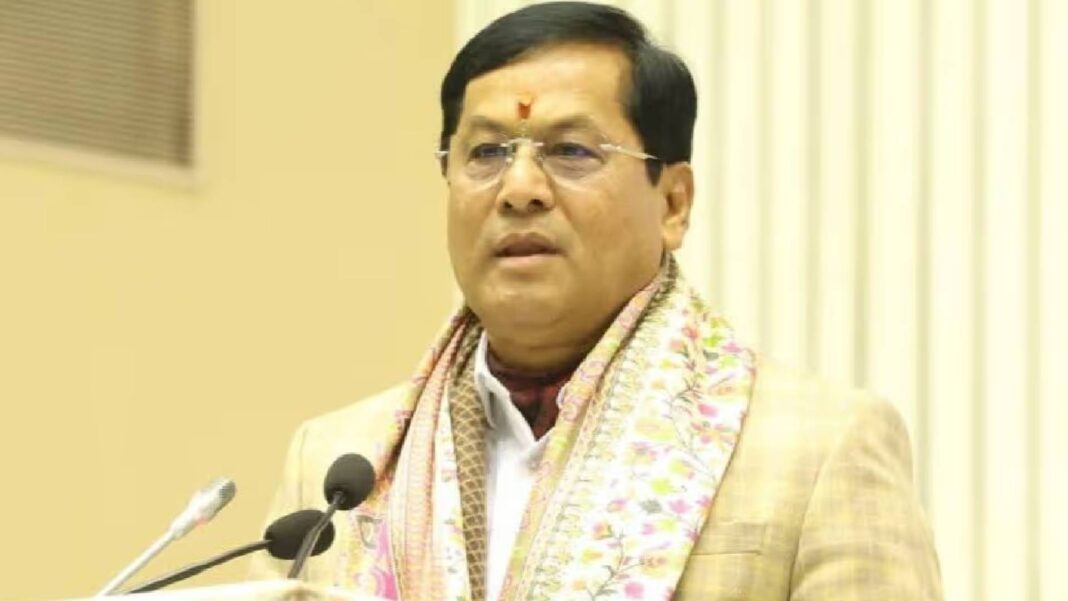
Business Secretary Peter Kyle told MPs during debate that the government’s approach was not motivated by Jingye’s nationality. “Our decision to proceed with this Bill to take these powers now has absolutely nothing to do with the national origin of the current owners,” Kyle said.
Jingye’s Claim and Beijing’s Warning
Jingye has consistently argued that it poured more than £1.2 billion into British Steel after acquiring the company in March 2020. The firm has said the Scunthorpe plant was losing approximately £700,000 per day by 2025, which it attributed to difficult market conditions, US tariffs, and the rising cost of transitioning to lower-carbon production.
In March 2026, Sky News reported that the UK government had offered Jingye less than £100 million to settle the dispute — far short of the £1 billion Jingye had previously sought. The Department for Business and Trade confirmed at the time that discussions were ongoing, saying the government was seeking “a pragmatic and realistic solution to secure the long-term future of the site.”
Beijing has backed its company’s position. According to the House of Commons Library research briefing published on the bill, China’s government urged the UK “to act prudently and respect the wishes of firms and market principles,” and said it would “take strong measures to protect the legitimate rights of Chinese companies,” including Jingye.
Why Britain Moved to Nationalise
Prime Minister Sir Keir Starmer announced on May 11, 2026 that a commercial sale of British Steel was no longer viable after months of failed negotiations with potential private buyers and with Jingye itself. “A commercial sale has not been possible, and now a public test could be met,” he told supporters.
His announcement came as spending figures mounted. According to the UK’s spending watchdog, the cost of supporting British Steel was expected to reach £615 million by June 2026. Running the plant was costing the public purse more than £1 million per day at the time of the Commons debate.
The case for keeping the Scunthorpe site in operation centres on its unique role as the UK’s last producer of virgin steel — steel smelted from raw iron ore rather than recycled scrap. Losing that capability, ministers argued, would leave Britain dependent on foreign suppliers for steel used in railways, large-scale construction, and defence infrastructure. Gareth Stace, director-general of trade body UK Steel, said nationalisation offered “vital certainty” to the 2,700-strong Scunthorpe workforce. “Maintaining domestic production capability for British Steel’s products is essential not only for economic growth but also for our national security and resilience,” Stace said.
The Legal Terrain
The question of compensation is legally complex. The Steel Industry (Special Measures) Act 2025, passed in the April 2025 emergency sitting, made no provision for immediate payment to Jingye. A compensation mechanism exists under the act but is subject to further regulations that the UK government has not yet introduced.
Former Business Secretary Jonathan Reynolds had previously stated that British Steel’s market value was zero, suggesting no compensation was due at all. That position has since shifted. Under the new nationalisation bill, officials say an independent valuation of the business will be conducted once legislation is in place, with any compensation for Jingye to be determined on that basis, according to reporting by BM Magazine.
Legal analysts have pointed to the UK-China Bilateral Investment Treaty, in force since 1986, as the potential framework for any arbitration Jingye might pursue. The Kluwer Arbitration Blog noted that such disputes face jurisdictional complications under Chinese bilateral investment treaties, which typically limit arbitration scope to disputes over the “amount of compensation” — meaning a disagreement over whether compensation is owed at all could face a threshold challenge before any hearing on the sum takes place.
Jingye has reportedly retained City law firm Linklaters to explore its options for recovering the money invested in the plant before the government seized control, Sky News reported in July 2025.
Parliamentary and Political Divisions
The bill passed its Commons stages with broad Labour support, but drew reservations across the aisle. Liberal Democrat business spokesperson Sarah Olney said her party backed the legislation “as a temporary emergency and targeted step aimed specifically at turning around British Steel before it can be returned to the private sector.”
Conservative shadow business minister Dame Harriett Baldwin was more critical, arguing the bill “lacks any credible exit plan” and calling on the government to actively pursue a private-sector buyer for any nationalised assets, with progress reported to Parliament every six months.
Background
Jingye Group, a Chinese steelmaking conglomerate, acquired British Steel in March 2020 for approximately £50 million after the company entered insolvency. At the time, the government welcomed the deal as securing more than 3,200 jobs across Scunthorpe, Skinningrove, and Teesside, and Jingye pledged to invest £1.2 billion over ten years. Between 2022 and 2025, Jingye and the UK government held repeated discussions on converting Scunthorpe’s blast furnaces to electric arc furnaces, but no agreement was reached. In April 2025, the government acted under emergency legislation after concluding that Jingye had been preparing to shut the furnaces — a step that would have ended Britain’s domestic capacity to produce primary-grade steel. Business Secretary Reynolds said at the time that Jingye had not been negotiating “in good faith.”
What Happens Next
The Steel Industry (Nationalisation) Bill must now pass through the House of Lords before it can receive Royal Assent and become law. Once enacted, the government will commission an independent valuation of British Steel, with any compensation payable to Jingye determined on that basis. Jingye has made clear it intends to press its claim through all available channels, and the involvement of Linklaters suggests the possibility of formal legal proceedings if a negotiated settlement is not reached. The Chinese government’s warning of “strong measures” to protect Chinese investors signals that the dispute carries the potential to affect wider UK-China trade relations. No date has been set for the Lords committee stage.