
Macron to Visit Syria in First Trip by a Western European Head of State Since Assad’s Fall
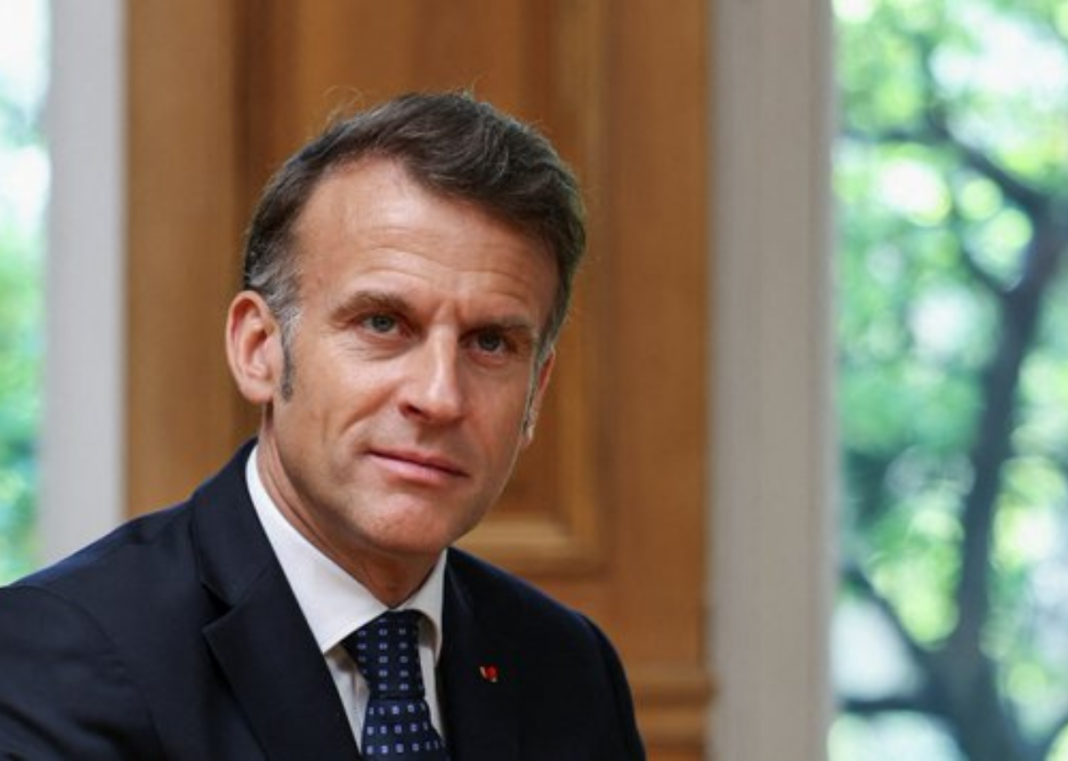
French President Emmanuel Macron will visit Syria for talks with President Ahmed al-Sharaa on strengthening bilateral relations and discussing regional issues, Syria’s presidential media directorate announced on Sunday, July 5. Macron will be accompanied by a delegation of investors and representatives from French companies, and will hold a roundtable session with al-Sharaa and Syrian delegations. No date for the visit was given. The trip will make Macron the first Western European head of state to visit Damascus since the fall of Bashar al-Assad’s regime in December 2024.
Syria’s state news agency SANA confirmed the visit, citing the presidential media office as saying Macron is expected to travel to Syria “to discuss ways of strengthening bilateral relations and issues of common interest.” The inclusion of a business delegation alongside the diplomatic programme signals that France intends the visit to advance concrete economic engagement, not only political symbolism.
A Relationship Built Through Cautious Steps
The visit is the product of a diplomatic relationship that has developed methodically over the eighteen months since Assad’s fall. Al-Sharaa visited France in May 2025 at Macron’s invitation, holding talks at the Élysée Palace focused on bilateral relations and Syria’s reconstruction prospects. At that meeting, Macron said he hoped to help Syrian authorities move toward “a free, stable, sovereign Syria that respects all components of Syrian society.” The two sides reaffirmed the importance of respecting Syria’s sovereignty and territorial integrity and discussed opportunities to deepen cooperation.
France transferred approximately €32 million to Damascus earlier this year — funds seized by French courts from Rifaat al-Assad, the former president’s uncle — in one of the most concrete early signals of France’s intent to convert political goodwill into material support for Syria’s transitional government.
The Economic Logic
French officials have framed Macron’s upcoming visit not simply as a diplomatic outreach but as a targeted economic mission. By bringing firms active in infrastructure, energy, and reconstruction sectors, Paris aims to position itself early in Syria’s recovery landscape. The underlying calculation is explicit: economic presence can translate into long-term political influence at a moment when Western engagement with Damascus remains limited and Chinese and Gulf Arab competitors are also positioning themselves in Syria’s reconstruction market.
Syria’s economy was devastated by more than a decade of civil war under Assad, with the World Bank estimating reconstruction costs in the hundreds of billions of dollars. The lifting of the bulk of US and European Union sanctions on Syria in early 2025, following Assad’s removal, has opened the legal space for Western companies to re-engage with the country for the first time in years. France’s decision to move early — ahead of most EU partners — reflects a strategic calculation that first-mover advantage in Syria’s reconstruction will yield outsized influence over its political trajectory.
France as Mediator Between Damascus and the SDF
Beyond reconstruction, France occupies a unique mediating role in Syria’s most sensitive outstanding internal political question: the relationship between al-Sharaa’s government and the Syrian Democratic Forces, the Kurdish-led militia that controls northeastern Syria and remains France’s primary military partner in the fight against the Islamic State remnants.
Paris has publicly endorsed the recent agreement between the Syrian government and the SDF, describing it as “the best opportunity for both parties,” and confirmed it is actively working to support its implementation. France’s leverage derives from a decade of military cooperation with the SDF in northeastern Syria, where French forces maintain bases in the Deir ez-Zor and Hasakah regions. French officials say Paris is maintaining “equal distance” from both the government and the SDF while relaying messages and monitoring commitments under the agreement.
This triangular position — supporting al-Sharaa’s government diplomatically and economically while maintaining a military relationship with the SDF — gives France a degree of influence over Syria’s internal stabilisation process that no other Western country currently holds.
The Israeli Dimension
France has also positioned itself on Syria’s most internationally contested bilateral relationship. On Israeli violations of Syrian sovereignty — including Israeli military operations in the buffer zone and around the Golan Heights — France’s position is that it hopes Israel will adhere to international law. A French spokesperson said both Syrians and Israelis were “open to a new round of negotiations” and that France was prepared to host such talks, though no timeline had been set. That offer reflects Paris’s broader ambition to play a constructive role across Syria’s multiple overlapping diplomatic challenges simultaneously.
Al-Sharaa’s Background and France’s Conditions
Al-Sharaa’s past presents a complication that France has navigated carefully. He headed Hayat Tahrir al-Sham, the Islamist group that spearheaded Assad’s downfall after leading a rebellion in Syria’s northwest. HTS formerly had links to al-Qaeda, though al-Sharaa severed those ties and rebranded the movement. He remains subject to a UN travel ban, meaning France likely had to request a UN exemption for his Paris visit last year, as was the case for his earlier trips to Turkey and Saudi Arabia.
French officials have said Paris is aware of al-Sharaa’s past and demands “no complacency” with terrorist movements operating in Syria, while also maintaining that engagement with the transitional government is the most effective path toward the stable, inclusive Syria that France says it seeks. On violence in Syria’s coastal region and in Suwayda — areas that have experienced sectarian and security incidents since Assad’s removal — France has adopted a firm tone, with a spokesperson stating: “There will be no impunity.”
Regional and Global Impact
Macron’s visit will be the most high-profile Western state visit to Damascus since the end of Assad’s rule and will set a template for broader European re-engagement with Syria at a moment when the EU has been debating the pace and conditionality of its own diplomatic normalisation with the new government. Several EU member states have been more cautious than France about the speed of engagement, citing concerns over al-Sharaa’s Islamist past, the treatment of religious minorities, and the unresolved status of the SDF. Macron’s visit — particularly if it produces concrete investment commitments or agreements — will apply implicit pressure on Brussels to accelerate its own approach.
For Syria, a Macron visit accompanied by French companies carries economic and political significance that goes beyond the bilateral relationship. It signals to Gulf Arab states, Turkey, and China — all of which have been active in positioning themselves for post-war Syria — that Western actors are re-entering the field, increasing competition for influence and potentially improving Damascus’s leverage in negotiations over reconstruction terms.
Background
Bashar al-Assad’s government collapsed in December 2024 after a rapid offensive by a rebel coalition led by HTS swept through Aleppo and Damascus following more than 13 years of civil war. Ahmed al-Sharaa, also known by his nom de guerre Abu Mohammad al-Jolani, was named Syria’s interim president and has led a transitional government since then. France was among the first Western countries to engage diplomatically with the new Syrian government, hosting al-Sharaa in Paris in May 2025. The European Union lifted most of its sanctions on Syria in early 2025, reopening legal space for European companies to operate in the country. France maintains military forces in northeastern Syria as part of the international coalition against IS, giving it a unique operational presence that no other Western European state shares.
What Happens Next
No date for Macron’s Damascus visit has been confirmed as of Sunday, July 5. The visit’s programme is expected to include a bilateral summit with al-Sharaa, the roundtable session with French and Syrian business delegations, and potentially additional meetings with Syrian civil society or institutional figures. Any investment commitments or economic agreements produced during the visit will be closely watched by EU partners, competing regional powers, and Syrian civil society groups monitoring whether Western economic engagement comes with meaningful human rights and governance conditions attached.