
India’s Rupee Hits Record Low as Iran War Lifts Oil
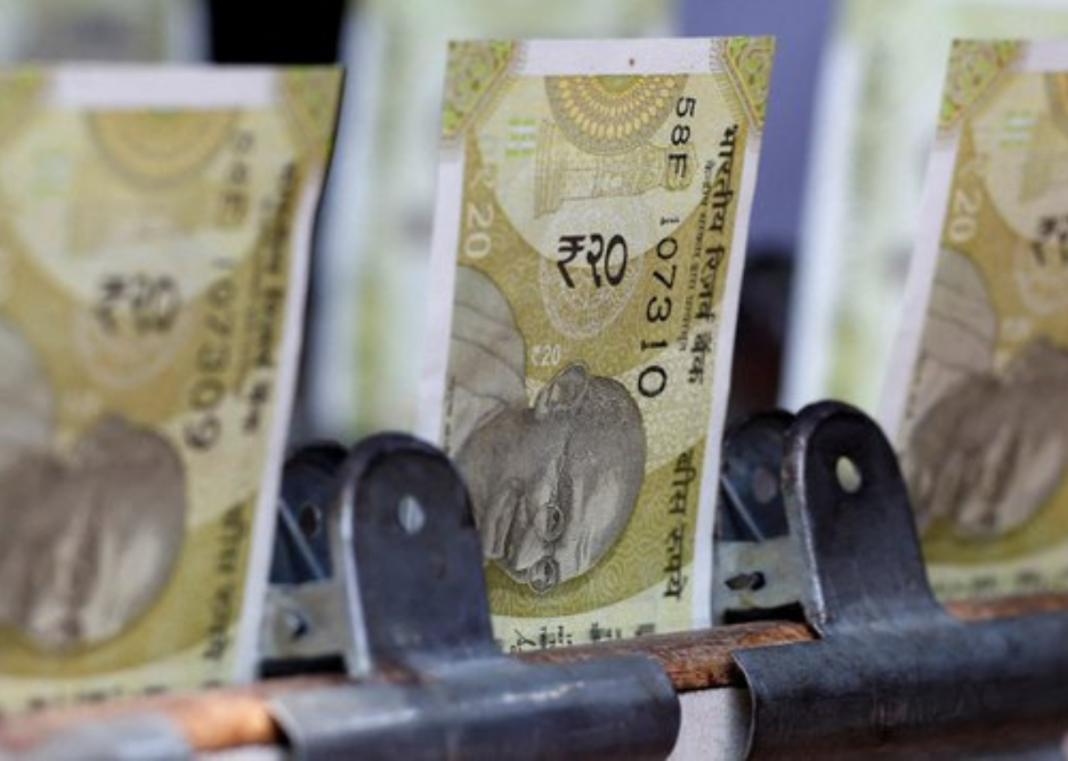
The Indian rupee touched an all-time low on Wednesday, May 13, settling at 95.7050 against the U.S. dollar and briefly hitting 95.7950 during the session — its weakest level on record. Currency traders in Mumbai said the currency is expected to remain under pressure on Thursday, with oil prices near $106 a barrel and the outcome of U.S. President Donald Trump’s summit with Chinese President Xi Jinping capable of moving markets sharply in either direction.
The rupee is expected to open in the 95.70 to 95.80 range, traders said, after settling at 95.7050 per U.S. dollar on Wednesday, when it hit a lifetime low of 95.7950. Yahoo!
Brent crude was largely steady near $106 a barrel, with investors awaiting a meeting between Trump and Chinese President Xi Jinping, with the Iran war in focus. Yahoo!
The war between the United States, Israel, and Iran — now in its eleventh week — has become the central variable in global oil markets. Iran’s control over access to the Strait of Hormuz, through which more than 20 percent of the world’s oil supply passes, has kept energy prices elevated and injected sustained volatility into currencies of oil-importing nations. India, which imports roughly 85 percent of its crude requirements, sits at the sharp end of that exposure.
For an economy like India, which imports 85 percent of its crude, the surge in Brent prices to around $107 per barrel has created a massive demand for dollars, leaving the rupee vulnerable. Republic World
Trump in Beijing — Iran in the Room
Trump arrived in China on Tuesday, May 13, for a summit that carries far broader stakes than originally planned when the visit was first announced earlier this year. Trump delayed his planned China visit in March to give the war — which he said would be resolved in a matter of weeks — time to play out. It has not. CNN
Trump is expected to encourage Xi to push China-ally Iran to reopen the Strait of Hormuz, a chokepoint vital to oil trade, and agree to a peace deal. Travelling with Trump are top officials and more than a dozen business leaders including Tim Cook and Elon Musk, according to CNN. CNN
Yet Trump publicly downplayed the Iran dimension before boarding Air Force One. “I don’t think we need any help with Iran,” Trump told reporters on Tuesday before his flight. CNN
Analysts described that statement as negotiating posture rather than strategic reality. “The war in Iran has given President Xi sources of leverage that he would not have anticipated having at the beginning of this year,” said Ali Wyne with the International Crisis Group. Wyne noted that Washington will need rare earth minerals from China to rebuild its stockpile of missile interceptors depleted during the conflict. NPR
Analysts say China may seek changes in U.S. policy toward Taiwan if it were to pressure Iran to reopen the Strait of Hormuz. Beijing has so far been careful not to commit. China has been “holding off on putting any pressure on Iran to end the conflict, just waiting for this visit,” said Christopher Heurlin, an associate professor of government and Asian studies. Al JazeeraAl Jazeera
The key question is whether the meeting will yield any progress on the Iran conflict, ING said in a note. Some hope China could exert pressure on Tehran to strike a deal with the U.S. and allow energy flows through the Strait of Hormuz to resume. MarketScreener
India’s Economic Strain
The rupee is now the worst-performing Asian currency of 2026. The local currency has depreciated 6.02 percent so far this calendar year, with the twin pressure of higher oil import bills and foreign portfolio investor outflows continuing to drive dollar demand. The Statesman
Since the start of 2026, overseas funds have pulled out over $21 billion from Indian markets, surpassing the total outflows of the previous year. The combination of a strengthening dollar, elevated U.S. bond yields, and expensive domestic equity valuations has made Indian assets less attractive to foreign capital at precisely the moment India’s import bill is rising. Republic World
In a decisive move to protect foreign exchange reserves, the Indian government on Wednesday increased import tariffs on gold and silver, raising them from 6 percent to 15 percent. The measure follows a public appeal by Prime Minister Narendra Modi last Sunday, in which he urged citizens to refrain from buying gold for one year to conserve foreign exchange. Republic World
The government is also looking beyond import duties. Nomura said in a note that more policy measures are likely in the coming weeks and months, including steps to discourage imports such as electronics, tighter rules under the liberalised remittance scheme — which allows residents to take up to $250,000 out annually — and the potential issuance of a diaspora bond. MarketScreener
India has raised import duties on bullion specifically to contain the trade deficit, Reuters reported, which could widen further due to higher oil imports and lead to a significant expansion in the current account deficit.
The Oil Market Cannot Wait Long
Even if the Trump-Xi summit produces a positive signal on Iran, energy markets may not recover quickly. “If the Strait of Hormuz opens today, it will still take months for the market to rebalance. And if its opening is delayed by a few more weeks, then normalization will last into 2027,” said an analyst cited by CNBC. That timeline does not account for the time it could take to clear mines Iran may have left in the strait. CNBC
Iran’s ambassador to China, Abdolreza Rahmani Fazli, took to social media on Tuesday to reinforce his country’s position with Beijing. He pressed Tehran’s case directly, saying that the relationship between the two countries is too strong for the U.S. to overcome. CNBC
Background
The conflict between Israel and Iran began with Israeli strikes on June 13, 2025. The U.S. followed with strikes on Iranian nuclear facilities, which Iran’s parliament responded to by voting to close the Strait of Hormuz. The Strait of Hormuz is key to the global economy, with more than 20 percent of the world’s oil supply and much of its liquefied gas from countries including Iran, Saudi Arabia, and the United Arab Emirates passing through the strait. A brief ceasefire was declared in late June 2025, but fighting resumed. The conflict entered its eleventh week by mid-May 2026, with no formal peace agreement in place and the strait’s status remaining the central point of global energy risk. strategicstudyindia
What Happens Next
Trump and Xi Jinping are scheduled to hold formal bilateral talks in Beijing on Thursday, May 14, with Iran, trade, and Taiwan expected to feature prominently. There are widespread expectations that China will announce plans to purchase additional soybeans and other farm goods as well as Boeing aircraft, and there is talk of a process to formalise the trade truce between the two nations. Any statement from the summit regarding the Strait of Hormuz or a fresh peace framework would immediately affect Brent crude pricing and, by extension, the rupee. Nomura has indicated further Indian policy measures are expected within weeks, potentially including the diaspora bond and tighter outflow controls. Indian currency traders will be watching Beijing closely for any signals from the summit before markets open on Friday. NPR