
Yen Touches 160 for Third Straight Session as Japan’s $73bn Intervention Evaporates
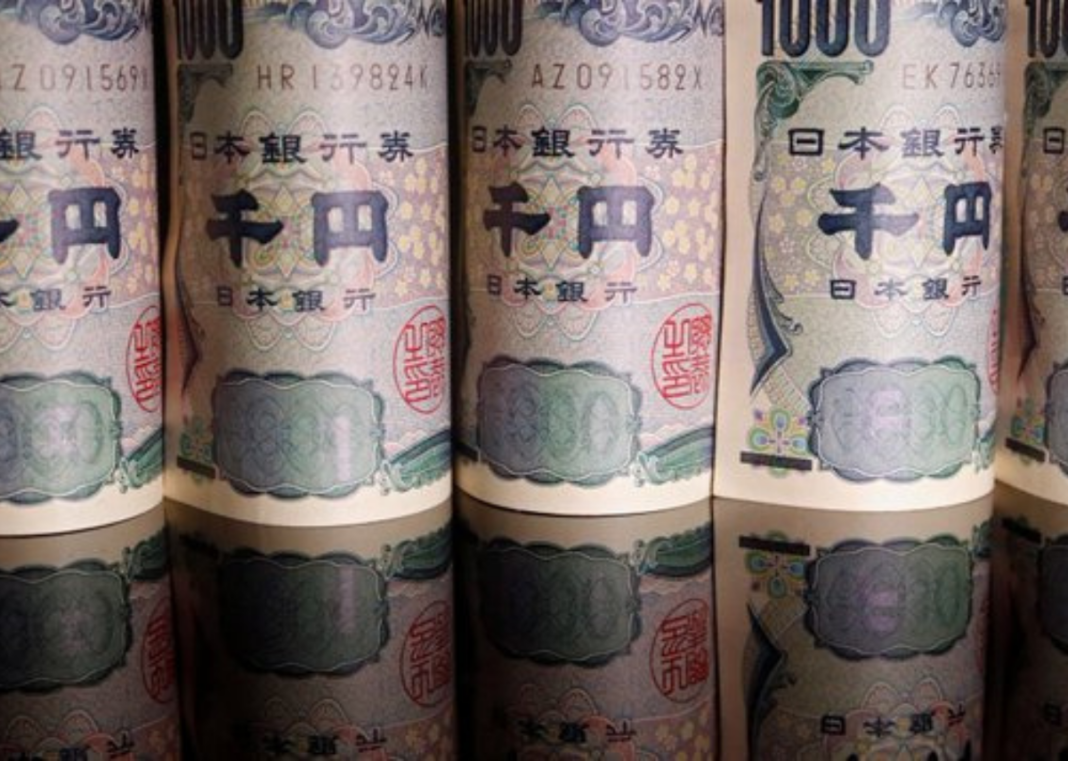
The Japanese yen tested the 160-per-dollar barrier for the third consecutive session on Friday, June 5, prompting renewed verbal warnings from Japanese officials, as the US dollar extended a weekly gain driven by safe-haven demand linked to ongoing Gulf tensions. The yen is now on track for a fourth straight week of decline — a streak not seen since February — having largely reversed the gains secured by Japan’s record intervention campaign over the past month at a cost of $73 billion. CBS NewsCBS News
Finance Minister Satsuki Katayama said on Friday that Japan is ready to respond appropriately at any time on foreign exchange and reserves the right to take “decisive action” against excessive volatility. CBS News
How Japan Got Here
The 160 level did not appear suddenly. The yen slid to a near two-year low of 160.725 per dollar on April 30, before jolting to as strong as 155 in what is believed to have been multiple bouts of yen-buying intervention. But the currency has ground weaker ever since, spurring expectations of further action by Tokyo. Discovery Alert
Data released on Friday showed Japan spent 11.7 trillion yen ($73.14 billion) since April to support the yen, the largest-ever intervention round in a single month. Yen-buying intervention requires selling foreign assets, of which Japan held about $1 trillion at the end of April. Discovery Alert
A previous intervention on April 30, when the yen hit 160.7, saw Japan spend as much as 5.48 trillion yen ($35 billion) in a single day, just shy of the $36.8 billion spent in July 2024. ThePrint
Friday’s return to 160 wiped out the gains from that entire campaign in a matter of weeks. The scale of capital deployed versus the brevity of the relief it delivered has sharply concentrated market attention on what Tokyo will do next — and whether it can afford to do more.
What the Officials Said
“With regard to foreign exchange, we will respond appropriately at any time as necessary,” Katayama said at a press conference after the government finalised an extra budget. NBC News
Finance Minister Katayama also warned that authorities were ready to respond to forex as necessary at any time, adding that Bank of Japan Governor Kazuo Ueda shared many of the same views. Katayama said she and Ueda were largely in alignment and that Ueda and Prime Minister Sanae Takaichi held “very constructive discussions” in their recent meeting. Wikipedia
The coordinated messaging between the finance ministry and the central bank is a standard precursor to intervention. In 2024, similar language preceded two rounds of dollar-selling operations totalling nearly $70 billion across a three-month period.
Analysts were sceptical about whether words alone will hold the line this time. Brent Donnelly, president of analytics firm Spectra Markets, wrote: “Intervention odds click above zero as 160 nears and click substantially higher if 162 trades.” CBS News
Donnelly added that previous intervention efforts in late April delivered only a fleeting impact, and that the dollar would need to sustainably weaken below 155 to inflict any meaningful damage on the prevailing uptrend. CBS News
The Middle East War and Oil’s Role
The structural force pushing the yen lower is Japan’s vulnerability to the Middle East conflict. Japan imports the vast majority of its oil from the Gulf region, and higher crude prices act as a direct tax on the economy — raising import costs, widening the trade deficit, and applying downward pressure on the yen as more dollars are sold to pay for energy.
“Upward pressure on crude oil prices is making it easier for yen-selling pressure to build,” said Hirofumi Suzuki, chief FX strategist at SMBC. “My view is that the ‘line in the sand’ is probably not a precise level, but the 160–161 area for dollar/yen is likely being watched,” he said, referring to the likelihood of further intervention. U.S. News & World Report
Governor Ueda was scheduled to deliver a speech on Friday that markets expected to reveal his thinking on the prospects of a June rate hike, with the war in Iran raising price pressures. “Governor Ueda is likely to maintain a positive stance toward a rate hike, while also referring to uncertainty surrounding the situation in the Middle East,” Suzuki said. “He is likely to avoid providing any definitive signal.” NBC News
The BOJ Rate Decision Ahead
The Bank of Japan will next review interest rates on June 15–16. It considers steady rises in wages and prices as essential conditions for any further rate hike. CBS News
Japan’s real wages climbed 1.9 percent in April from a year earlier, government data showed on Friday, marking a fourth consecutive monthly gain. That sustained wage growth is precisely the condition BOJ policymakers have said they need to see before tightening further — and it arrives ahead of a meeting at which the market is watching closely for a hike. CBS News
The BOJ is expected to raise interest rates unless a sharp escalation in the Middle East conflict upends markets, as rising fuel costs from the energy shock add to mounting price pressure. A rate hike would narrow the interest rate differential between Japan and the United States — one of the primary mechanical drivers of yen weakness — and could provide a more durable floor for the currency than intervention alone. South China Morning Post
The US Dollar’s Support
The yen’s weakness is not purely a Japan story: the dollar is gaining across the board. US job openings rose sharply to 7.618 million in April, up 731,000 from the previous month and well above the roughly 6.88 million economists had expected, according to the US Bureau of Labor Statistics. This marks the highest level since late 2024. nus
The stronger jobs data reinforced expectations for a steadier US policy path compared with other major economies, lifting the dollar against pairs including the euro and sterling. nus
The Commonwealth Bank of Australia’s strategist Kristina Clifton said: “The US labor market is improving after weakness in 2025. Combined with high inflation, we expect the Federal Reserve to begin an interest rate tightening cycle in December 2026.” Markets were pricing in roughly 18 basis points worth of Fed rate hikes by December, she said. U.S. News & World Report
A Fed tightening cycle beginning in late 2026 would mean the US-Japan interest rate differential widens before it narrows — a scenario that structurally supports dollar strength against the yen and complicates Tokyo’s efforts to stabilise its currency through intervention alone.
The Broader Currency Market
Elsewhere, the Australian dollar fell 0.05 percent to $0.7177 and the New Zealand dollar dipped 0.03 percent to $0.5924. Bitcoin slid to a two-month trough and last traded 0.75 percent lower at $66,985.26, while ether similarly hit a three-month low at $1,869.33. U.S. News & World Report
Background
The yen came under sustained pressure from the onset of the Middle East conflict, which began when the United States and Israel launched a military campaign against Iran in early 2026. Japan’s dependence on Gulf oil imports made it acutely exposed to the resulting energy price surge. In March 2026, Vice Finance Minister for International Affairs Atsushi Mimura told reporters that concern was growing over rising speculative activity in both the crude oil futures market and the foreign exchange market, and that the government would take decisive action if necessary. The 160 level first triggered major intervention in July 2024, when Tokyo spent nearly $37 billion in a single operation — a record at the time — to halt the yen’s slide. The April 2026 campaign eclipsed that figure by a factor of two. A brief two-week ceasefire in April 2026, during which the US, Iran and Israel agreed to pause hostilities, allowed the yen to rebound toward 158.5 per dollar, but the currency resumed its decline as negotiations failed to produce a lasting agreement. South China Morning Post + 2
What Happens Next
The Bank of Japan’s June 15–16 policy meeting is the next major domestic catalyst, with markets watching Governor Ueda’s Friday speech for early signals on whether a rate hike is likely. The yen is on track for a fourth consecutive week of losses, and any failure to hike on June 16 risks accelerating the slide toward levels — around 162 — that analysts say would substantially raise the probability of direct currency intervention. Japan holds approximately $1 trillion in foreign assets available for yen-buying operations, giving Tokyo significant firepower, but the speed with which the April campaign’s gains were reversed has raised questions about the durability of any further action without a fundamental shift in the interest rate differential driving the dollar higher. NBC News + 2