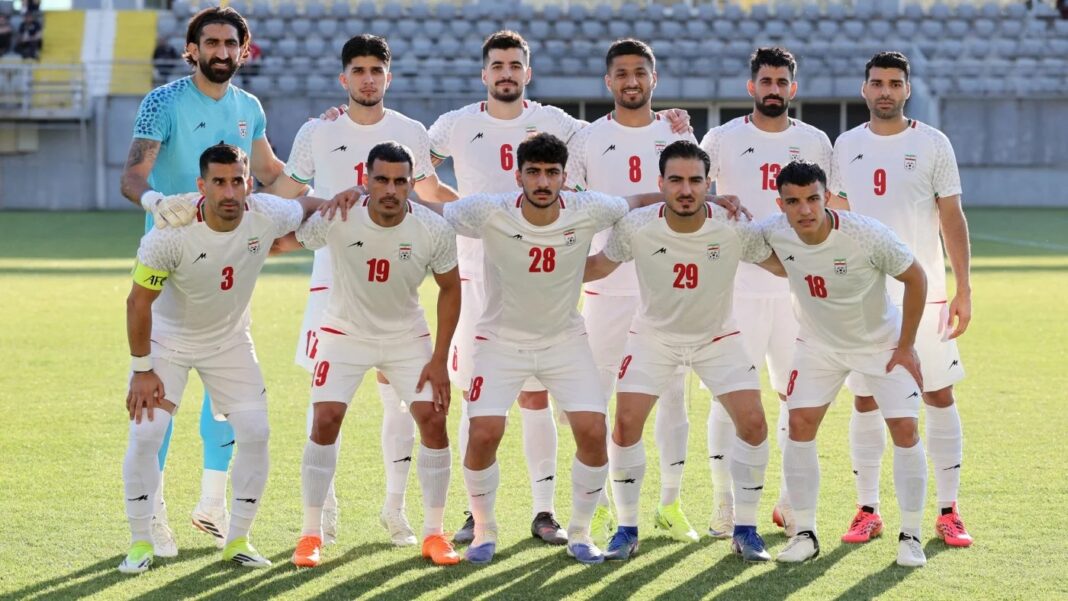

The United States has granted visas to Iran’s football players for the 2026 FIFA World Cup but has denied entry to several members of the squad’s administrative staff, Iranian media and U.S. officials confirmed on Friday and Saturday. A White House official told Reuters on Friday that the players had received their visas, after Iran’s ambassador to Mexico, Abolfazl Pasandideh, said on Thursday that they had not. Iran’s delegation departed Antalya, Turkey, for Tijuana, Mexico, on Saturday, June 6, and was scheduled to arrive in the early hours of Sunday, June 7.
Iran’s semi-official news agency Tasnim reported that the staff members denied visas include Mehdi Kharati, the executive director; Hedayat Mombini, the secretary general of the football federation; and Mohsen Motamedkia, the media director. Those three will travel to Mexico alongside the squad while efforts to secure their U.S. entry documents continue, Tasnim said.
U.S. Secretary of State Marco Rubio drew a clear line on what Washington would and would not accept. “We have no problem with the athletes, as we stated earlier, or their support staff,” Rubio said during a House Appropriations subcommittee hearing. “But what we’re not going to allow is for them to embed in their delegation a bunch of people that we know have nothing to do with athletics and have ties to the IRGC or things of that nature.”
Mehdi Taj, a former Islamic Revolutionary Guard Corps commander who now serves as president of Iran’s football federation, was denied entry for the tournament draw in Washington in December. The New York Times reported that Taj’s visa was rejected for the World Cup as well.
Iran’s ambassador to Mexico offered a pointed response to the situation. Pasandideh said through a Spanish interpreter at the Iranian embassy in Mexico City: “Iran’s participation in the World Cup — even on the soil of what is seen as its enemy — shows that Iran seeks peace.” Pasandideh also said the U.S. had never formally stated it did not want Iran’s team staying on its territory.
Tehran negotiated a last-minute move of the team’s base from Arizona to Tijuana, Mexico, due to the visa issues and a growing feeling in Iran that the squad’s presence in the United States should be kept to a minimum. Iran’s training base had originally been set for Tucson, Arizona, before its football federation requested the switch to Tijuana, citing security concerns.
Iran finalised its squad on Monday, including 17 home-based players whose clubs have not played since February because of the war. Sardar Azmoun, the team’s best striker, was dropped in March, reportedly because of a social media post that angered Iranian authorities during the war.
Regional and Global Impact
Iran plays its first match on June 16 against New Zealand in Los Angeles, California. After facing New Zealand, Iran will play Belgium in Los Angeles and Egypt in Seattle. Iran and the United States could meet in the round of 32 on July 3 in Arlington, Texas, if both teams finish second in their groups.
In April, an Iranian football federation delegation turned back at Toronto’s main airport, citing their treatment by Canadian immigration, and missed a pre-World Cup FIFA gathering in Vancouver. In 2024, Canada listed Iran’s IRGC as a terrorist organisation. Al Jazeera
Iran’s sports minister said in March that it would “not be possible” for the team to participate in the World Cup, but the republic’s soccer federation said in May it was moving ahead with a team. The decision to send the squad represents a reversal of that position amid ongoing U.S.-Iran tensions.
Background
The Trump administration announced a travel ban on citizens from 12 countries, including Iran, but promised exemptions for athletes, coaches, necessary support staff, and immediate relatives travelling for the World Cup, the Olympics, or other major sporting events as determined by the Secretary of State. Iran boycotted the December 5 World Cup draw in Washington after the U.S. denied visas to senior members of its delegation, including federation president Mehdi Taj. Negotiations between the U.S. and Iran are continuing, but both sides have continued to fire on enemy targets. The federation had insisted that all players and staff be granted visas, including those who had military service in the IRGC.
What Happens Next
Staff members without U.S. visas will travel to Mexico with the team while efforts to obtain the documents continue, according to Tasnim. Rubio said he did not anticipate visa problems arising with any other competing nation. Iran’s opening group-stage match against New Zealand in Los Angeles on June 15 will require players and approved staff to cross from Mexico into the United States, meaning the visa situation for all travelling personnel must be resolved before that date. The team will travel to Mexico via Spain.