
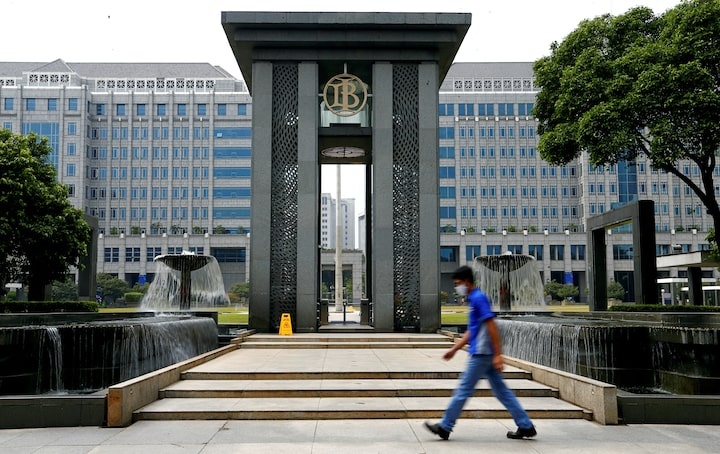

Bank Indonesia raised its benchmark interest rate by 25 basis points on Tuesday, June 9, in an unscheduled move to prop up the rupiah, which has fallen to a record low of 18,190 per U.S. dollar. The off-cycle decision — taken more than a week before the bank’s next scheduled policy meeting — lifted the 7-day reverse repo rate to 5.50%. Economists polled by Reuters had expected the bank to hold rates steady.
The rupiah strengthened slightly to 18,075 per dollar following the announcement, pulling back from the record low it touched a day earlier. The currency has fallen more than 8 percent this year and 7 percent since the Iran war erupted, making it Asia’s worst-performing currency in 2026, according to Bloomberg News.
“This rate hike is a further step to strengthen the rupiah’s exchange rate stabilisation against the impact of high global volatility caused by the war in the Middle East and a preemptive measure to maintain inflation in 2026 and 2027 within the target range,” Bank Indonesia said in a statement.
The bank added that the hike was also designed to “enhance yields to attract foreign portfolio investment inflows to Indonesia,” according to the statement cited by CNBC.
The decision marked the second aggressive tightening move in as many months. In May, Bank Indonesia delivered a larger-than-expected 50 basis point hike at its scheduled meeting and has also intervened directly in foreign exchange markets. Neither measure has succeeded in reversing the rupiah’s slide.
Jason Tuvey, deputy chief emerging markets economist at Capital Economics, said the rate increases would not be enough to stem the rupiah’s decline and waning investor confidence. “Placing the currency on a firmer footing requires more than just interest rate hikes and requires the Prabowo administration to shift away from its populist and interventionist policy agenda,” he told the Financial Times. “There’s still no sign that this is forthcoming.”
The currency’s weakness has multiple drivers beyond Middle East instability. Investor concerns include President Prabowo Subianto’s large spending plans, a ballooning fuel subsidy budget following the outbreak of the Iran war, doubts about the central bank’s autonomy, and controversial new commodity export policies.
Those concerns over Bank Indonesia’s independence deepened last week. Indonesia’s parliament passed a bill expanding the central bank’s mandate to include responsibility for economic growth and increasing lawmakers’ oversight of the institution, raising fears among analysts and investors about its independence.
The market damage has been severe. Jakarta’s equity benchmark, the Jakarta Composite, has tumbled over 35 percent year to date as investors have fled Indonesian markets since the start of 2026. The Jakarta stock index did recover, rising nearly 5 percent in Tuesday morning trade following the rate decision, according to AFP.
The central bank’s escalating currency market interventions have also drained Indonesia’s foreign exchange reserves to their lowest level in nearly two years. They dropped by $1.3 billion in May to $144.9 billion, despite the government’s $3.5 billion sale of foreign currency bonds intended to bolster reserves.
Indonesia’s currency troubles are not isolated from regional dynamics. The rupiah’s slide has been driven in part by escalating Middle East tensions that have triggered capital outflows from emerging markets more broadly. But Indonesia’s specific vulnerabilities — its oil import exposure, subsidy commitments, and political uncertainty — have made it more susceptible than most of its regional peers.
The off-cycle timing of Tuesday’s hike is itself a signal of how rapidly conditions deteriorated. The bank was originally scheduled to meet next week, but moved early as the rupiah came under mounting pressure, with its steepest three-week drop since 2020 prompting the emergency action.
Background
Bank Indonesia spent much of 2024 and early 2025 cutting rates to stimulate growth, delivering cumulative reductions of 150 basis points between September 2024 and September 2025. The May 21 rate hike to 5.25% was the bank’s first rate increase in two years, and was followed swiftly by Tuesday’s additional 25 basis point move. The rupiah’s decline accelerated sharply after the outbreak of conflict involving Iran raised global energy prices and triggered a broad flight from emerging market assets. Indonesia, as a major fuel subsidy provider and commodity exporter, faces compounded pressure from that environment. Parliament’s move to expand Bank Indonesia’s mandate — and increase political oversight — added a further layer of investor concern about the credibility of monetary policy.
What Happens Next
Bank Indonesia’s regularly scheduled policy meeting is set for next week, where officials are expected to provide fresh guidance on the rate path. Analysts at Capital Economics said they do not expect the rate hikes alone to stabilise the currency without complementary changes in fiscal policy from the Prabowo administration. The government has committed to boosting efforts to attract capital inflows, with finance and central bank officials making that pledge over the weekend of June 7–8, according to Reuters. Whether the Jakarta Composite can sustain Tuesday’s recovery will be closely watched as an indicator of investor confidence in the policy response. Further foreign exchange intervention remains likely, though reserves are already under pressure from recent market operations.