
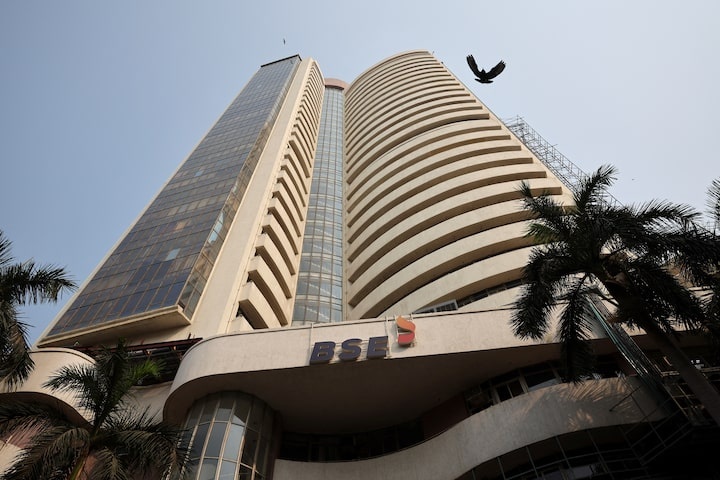

Inflows into India’s equity mutual fund schemes fell 40.40 per cent month-on-month to Rs 22,907.77 crore in May 2026, their lowest level so far this year, according to data released by the Association of Mutual Funds in India (AMFI) on Wednesday, June 10. The drop came as investor anxiety over the unresolved U.S.-Iran conflict prompted widespread caution across fund categories, Reuters reported.
The May figure marked the third straight monthly decline in equity inflows, following a peak of Rs 40,450.26 crore in March. April had already seen inflows ease to Rs 38,440.20 crore before the sharper pullback last month.
Uncertainty over a U.S.-Iran peace deal prompted investors to reduce allocations across segments, according to Reuters, which cited the AMFI data. The conflict, which escalated in the early weeks of May, rattled emerging market sentiment and contributed to broader volatility across Indian equity benchmarks.
“The moderation in net inflows during May reflects a degree of geopolitical uncertainty and investor caution; however, we view this as a phase of healthy consolidation rather than any reversal in sentiment. Having witnessed strong inflows in recent months, a cooling-off period is both natural and constructive for the market,” said Vaibhav Chugh, Chief Executive Officer, Abakkus Mutual Fund.
The decline was not uniform across all fund types. Flexi-cap funds led equity inflows in May with Rs 5,175.54 crore, followed by small-cap funds at Rs 4,945.57 crore and mid-cap funds at Rs 4,385.06 crore. Together, those three categories accounted for more than 63 per cent of all equity capital invested during the month, according to AMFI.
May marked the third consecutive month in which small-cap funds drew more inflows than mid-cap funds — a shift that began in March, ending a seven-month run from August 2025 to February 2026 in which mid-cap schemes had consistently attracted higher flows.
Analysts noted that the preference for flexi-cap structures reflects a deliberate strategy among retail investors navigating a volatile environment. “Flexi-cap’s continued dominance is a structurally sound behaviour. In a market where cap-curve leadership is shifting and earnings delivery is being scrutinised across segments, mandates that give fund managers the freedom to navigate are proving consistently attractive,” said Nitin Agrawal, Chief Executive Officer, mutual funds, InCred Money.
Despite the headline drop in equity inflows, systematic investment plan (SIP) contributions showed more resilience. Monthly SIP contributions came in at Rs 30,954 crore in May, a marginal decline of 0.52 per cent from Rs 31,115 crore in April, but May was the third consecutive month in which SIP contributions stayed above Rs 30,000 crore. On a year-on-year basis, SIP flows were up 16 per cent from Rs 26,688 crore recorded in May 2025, Outlook Money reported.
SIP assets crossed Rs 17 lakh crore for the first time, reaching Rs 17,12,126 crore at end-May, up from Rs 16,85,126 crore in April.
The debt segment delivered a sharper shock. Debt mutual funds recorded net outflows of Rs 96,948.51 crore in May, a reversal from the Rs 2,47,490.03 crore in inflows seen the previous month. Liquid funds and money market funds bore the brunt, shedding Rs 29,680.94 crore and Rs 24,691.74 crore, respectively.
Agrawal attributed the debt-side outflows to routine corporate treasury behaviour rather than a structural retreat. “The bulk of the redemptions came from liquid, money market, and overnight categories — instruments that move with corporate treasury cycles and tax payment schedules, not with investor sentiment. This is seasonal noise, not a structural retreat from fixed income,” he said.
Regional and Global Impact
The data points to how geopolitical risk far beyond India’s borders can transmit quickly into domestic capital markets. The U.S.-Iran standoff has elevated global oil price uncertainty, a particularly sensitive variable for India, which imports roughly 85 per cent of its crude oil requirements. A prolonged conflict scenario would widen India’s import bill and add pressure to the rupee, compounding the cost of risk for equity investors.
Funds of funds investing in overseas markets attracted net inflows of Rs 763.99 crore in May, 54 per cent lower than the Rs 1,660.97 crore recorded in April. Multiple fund houses have restricted fresh subscriptions in overseas schemes after the mutual fund industry’s overall overseas investment cap of $7 billion was largely exhausted, AMFI data showed.
The industry’s total assets under management contracted marginally to Rs 81.58 lakh crore in May.
Venkat Chalasani, Chief Executive of AMFI, said the industry’s AUM remained largely stable, witnessing a marginal contraction amid ongoing global uncertainties and commodity price volatility. He added that May marked the 63rd consecutive month of positive flows into equity-oriented schemes.
Background
India’s mutual fund sector has expanded rapidly over the past five years, driven by rising retail participation and digital investment platforms. The AMFI publishes monthly flow data that serves as a key barometer of domestic investor sentiment. Equity-oriented mutual funds had attracted net inflows of Rs 24,028.59 crore in January 2026 and Rs 25,977.91 crore in February before surging to Rs 40,450.26 crore in March. The U.S.-Iran conflict introduced a new risk variable into that trajectory in May. SIP contributions, which represent automated monthly investments from retail savers, have historically proved more resilient to market shocks than lump-sum flows, a pattern repeated in this latest data.
What Happens Next
AMFI will release June 2026 flow data in early July, which will indicate whether the May pullback was a one-month correction or the beginning of a more sustained slowdown. The trajectory of U.S.-Iran negotiations will remain a key watch point for fund managers. Retail folios under equity, hybrid, and solution-oriented schemes rose to 211 million in May, and the industry added a net 1.26 million folios during the month, suggesting the investor base continues to grow even as inflow volumes dip. Whether those new investors sustain or increase their allocations in June will depend, in large part, on how geopolitical conditions develop in the weeks ahead.