
Israel’s Cabinet Unanimously Votes to Recognize Armenian Genocide, Sending Measure to Knesset
Israel’s cabinet approved a resolution on Sunday, June 28, formally recognizing the Armenian Genocide, advancing legislation proposed by Foreign Minister Gideon Sa’ar that describes acknowledgment of the mass killings as a “moral and historical duty” and sends the measure to the Knesset for a final vote. The resolution passed by a unanimous vote in the Cabinet, officially recognizing the mass killing of approximately 1.5 million Armenians during the final years of the Ottoman Empire and calls on Israel to condemn efforts to deny, minimize, or distort the historical record. Traders UnionTraders Union
“The Israeli government approved a short time ago the resolution I presented to it recognizing the Armenian genocide,” Sa’ar said following the vote. “It’s never too late to do the right thing.” “This horrific genocide, which took place more than 100 years ago and regarding which there is no real dispute over the historical facts, included the murder of 1.5 million people and the destruction of an ancient cultural and historical heritage,” he said. “In my view, it is our moral obligation as Jews, and certainly as the state of the Jewish people, to adopt the decision we approved today.” The Jakarta PostThe Jakarta Post
The Path to Sunday’s Vote
Sa’ar announced on Thursday, June 25, that he would present a proposal at the government’s next meeting to officially recognize the Armenian Genocide, calling it a “moral and historical obligation.” In his Thursday night announcement on X, Sa’ar wrote: “Recognizing the genocide perpetrated against the Armenian people in the final years of the Ottoman Empire is both a moral and historical duty. We must also firmly condemn any denial, minimization, or distortion of the historical truth.” Agenzia NovaThe Japan Times
Explanatory text accompanying the proposal states that the Armenian Genocide began in April 1915 with the arrest, deportation, and killing of hundreds of Armenian intellectuals, community leaders, and members of the educated elite in Constantinople, before Ottoman authorities subsequently launched a systematic campaign against the broader Armenian population. The proposal states: “In light of this moral and historical obligation, it is proposed that the Government of Israel recognise the genocide committed against the Armenian people during the final years of the Ottoman Empire. In addition, given ongoing attempts to blur, minimise, or deny the atrocities of the Armenian Genocide, the proposal calls for condemning all efforts to distort the historical truth of these events.” Traders UnionAgenzia Nova
A Decades-Long Diplomatic Avoidance
For decades, Israel refrained from formally recognizing the Armenian Genocide while maintaining diplomatic and commercial relations with Turkey and Azerbaijan. In Israel’s Foreign Ministry’s past assessments, recognition by the Israeli government was seen as likely to lead to the expulsion of embassy staff in Ankara and the recalling of Turkey’s ambassador from Israel. Traders UnionPrime Minister’s Office of Japan
On August 1, 2016, lawmakers of the Knesset Education, Culture and Sports Committee issued a resolution recognizing the Armenian genocide and urging the government to acknowledge it as such, though successive governments stopped short of formal state recognition. In August 2025, Prime Minister Benjamin Netanyahu became the first Israeli prime minister to publicly recognize the Armenian Genocide, telling reporters who pressed him on why no prime minister had previously characterized the World War I-era events as genocide: “I just did. Here you go.” Prime Minister’s Office of JapanPrime Minister’s Office of Japan
Turkey’s Role in the Timing
The cabinet vote marks a shift in approach as tensions with Turkey have escalated in recent years. Relations between the two countries have steadily deteriorated over the past two decades and have sharply worsened since the outbreak of the Gaza war in October 2023, as well as subsequent conflicts involving Lebanon and Iran. Traders UnionGMA News Online
Relations have soured since Turkish President Recep Tayyip Erdoğan became more hostile toward Israel and closer to Hamas following the October 7, 2023 attack. On the Saturday before the cabinet vote, Israel’s Foreign Ministry sharply rebuked Erdoğan after he accused “Zionism” of threatening Turkey’s survival, calling the Turkish leader a “dictator” who persecutes opponents and backs jihadist groups. Prime Minister’s Office of JapanPrime Minister’s Office of Japan
Sa’ar told the Cabinet that despite extensive historical evidence, the Armenian genocide “remains to this day the subject of an institutionalized campaign of denial and minimization, including a manipulative rewriting of history, mainly by the Turkish government.” Officials involved in drafting the measure have stressed it should not be read narrowly as a response to Ankara. According to Israeli outlet Ynet, the resolution’s backers characterized it as “not an act of retaliation against Turkey,” framing it instead as the fulfilment of a long-overdue moral obligation rather than a punitive diplomatic signal. GMA News Online
Turkey’s Position
Turkey has long rejected the characterization of the events as genocide, arguing that the deaths occurred during civil strife and wartime conditions and disputing estimates of the number of victims. GMA News Online
Where Israel Now Stands Internationally
To date, 34 countries, including the United States and Greece, have recognized the Armenian Genocide. Israel would become the 35th. According to the proposal, 32 countries have recognized the Armenian Genocide through parliamentary resolutions, legislation, or official declarations, a figure cited in earlier government statements before the final count was updated to 34 ahead of Sunday’s vote. Israel’s decision places it alongside countries including the United States, France, Germany and Italy, all of which have formally recognized the Armenian genocide. Prime Minister’s Office of Japan + 2
Regional and Global Impact
The vote is expected to deepen an already adversarial relationship between Jerusalem and Ankara, two regional powers whose ties have steadily unravelled since October 2023 over the war in Gaza and subsequent escalations involving Lebanon and Iran. For Turkey, which has historically responded to international recognition of the Armenian Genocide by downgrading diplomatic relations or recalling ambassadors, Israel’s formal recognition adds a politically charged new front to a relationship already strained by direct rhetorical clashes between Erdoğan and Israeli officials.
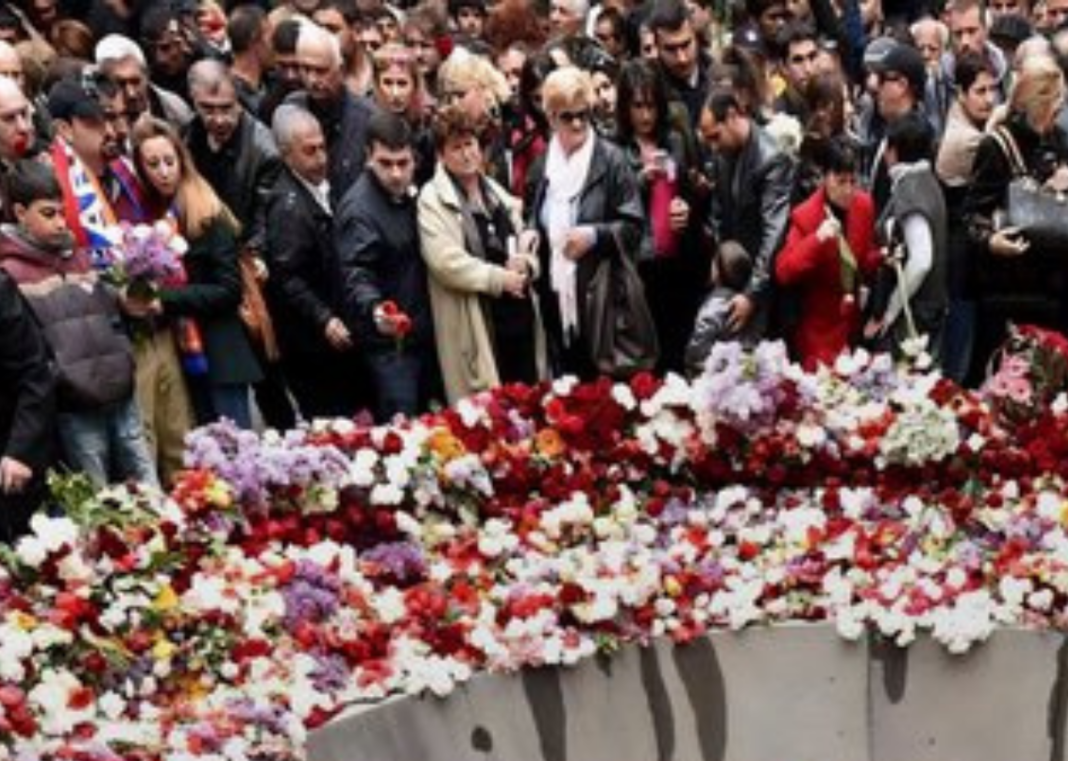
For Armenia and the global Armenian diaspora, Israel’s recognition — should it clear its remaining parliamentary hurdle — would mark a symbolically significant addition to the list of states formally acknowledging the 1915-1916 killings as genocide, given Israel’s particular historical and moral standing on questions of genocide recognition as the state founded in the aftermath of the Holocaust.
Background
The Armenian Genocide refers to the systematic deportation and mass killing of Armenians living in the Ottoman Empire, which began in 1915 and continued through 1916. According to the United States Holocaust Memorial Museum, between 664,000 and 1.2 million Armenians died, while many historians estimate the death toll reached as high as 1.5 million, making it one of the first genocides of the 20th century. Israel and Turkey have maintained diplomatic relations since 1949, with periods of close strategic cooperation alternating with episodes of significant tension, particularly following the 2010 Mavi Marmara incident and, more recently, the deterioration triggered by the Gaza war. Azerbaijan, a close security and energy partner of Israel, has also historically opposed recognition of the Armenian Genocide, adding a further layer of complexity to Israel’s past reluctance to take a formal position on the issue. GMA News Online
What Happens Next
The legislation must now be approved by the Knesset before becoming state law. The recognition is set to be brought for a Knesset vote following years of inconsistency regarding Israel’s stance on the matter. No date for the Knesset vote had been confirmed as of Sunday. Turkish officials have not yet issued a formal response to the Cabinet’s decision, though past Israeli Foreign Ministry assessments have suggested that formal recognition could prompt retaliatory diplomatic measures from Ankara, including the potential recall of ambassadors. Traders UnionEUROPE SAYS