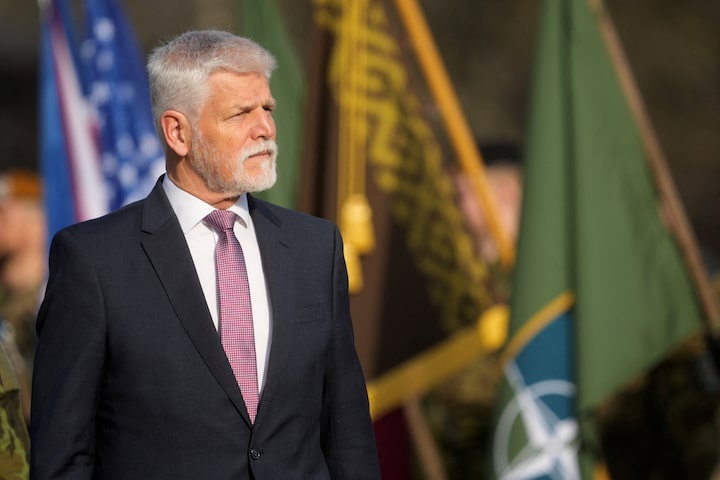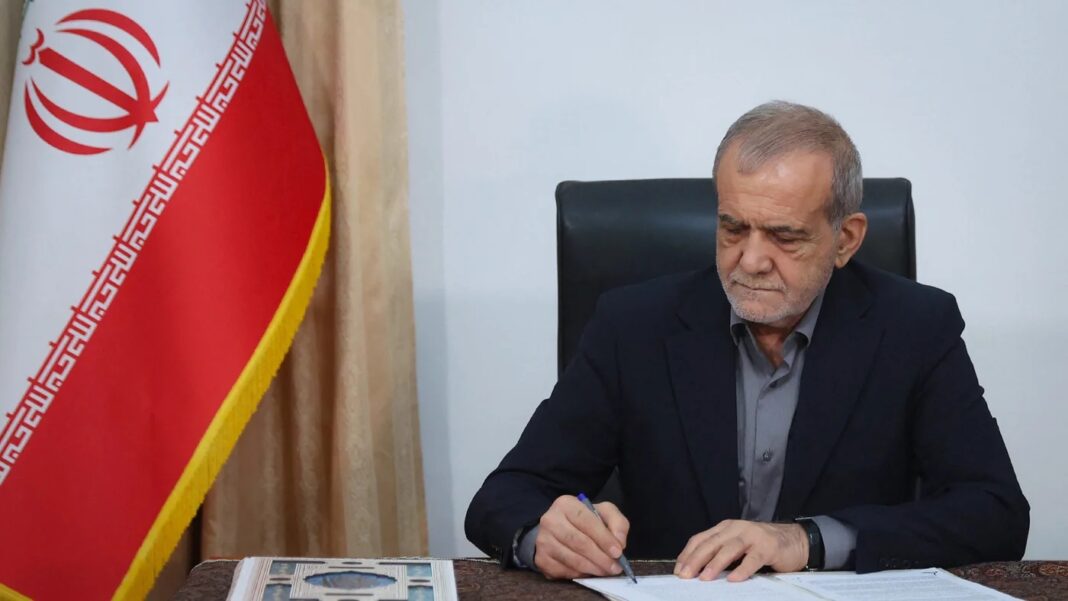

US President Donald Trump and Iranian President Masoud Pezeshkian electronically signed the Islamabad Memorandum of Understanding on June 17, extending a ceasefire in the war between Iran and the US-Israeli coalition and setting a 60-day window for further negotiations, according to Al Jazeera. Trump signed the agreement at the Palace of Versailles near Paris, while Pezeshkian signed it afterward in Tehran. Pakistan, which mediated the talks, confirmed the memorandum took effect on June 17.
Iran’s Ministry of Foreign Affairs spokesperson, Esmaeil Baghaei, told the state news agency IRNA that the text of the memorandum had been finalized with the signatures of both presidents and that “now it is time to test the implementation of the agreement.” Trump confirmed the signing to reporters as he left Versailles. “It’s signed,” he said. “I signed it in Versailles. Just signed it.”
The memorandum is a 14-point framework agreement that provides for an end to military strikes, the reopening of the Strait of Hormuz to commercial shipping toll-free for 60 days, and an end to the US naval blockade of Iranian ports. The war between the US, Israel and Iran began on February 28, though a temporary ceasefire had already suspended much of the most intense fighting starting April 8.
Pakistan’s Prime Minister Shehbaz Sharif, who brokered the negotiations, called the agreement historic. “The Memorandum has been signed by honourable Presidents of both the countries and also endorsed by me as the mediator,” he wrote on X. “May this Memorandum of Understanding serve as an enduring foundation for greater understanding, mutual respect and shared prosperity for the complete region.”
The agreement does not resolve the most contentious issue of the conflict. It contains no accord on Iran’s nuclear program or uranium stockpiles, though it calls for downgrading Iranian uranium from weapons-grade to reactor-grade following a final agreement. These questions, along with Iran’s ballistic missile program and its regional allies, are deferred to talks during the 60-day ceasefire extension. US officials say the memorandum includes Iran reaffirming a commitment not to develop a nuclear weapon, though Tehran has long denied any such intention.
The memorandum also sets a 60-day timeline for a final deal and indicates the US will rally regional partners to create a $300 billion fund for Iran’s reconstruction. Washington has also committed to easing some sanctions against Iran and issuing waivers for the export of Iranian fuel. The US waived sanctions on Iran’s oil exports for 60 days on June 21, restoring Iran’s ability to sell crude on the world market.
Both Washington and Tehran have stressed the document is not a final settlement. “It will only become a deal, as such, at the end of the 60-day negotiation period,” according to the Al Jazeera report, which cited US and Iranian statements characterizing the memorandum as a prelude to further talks rather than a concluded agreement.
Iranian negotiators have framed the outcome as a setback for Washington’s original objectives. Iran’s chief negotiator, parliamentary speaker Mohammad Bagher Ghalibaf, told the Iranian state news agency Fars that the US had failed to achieve its goals with Iran, calling the memorandum “a record of US failure.”
Iranian Supreme Leader Mojtaba Khamenei issued a written statement saying he endorsed the memorandum “despite misgivings.” Khamenei said separately that he had approved the agreement despite holding a “different view,” without elaborating further.
Regional and Global Impact
Al Jazeera correspondent Mike Hanna said the memorandum is likely to face domestic backlash in the United States, where Trump has faced pressure from the political right to take a harder line against Iran. “There’s a great deal of dissatisfaction with the memorandum of understanding, as it has been outlined to the public at this particular point, even among some Republicans who have expressed the concern that Iran is being treated leniently,” Hanna said. US Republican Senator Roger Marshall, by contrast, described the memorandum as a “winning deal” and said it was better than the 2015 nuclear agreement from which Trump withdrew the US in 2018.
The agreement’s silence on the conflict in Lebanon has raised separate concerns. Iran has pressed for the ceasefire to extend to Lebanon, where Israel and Hezbollah have continued exchanging fire since March. Israel was not party to the negotiations, and its reluctance to accept the Lebanon ceasefire framing has created tension between Trump and Israeli Prime Minister Benjamin Netanyahu.
Officials in Gulf Cooperation Council states are studying the memorandum’s language for ambiguities, particularly around the sequencing of the Strait of Hormuz reopening, given their reliance on the waterway. The International Atomic Energy Agency has also weighed in on the unresolved nuclear file. IAEA chief Rafael Grossi said following the signing that “now the technical work starts” on Iran’s nuclear programme.
Background
The war began after Israel and the US launched strikes on Iranian military and nuclear facilities, with Trump authorizing the operation following Israeli intelligence sharing and lobbying from Netanyahu. Iran responded with missile and drone strikes on Israel, US bases and US-allied states in the region, and by disrupting shipping through the Strait of Hormuz. A two-week ceasefire brokered by Pakistan began on April 8, alongside a separate ceasefire in Lebanon that began on April 16. That truce came under strain when Iran refused to reopen the Strait of Hormuz, blaming continued Israeli attacks on Lebanon, prompting Trump to impose a naval blockade on Iran on April 13 after the Islamabad Talks failed to produce an agreement. Negotiations resumed, and on June 12 Pakistan announced that the US and Iran had agreed on final text to end the war, leading to the signing five days later.
What Happens Next
The memorandum establishes a 60-day negotiating period during which the US and Iran are expected to work toward a final agreement. US officials say Iran and the International Atomic Energy Agency have separately worked out an arrangement to resume nuclear inspections, though details on timing, scope and frequency remain undefined. Talks on sanctions relief, the release of frozen Iranian assets and the final disposition of Iran’s nuclear program are scheduled to continue within the 60-day window. Netanyahu has said Israeli forces will continue to occupy southern Lebanon during this period, a position that falls outside the memorandum’s terms since Israel was not a party to the negotiations.