
Torrential Rain From Passing Typhoon Mekkhala Shuts Down Southern Taiwan as Japan Evacuates Over 2 Million
Torrential rains from a passing tropical storm shut down a swathe of southern and parts of northern Taiwan on Friday, June 26, leaving around 6 million people off work or school, while neighbouring Japan ordered more than 2 million residents to evacuate as the storm approached. Typhoon Mekkhala, now downgraded to a tropical storm, is nearing southern Japan’s Ryukyu Islands after skirting Taiwan, where it brought heavy rain to parts of the island, especially the southern regions of Kaohsiung, Tainan, and Pingtung. Al Jazeera
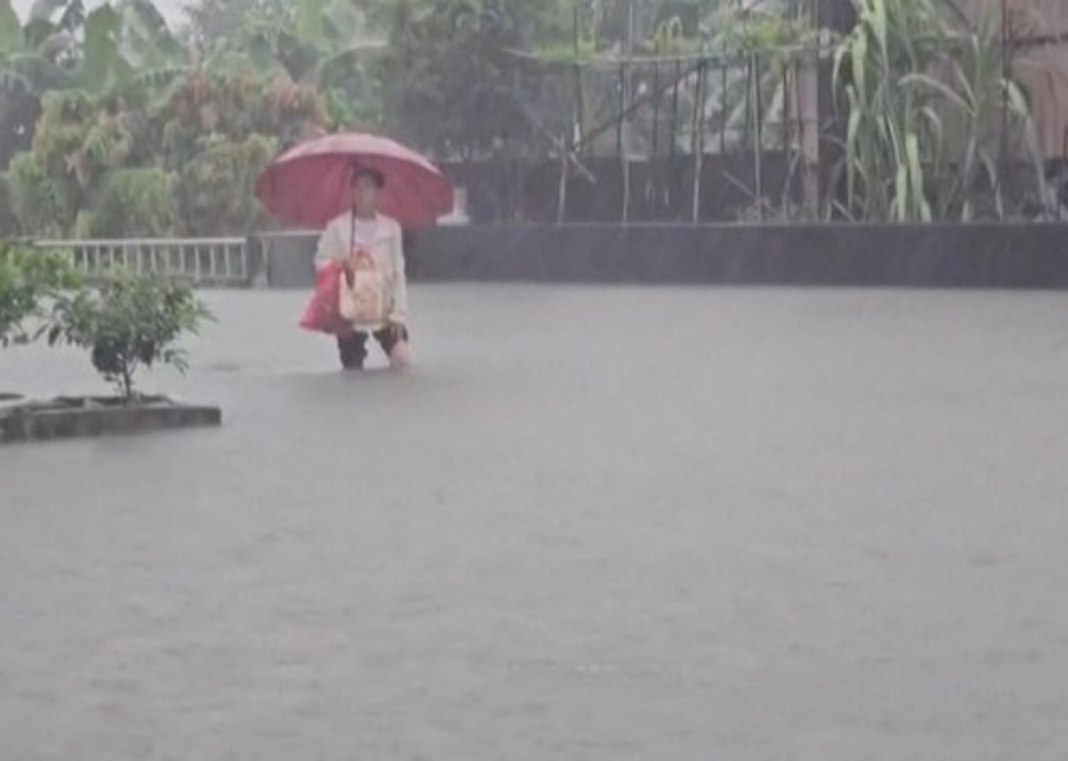
Although Mekkhala did not make direct landfall in Taiwan, its outer bands brought heavy rain to parts of the island. The governments of Kaohsiung, Tainan, and Pingtung, where more than 5 million people live, ordered offices and schools closed on Friday. Severe flooding in Tainan shut down a section of the main north-south railway line, though the separate high-speed rail line reported no problems. OCHA OPT + 2
The northern Taiwanese city of Hsinchu, home to the world’s largest contract chipmaker, TSMC, said that from noon local time, it would also close offices and schools. TSMC said in a statement that it had taken measures across its Taiwan facilities to prepare for the rain, and its factories were operating normally. OCHA OPTAl Jazeera
Rainfall Totals and Affected Population
Some 6 million people live in the four affected areas of Taiwan. In parts of largely rural Pingtung, almost a metre, or 3.2 feet, of rain has fallen since Thursday. Al Jazeera
No Casualties, but a Barrier Lake Threat
While no casualties have been reported, authorities in Hualien county on Taiwan’s east coast are evacuating nearly 200 residents from two townships downstream of a rapidly filling barrier lake in the mountains. Barrier lakes are formed when rocks, landslides, or other natural blockages create a dam across a river, normally in a valley, blocking and holding back water, hindering or even stopping natural drainage. Tehran TimesAl Jazeera
The precaution reflects painful recent history for the region. Last year, 19 people died in a different part of Hualien when another barrier lake breached its banks during Super Typhoon Ragasa, unleashing a wall of water and mud into homes. Tehran Times
Japan Bears the Brunt as the Storm Tracks North
Heavy rain and strong winds also lashed areas of southern and western Japan, where authorities warned of landslides, flooding, and swollen rivers, and ordered 2.2 million people to evacuate. More than 200 flights were cancelled, dozens of train lines halted, and many expressways closed, according to Japan’s land ministry. Al JazeeraOCHA OPT
Japan’s meteorological agency warned that a stationary seasonal rain front, being fed with warm, moist air, was causing intensifying rainfall across the country. Toyota suspended a factory in the southern region of Kyushu from Thursday afternoon through the first shift on Friday, with a decision on the second shift due later. Al JazeeraOCHA OPT
Regional and Global Impact
The closure of offices and schools in Hsinchu, even on a precautionary basis, drew particular attention given the city’s status as home to TSMC, the world’s dominant manufacturer of advanced semiconductors and a linchpin of global technology supply chains. TSMC’s confirmation that its factories continued operating normally despite the closures will be closely noted by markets and customers dependent on uninterrupted chip production, particularly given the elevated global demand for advanced semiconductors currently driving record valuations across Asian technology stocks.
For Japan, the scale of the evacuation order — more than 2.2 million people — reflects the cumulative risk posed by a stationary rain front interacting with a passing tropical storm system, a combination Japanese meteorologists have flagged as producing unusually intensified and prolonged rainfall compared with a typical typhoon passage. The suspension of Toyota’s Kyushu operations, even briefly, illustrates the direct exposure of Japan’s manufacturing base to extreme weather events of this kind.
For Taiwan, the disruption to its north-south railway line and to daily life across three populous southern regions underscores the recurring vulnerability of the island’s transport and population centres to seasonal typhoon activity, even when storms do not make direct landfall.
Background
Typhoon Mekkhala formed in the western Pacific and weakened to tropical storm strength as it approached Taiwan and the Ryukyu Islands of southern Japan. Taiwan and Japan both sit within a typhoon-prone zone of the western Pacific, with the region’s annual typhoon season typically running from late spring through autumn. Rain is forecast to continue over Taiwan for at least the next week, though it will gradually ease. Precipitation is not entirely unwelcome for Taiwan, which relies on the traditional summer and autumn typhoon season to fill its reservoirs after what are typically dry winters. Hualien county, on Taiwan’s mountainous east coast, has faced repeated barrier-lake hazards in recent years as a result of landslide activity destabilising slopes above populated valleys, a vulnerability that became acutely visible during last year’s Super Typhoon Ragasa. Tehran TimesTehran Times
What Happens Next
Taiwanese authorities in Hualien are continuing the evacuation of residents downstream of the rapidly filling barrier lake, with the operation expected to continue until water levels are assessed as stable. Rail services on Taiwan’s main north-south line are expected to resume once flooding in Tainan recedes sufficiently to allow safe operation. In Japan, authorities are continuing to monitor swollen rivers and landslide risk across the more than 2 million people placed under evacuation orders, with Toyota expected to confirm in the coming hours whether its Kyushu factory will resume operations for the second shift. Forecasters expect rain to persist over Taiwan for roughly another week before gradually easing.