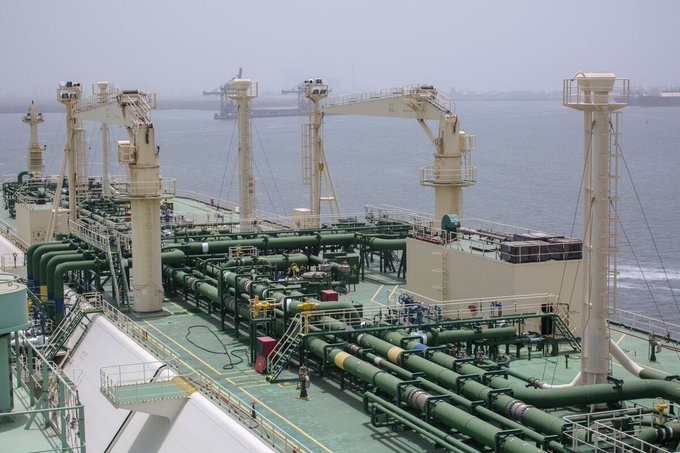

State-owned Pakistan LNG Limited issued an emergency tender over the weekend to buy a shipment of liquefied natural gas for delivery between June 30 and July 4, according to a notice posted on its website and reported by Bloomberg. Offers from suppliers were due on Monday. The tender came as a string of attacks in the Strait of Hormuz continued to disrupt the flow of LNG cargoes through the waterway, which normally carries about a fifth of the world’s supply of the fuel.
Pakistan has turned repeatedly to the spot market since March, when Iran began restricting and attacking shipping through the strait in retaliation for US and Israeli airstrikes that started on February 28. The country relies on Qatar for nearly all of its LNG, and those supplies were cut sharply once the conflict began, according to Bloomberg. Qatar’s QatarEnergy formally declared force majeure on deliveries after Iranian strikes hit infrastructure near its Ras Laffan export terminal, according to Profit by Pakistan Today.
The latest tender follows a fresh escalation in the strait. Iran’s Islamic Revolutionary Guard Corps struck the Singapore-flagged cargo ship M/V Ever Lovely with a one-way attack drone on June 25 as the vessel was exiting the strait along the Omani coast, according to US Central Command. CENTCOM said it responded the next day with strikes on Iranian missile and drone storage sites, coastal radar installations and minelaying capabilities. A second vessel, the Panama-flagged tanker Kiku, was hit by a projectile on Saturday while carrying Qatari oil toward Fujairah in the United Arab Emirates, according to Fox News.
“Commercial vessel transits through the Strait of Hormuz continue,” CENTCOM said in a statement. “US forces remain vigilant, lethal, and ready.” The command added that Iran’s attack on the Ever Lovely “clearly violated the ceasefire” and “undermined freedom of navigation as commerce increasingly flows through the vital international trade corridor.”
The attacks have repeatedly tested a US-Iran memorandum of understanding reached last week that was meant to reopen the strait toll-free for 60 days. Iranian naval forces have insisted that ships use only a designated route through Iranian waters, warning that vessels traveling elsewhere will not be covered by any safe-passage guarantee. A UN agency paused efforts to evacuate ships stranded in the Persian Gulf through the strait after a vessel was struck off the coast of Oman in late June, according to NPR.
Pakistan’s energy minister, Awais Leghari, has described the dilemma facing the government in stark terms. “If we buy expensive fuel, it will increase electricity prices and also put pressure on foreign exchange,” Leghari told media, according to OilPrice.com. “If there is no gas, then there is a power shortfall and load-shedding.” Jakob Larsen, chief security officer at BIMCO, the world’s largest shipping association, said the underlying problem is contractual ambiguity. “The wording of the U.S.-Iran [memorandum of understanding] is currently not sufficiently clear,” Larsen said in a statement reported by Time.
Pakistan’s power sector consumes nearly 70% of the country’s imported LNG, and gas-fired plants have struggled to run at capacity since cargo deliveries slowed, according to IEEFA. The energy ministry reported in April that LNG-related constraints alone had created a 2,500-megawatt generation gap, compounded by a separate 1,530-megawatt shortfall in hydropower output tied to reduced water availability. Peak electricity consumption reached as high as 20,000 megawatts on some days in April, according to Profit by Pakistan Today.
Regional and global impact
The disruption has pushed Pakistan into the spot LNG market at a steep cost. Pakistan awarded a spot cargo contract at $18.40 per MMBtu in April and arranged another delivery in June at $19.10 per MMBtu, according to IEEFA, compared with the Japan-Korea Marker benchmark trading between $16.50 and $18.80 over the same period. At those prices, LNG-based electricity generation could cost up to 51 Pakistani rupees, or about $0.18, per kilowatt-hour before accounting for fixed capacity charges, IEEFA said. Regional buyer Bangladesh has paid as much as $28 per MMBtu on the spot market, intensifying competition for limited cargoes.
The Federation of Pakistan Chambers of Commerce and Industry has said some industries are enduring eight-hour stretches without electricity, and Bloomberg has reported that factories in parts of the country are being forced to shut down at night. The government has turned to costlier furnace oil to keep generation capacity online and has delayed maintenance at some power plants to avoid taking them offline, according to Flare.
Background
Iran effectively closed the Strait of Hormuz to vessels it associates with the US, Israel and their allies on March 4, after declaring the war that began February 28 had made the waterway unsafe, according to Wikipedia’s tracking of the crisis. The Islamic Revolutionary Guard Corps has since boarded ships, fired warning shots, and laid sea mines in the strait, while continuing to make exceptions for vessels from countries it considers friendly. The US and Iran signed a preliminary memorandum of understanding in mid-June intended to reopen the strait without tolls for 60 days, but the agreement’s terms on long-term management of the waterway remain unresolved. Oman has held discussions with Iran on a future administration system for the strait, a prospect that US and European officials have said concerns them. Pakistan ironically entered the crisis with a gas surplus, after years of declining demand driven by a boom in rooftop solar power that reduced grid consumption nearly 11% between 2022 and 2025, according to Al Jazeera.
What happens next
Offers on Pakistan LNG’s latest tender were due Monday, with the cargo intended for delivery by July 4. US and Iranian negotiators are scheduled to begin technical talks on June 30 covering Iran’s nuclear program and sanctions relief, according to Secretary of State Marco Rubio. Those talks are expected to address the unresolved question of who will manage and potentially charge for transit through the strait once the current 60-day arrangement expires. Pakistani officials have not indicated a timeline for resolving the broader gas-supply gap, and IEEFA has said the country could return to its earlier LNG surplus only once tensions in the Gulf ease and contracted cargoes resume on schedule.