
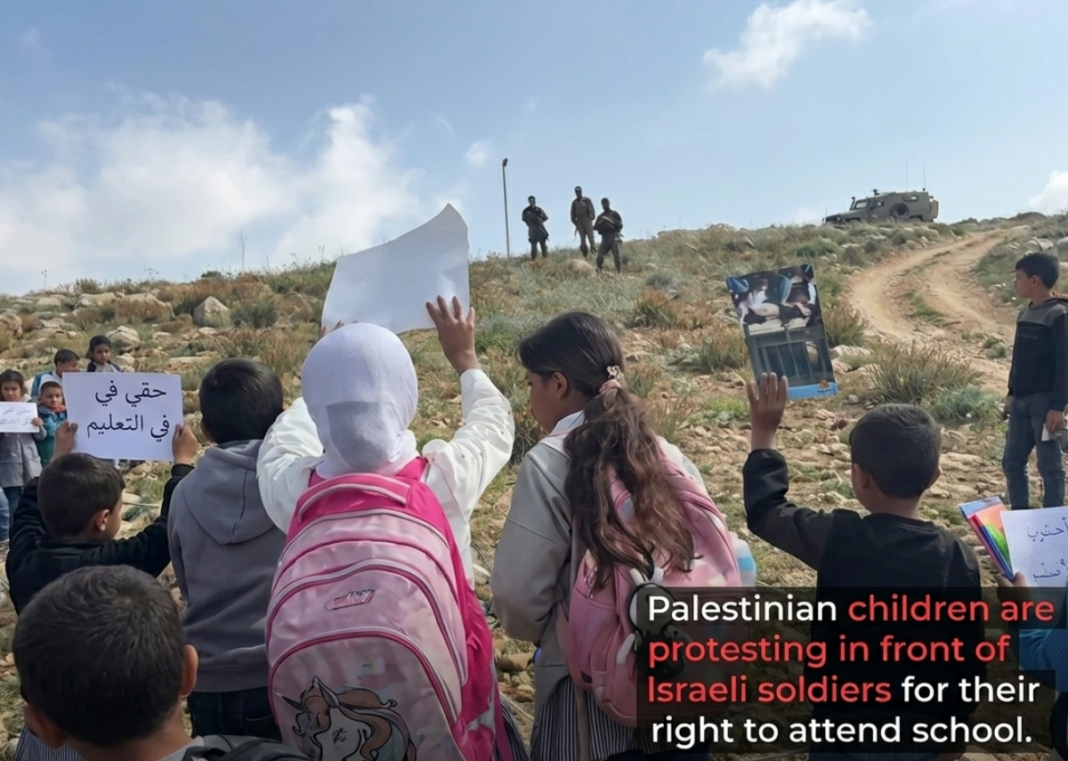

Tensions are really high again in the West Bank. The West Bank is having a lot of problems. In Masafer Yatta, which’s a group of small Palestinian villages near Hebron kids going to school found that they could not walk to class like they usually do. This was because settlers had blocked their way. So these kids decided to do something about it. They held a protest hoping that people would notice the issues that the West Bank communities are facing. The West Bank communities have to deal with a lot of things like not being able to move around and the fact that settlements are getting bigger. The people, in the West Bank also have to live with uncertainty every day, which affects simple things like going to school in the West Bank.
For years, Masafer Yatta has been caught in the middle. It’s right in a sensitive spot—an area labeled as a zone for Israeli military training and close to several settlements. That location has made life hard for residents, and this latest incident with the kids just throws their struggles back into the spotlight.
People who live in the area and saw what happened say that settlers put up barriers like wire on the main path that kids take to get to school. The kids can not use this path now. They have to go a way, which is not easy. This new way is over ground and it takes longer. The kids have to climb and scramble to get to school. This is a problem. Parents are worried about the kids. They are worried because the new way to school is hard and it is not safe. The kids might get. They might get too tired to go to school. The kids might even get scared. Not want to go to school at all. The settlers and the barriers they put up are the reason, for this problem. The kids and their parents are affected by what the settlers did.
When the route was closed, groups of kids and their families protested. They gathered near the blockade and called for the path to be reopened so children could get to school safely. The demonstration was peaceful. No one looked for a fight. The focus stayed on the kids’ right to education and the hardship this kind of disruption brings.
Getting an education in Masafer Yatta isn’t easy in the first place. Most villages in this area don’t have much infrastructure. Basic things like paved roads, school buses, or clinics just don’t exist for many. So, kids walk—along footpaths and dirt tracks—to classes miles away. If one of these paths gets cut off, school attendance drops. Parents get nervous about letting young children go alone. And honestly, who can blame them?
The deeper problem is that these movement restrictions happen all the time. Security policies, military zones, or the growth of settlements can suddenly make everyday routes off-limits. The day-to-day impact builds up. Kids miss classes. Parents are stuck with impossible choices. And the whole community feels those ripple effects.
Reports say settlers were behind the most recent barrier. That’s not new. Tensions between local Palestinians and settlers flare up regularly, especially over land access and freedom of movement.
But the protests in Masafer Yatta send a clear message: even the youngest residents aren’t staying silent about these ongoing challenges. The children—backed by their families—stood near the blocked path, holding signs and speaking out about their right to get an education safely. Their protests weren’t about confrontation; they just wanted their school path back.
In the West Bank people have to deal with a tough system every day. This system affects the roads they use because there are checkpoints that split them up. Some areas are completely closed off so people have to find ways to get around.
In places like Masafer Yatta even small things can cause problems. For example if someone puts up a wire fence or builds a new checkpoint it can make it hard for people to get to school see a doctor or go to work. The West Bank system is very hard to navigate. It makes life difficult, for people who live there in the West Bank.
People watching these events keep raising the same worry: movement restrictions aren’t just a headache; they chip away at kids’ futures. Reliable access to education is a right, not a privilege, and when that gets blocked again and again, it can have consequences that last a lifetime. Residents here know that better than anyone, and it’s their kids who pay the price every time another path gets closed.
So, what happened in Masafer Yatta is about more than one road or one protest. It’s another example of how tense, complicated, and fragile daily life is for Palestinian communities in the West Bank—especially when something as basic as walking to school is never guaranteed.