
SQM Shares Rise More Than 3% After Scotiabank Reaffirms Bullish Stance on Lithium Demand and Cost Edge
Shares in Chilean lithium producer SQM rose more than 3 percent in Santiago on Tuesday after Scotiabank reiterated its bullish view on the company following direct meetings with senior executives, maintaining a Sector Outperform rating and a price target of $105 — and making SQM one of its top picks for 2026 on the back of strong demand growth expectations and structural cost advantages at Chile’s Salar de Atacama. In a note after meeting with SQM Chief Financial Officer Gerardo Illanes and Head of Investor Relations Isabel Bendeck, Scotiabank maintained its Sector Outperform rating and a $105 price target, calling SQM one of its top picks for 2026. who
The broker said SQM sees lithium incentive pricing at around $18 per kilogram, within a broader $15-to-$20 range, and believes demand will keep expanding sharply through the end of the decade, requiring new supply from market entrants. who
The battery energy storage systems market featured prominently in the executive conversations. Scotiabank said SQM saw strong economics in battery energy storage systems, or BESS, where it views lithium demand growth as increasingly driven by cost competitiveness rather than consumer preference. That framing is significant: BESS demand driven by economics rather than sentiment is more durable and less susceptible to the cyclical swings that have characterised the EV-linked portion of lithium demand in recent years. who
The Iran war has added a structural tailwind to SQM’s demand outlook that the company itself has acknowledged. SQM has cited the Iran war as a factor it believes is accelerating lithium demand recovery. “The war in Iran is always impacting the demand, and because of that we think more people now want to buy an electric vehicle and be less dependent on oil,” an SQM executive said earlier this year. That argument — elevated oil prices pushing consumers toward electrification — is consistent with SQM’s full-year guidance revision, in which the company raised its lithium sales volume growth forecast for 2026 from 10 percent to 15 percent after selling approximately 69,000 metric tons of lithium carbonate equivalent in the first quarter. globalsecurity
Scotiabank’s note also addressed SQM’s market share expectations. Scotiabank said SQM does not expect to maintain its current market share indefinitely, and that the company said industry growth is too rapid for any single producer to keep pace. That candid acknowledgement of structural market evolution reflects SQM’s position as the world’s second-largest lithium producer — one that benefits from rapid market growth even as new entrants dilute its relative share. who
The principal constraint on industry-wide supply expansion, according to SQM, is regulatory rather than geological or financial. SQM noted that environmental permitting remains the main constraint on new lithium supply. That bottleneck — which applies across jurisdictions from Chile to Australia to Argentina — is likely to keep the market from oversupplying in the near term even as capital flows toward new projects. who
Supply tightening is visible on multiple fronts beyond permitting delays. Supply is meanwhile tightening due to the closure of a key mine in China, an export ban in Zimbabwe, and dwindling lithium carbonate stocks. The data centre boom driven by artificial intelligence has added another demand vector, as battery storage requirements for large-scale power infrastructure grow alongside computing capacity. Institutional forecasters are converging on deficit projections: Morgan Stanley forecasts a supply deficit of 80,000 metric tons LCE by the end of 2026, while UBS projects a more conservative but still constrained deficit of 22,000 tons, according to market analysis. globalsecurity
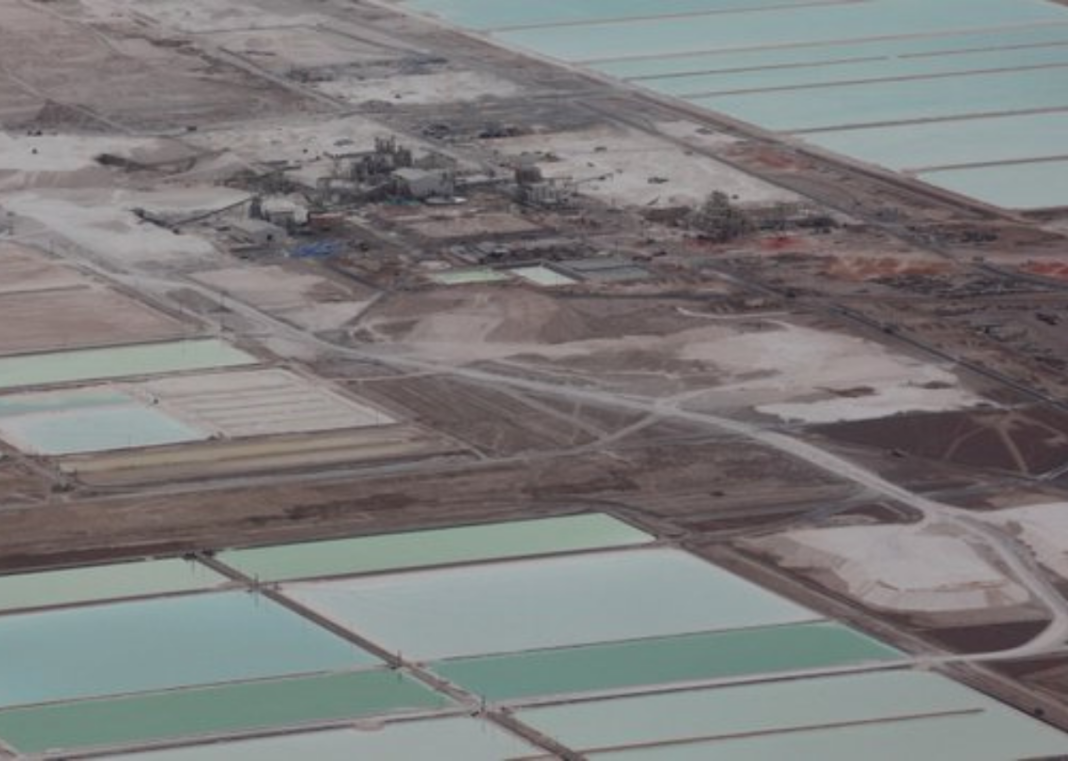
SQM’s cost position at the Salar de Atacama gives it a structural advantage that most competitors cannot replicate. SQM expects its 2026 operating costs to be lower than those recorded in 2025, driven by continued efficiency improvements and economies of scale from increased production levels. Brine-based extraction at Atacama — the world’s richest lithium brine deposit — carries production costs far below those of hard-rock spodumene mining in Australia or clay-based operations in the United States, giving SQM a durable margin advantage across the commodity cycle. who
Regional and Global Impact
Chile holds approximately 37 percent of the world’s known lithium reserves, concentrated in the Atacama salt flat that SQM and its joint venture partner Codelco — Chile’s state copper producer — operate under a long-term agreement. The completion of the SQM-Codelco joint venture, which received Chinese regulatory approval earlier this year and is awaiting sign-off from Chile’s comptroller, will give the Chilean state a formal stake in the world’s most productive lithium basin at a moment when lithium’s strategic importance is rising rapidly. The geopolitical dimension of that ownership structure is not lost on consuming nations: the EU’s supply chain diversification push, which the European Commission announced last week, explicitly targets concentration risk in critical mineral sourcing — of which lithium from Chile via Chinese-dominated processing chains is the most acute example.
For the electric vehicle supply chain, SQM’s $18 per kilogram incentive price framing provides a market signal that downstream manufacturers — particularly battery makers and automotive OEMs returning to long-term offtake agreements — can use in their procurement planning. A price floor in the $15-to-$20 range, if credible, removes the worst-case oversupply scenario from the forward curve and makes long-term supply contracts more viable for both producers and buyers.
Background
SQM — Sociedad Química y Minera de Chile — is the world’s second-largest lithium producer and also a leading producer of iodine, potassium, and industrial chemicals. Its lithium operations at the Salar de Atacama account for the majority of its earnings, with approximately 70 percent of output shipped to China. The company’s shares trade on the Santiago Stock Exchange and as American Depositary Shares on the New York Stock Exchange. Lithium prices fell more than 80 percent between their 2022 peak and a trough in mid-2024 as a supply surplus accumulated following the post-pandemic EV demand surge. Prices have recovered from those lows, and SQM’s first-quarter 2026 results beat revenue expectations, prompting the upward revision in its annual volume guidance. Scotiabank raised its SQM price target to $105 from a prior level following the executive meetings reported on Tuesday.
What Happens Next
SQM has not disclosed a specific timeline for the final regulatory approval of its joint venture with Codelco from Chile’s comptroller general, though the CEO previously expressed confidence it would close before the end of the year. The company’s next scheduled financial disclosure is its second-quarter 2026 results, which will provide the first read on whether the volume growth trajectory set out in the upgraded annual guidance is being maintained. Scotiabank’s updated research note is the third consecutive bullish reassessment of SQM from a major investment bank in 2026, following upgrades from Deutsche Bank and JPMorgan earlier in the year. No analyst polled by Reuters currently holds a sell rating on the stock.