
Tropical Storm Jangmi Batters Japan With Life-Threatening Winds and Rain, Cutting Power to 60,000 Homes
Severe tropical storm Jangmi swept across Japan on Wednesday, June 3, bringing fierce winds, torrential rain, transport chaos, and industrial shutdowns as it tracked northeast toward the greater Tokyo region. The storm’s centre lay off the central, main island of Honshu, tracking northeast towards the greater Tokyo region with maximum sustained winds of up to 25 metres per second, Japan’s Meteorological Agency said, adding that some areas along the Pacific coast are at an increasing risk of “life-threatening disasters.” Philstar.com
The storm, with a central pressure of 980 hPa, cut power to nearly 60,000 households, government spokesperson Minoru Kihara said during a regular press briefing. At least 15 people sustained injuries as the storm swept across Japan’s southwestern and central regions, according to authorities. Philstar.com
“If you sense any danger, please do not hesitate to take early action to protect your lives,” Kihara said. Rolling Stone Philippines
Path and Progression
As of midday Wednesday, the storm was located about 60 kilometres south-southwest of Izu-Oshima, in Shizuoka Prefecture, and was moving east-northeast at 45 kilometres per hour, with a central pressure of 985 hectopascals and wind speeds of 25 metres per second, packing maximum sustained winds of 35 metres per second. Business Today
The storm had already injured at least 16 people on Tuesday and left nearly 48,000 homes in Okinawa and Kagoshima prefectures without power before moving northeast onto the main island of Honshu. Jangmi led to evacuation advisories for more than 800,000 people in Miyazaki and Kagoshima prefectures on the island of Kyushu during its initial passage through Japan’s southwest. MSNOutlook Business
The Japan Broadcasting Corporation reported that injuries were caused by the storm blowing objects into cars and by strong winds causing people to lose their footing. A 10-metre tree was felled in Okinawa as the storm passed through. Outlook Business
Level 4 evacuation orders — the second-highest alert level under Japan’s five-tier system — were in place in Tokyo for all of Shinagawa Ward and areas near the Nogawa and Kanda rivers. In Chiba Prefecture, the cities of Izumi, Minamiboso, Kamogawa, and Katsuura, the Gyotoku district of the city of Ichikawa, and the town of Otaki all had level 4 evacuation orders. Business Today
Evacuation advisories were issued to hundreds of thousands of residents in eight prefectures across southwestern, central and eastern Japan. Rolling Stone Philippines
Industrial Shutdowns
The storm forced two of Japan’s largest automakers to suspend production. Toyota Motor suspended operations at 13 domestic plants on Wednesday morning before announcing plans to resume production from the evening. Suzuki Motor also planned to resume operations from later in the day after halting work at all five plants in Shizuoka Prefecture, west of Tokyo, in the morning. RAPPLER
Air and Rail Disruptions
Airlines including Japan Airlines and All Nippon Airways cancelled nearly 900 international and domestic services on Wednesday morning. Some bullet train services in Kyushu and western Japan were delayed, while East Japan Railway said some rail services in the Tokyo area were suspended with more potentially affected over the course of the day. Rolling Stone Philippines
The storm also disrupted rail and air travel in the Tokyo metropolitan area, with train operators warning of cancellations and delays and airlines scrapping hundreds of flights, including services to and from Haneda Airport. Business Today
Conditions and Hazards
The Japan Meteorological Agency had warned that rainfall totals in affected regions could reach 200 to 300 millimetres, prolonging flooding and increasing the risk of landslides. Heavy rain was expected even before the typhoon directly impacted Japan due to a stationary front north of the system. MarketScreener
The agency urged people to remain on strict alert for landslides and high waves with swells along the Pacific side of western and eastern Japan, while also warning of violent winds, flooding in low-lying areas, rising river levels, and river flooding. High waves were expected to remain a concern in eastern Japan and the Tohoku region through Thursday. Business Today
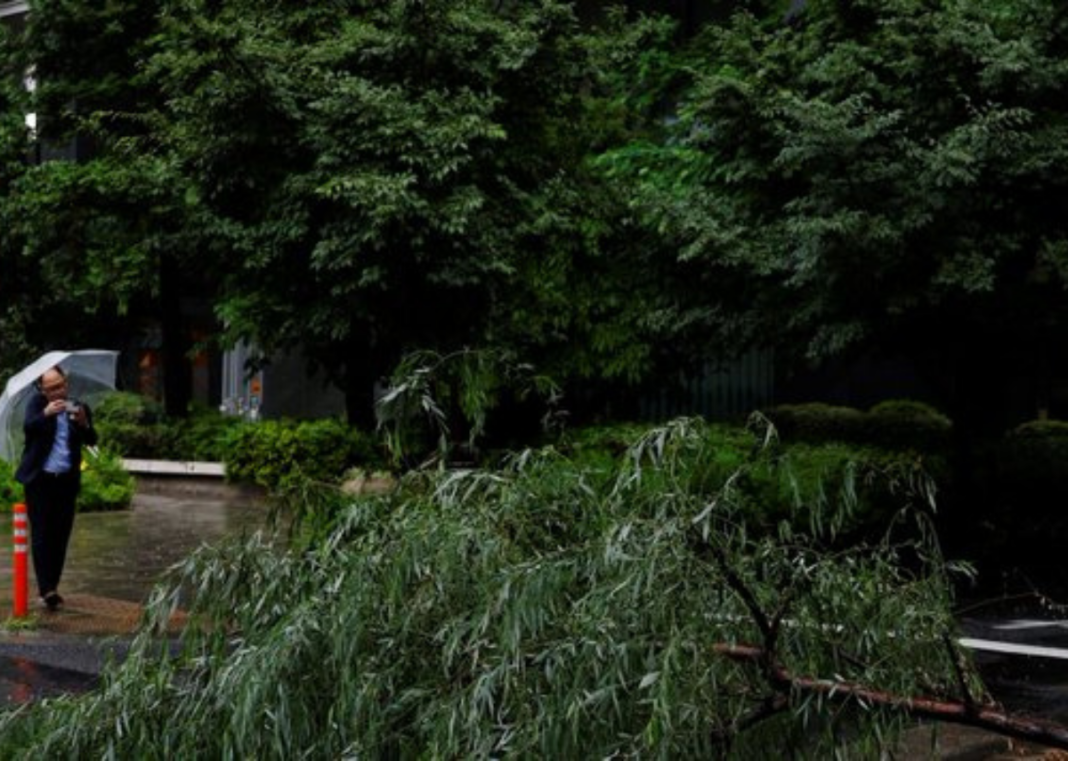
Authorities had been receiving reports of flooding, fallen trees and debris, and landslides across a wide stretch of the country since the storm’s approach, Japan Today reported.
Background
Jangmi is the season’s sixth typhoon. Japan’s typhoon season typically runs from May through October, with the most destructive storms historically striking in August and September. The storm first made itself known across Japan’s southernmost territories before strengthening as it moved northeast. The Japan Meteorological Agency had warned of violent winds, high waves, storm surges, landslides, flooding in low-lying areas, and rising or overflowing rivers in affected areas from the storm’s earliest approach. The typhoon was expected to impact large areas along Japan’s Pacific coast between Kyushu and Kanto, including Tokyo, through June 3, 2026. Rolling Stone Philippines + 2
What Happens Next
High waves were expected to remain a concern in eastern Japan and Tohoku through Thursday, June 4, even as the storm’s centre moved away from the main island. Toyota said it planned to resume production from Wednesday evening, and Suzuki indicated the same timeline for its Shizuoka plants, though both remained subject to storm conditions. Japan’s Fire and Disaster Management Agency was continuing to coordinate disaster response with prefectural governments and transport operators as of Wednesday afternoon. The meteorological agency said it would continue monitoring the storm’s northeast track and update its guidance on landslide and flood risks as conditions developed. Business TodayRAPPLER