
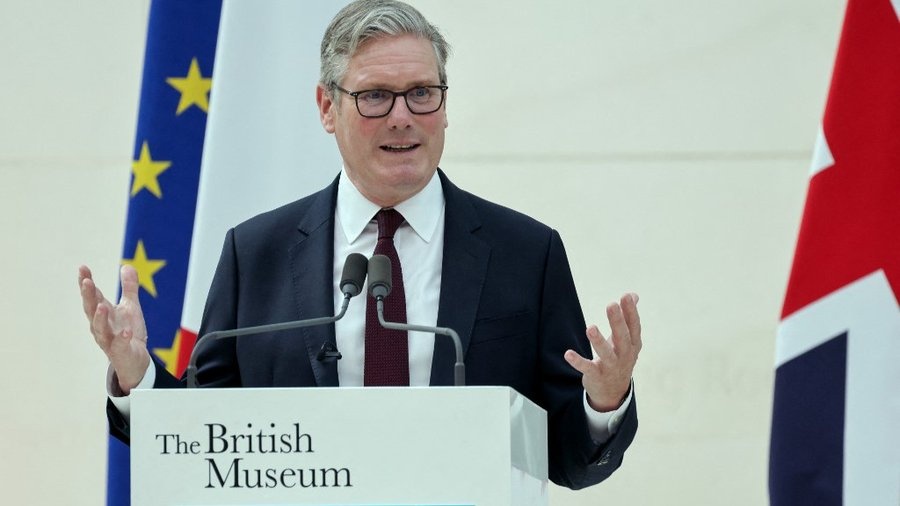

A complaint has been lodged by the Palestinian ambassador in the United Kingdom to the foreign office in Britain. According to the Palestinian ambassador, the British museum has been removing the name Palestine from certain exhibits in the museum. The Palestinian ambassador is really upset, about this because it is like the British Museum is trying to erase Palestine. This has started a debate on how museums show ancient Middle Eastern history.
The complaint is some changes in exhibit labels and descriptions at the British Museum. The ambassador says these changes have reduced or removed references to “Palestine.” He described this as an “erasure” of identity from historical narratives.
- The complaint was sent to the UK Foreign Office.
- The ambassador’s action makes this a matter of diplomatic concern.
The British Museum has artifacts from the ancient Near East. This includes items from regions historically linked to modern-day Israel, Palestine, Jordan and surrounding areas.
The museum says its labeling is based on accuracy and academic research. They use geographical terms from archaeology and ancient history studies.
Some people argue that using terms can unintentionally marginalize modern identities. This is especially true in areas where historical narratives are closely tied to political realities.
The British Museum says it still uses the term “Palestine” when it is historically or geographically suitable. They claim there is no policy to remove it.
This controversy is part of a debate on how museums in Europe and North America show Middle Eastern history. Institutions like the British Museum often use classifications that predate modern nations.
The term “Palestine” has an complex history. Its modern meaning is closely linked to the Palestinian conflict and Palestinian statehood.
Museums must balance:
- Ancient historical terms
- Colonial-era classifications
- Modern political identities and sensitivities
The Palestinian ambassador’s complaint shows that this issue is not just about culture. It is also about representation, recognition and respect at a level.
The issue has sparked debate among historians, archaeologists and cultural commentators. Some say museums should prioritize accuracy and evidence. Others argue that museums should also reflect how historical narratives affect living communities.
This debate is not unique to the British Museum. Similar debates have occurred in institutions about indigenous histories and colonial-era artifacts.
The dispute is happening now when museums around the world are being looked at very closely to see how they show the past. People are asking about how thingsre presented, who gets to decide what is important and how we talk about the past. These questions, about who gets to tell the story what we learn from the past and how we remember history are topics when people talk about what museums should be doing.
Institutions must balance:
- Academic neutrality
- sensitivity
- Political implications of interpretation
The UK Foreign Office will review the complaint. Possible outcomes include:
- No change if the museum’s practices are deemed justified
- Internal review of labeling policies
- Consultation with historians or cultural advisors
- Dialogue between representatives and museum officials
The complaint could lead to ongoing discussions about how Middle Eastern history is presented in UK institutions. The case shows how even museum labels can become part of international debates, about recognition, representation and historical narrative.
The Palestinian ambassador complained about the British Museum. They said the museum made Palestine disappear from their exhibits. This brings up issues about history, who people are and politics.
The museum says they did what they did based on facts and history.. Critics think this change makes it seem like Palestine does not matter.
This is not about the museum. It is part of an argument. People are talking about how museums should show history. They should be accurate, but fair to different countries and cultures.
It also shows how what we learn from history can cause problems between countries.
In the end this argument shows that museums need to tell stories that include everyone. The way history is told can have an impact, on politics. The Palestinian ambassador and others want to make sure their story is told.
Museums have to find a balance. They must be accurate and fair. They should not leave anyone out.


