

Vietnam Urges Businesses and Households to Conserve Power as Heatwave Drives Record Electricity Demand
Vietnam’s state utility EVN called on Thursday, June 25, for firms and households to conserve energy to ease strain on the country’s national power grid, as intense heat drove electricity consumption toward record levels. The appeal lands amid a broader heatwave that has gripped large parts of Asia and Europe simultaneously in recent days, with national grid operators across multiple countries reporting unusually high demand.
Vietnam’s National Load Dispatch Centre, known as NSMO, has already recorded a string of demand records this year as successive heatwaves pushed temperatures across the country to unusually high levels. In northern Vietnam, peak capacity climbed to 29,667 megawatts on May 25, around 1,700 megawatts higher than the previous day and 5.3 percent above the 2025 record. The northern region accounted for more than half of the country’s total electricity consumption that day, using 603 million kilowatt-hours. Crypto Briefing
The pressure on the grid has not let up since. Preliminary data for May 26 showed no sign of easing demand, with the national system load reaching 57,590 megawatts by midday, while the northern region recorded 29,385 megawatts. Meteorologists forecast temperatures in Hanoi could rise to between 40.3 and 42 degrees Celsius, potentially surpassing the capital’s previous May record of 40.3 degrees, set in 2015. NSMO projected that peak evening demand could reach 56,700 megawatts nationwide, with northern demand alone climbing to between 31,000 and 31,500 megawatts amid the prolonged heatwave. Crypto Briefing + 2
How EVN Is Responding
To manage the surge without compromising supply reliability, Vietnam’s grid operators have turned to a mix of conservation appeals and operational adjustments. EVN urged households and businesses to save electricity by switching off unused appliances, setting air conditioners at 26 degrees Celsius or higher, and reducing decorative outdoor lighting at night. To maintain stable supply, NSMO said it was maximising the use of higher-cost power sources, including liquefied natural gas-fired and oil-fired power plants. Crypto BriefingCrypto Briefing
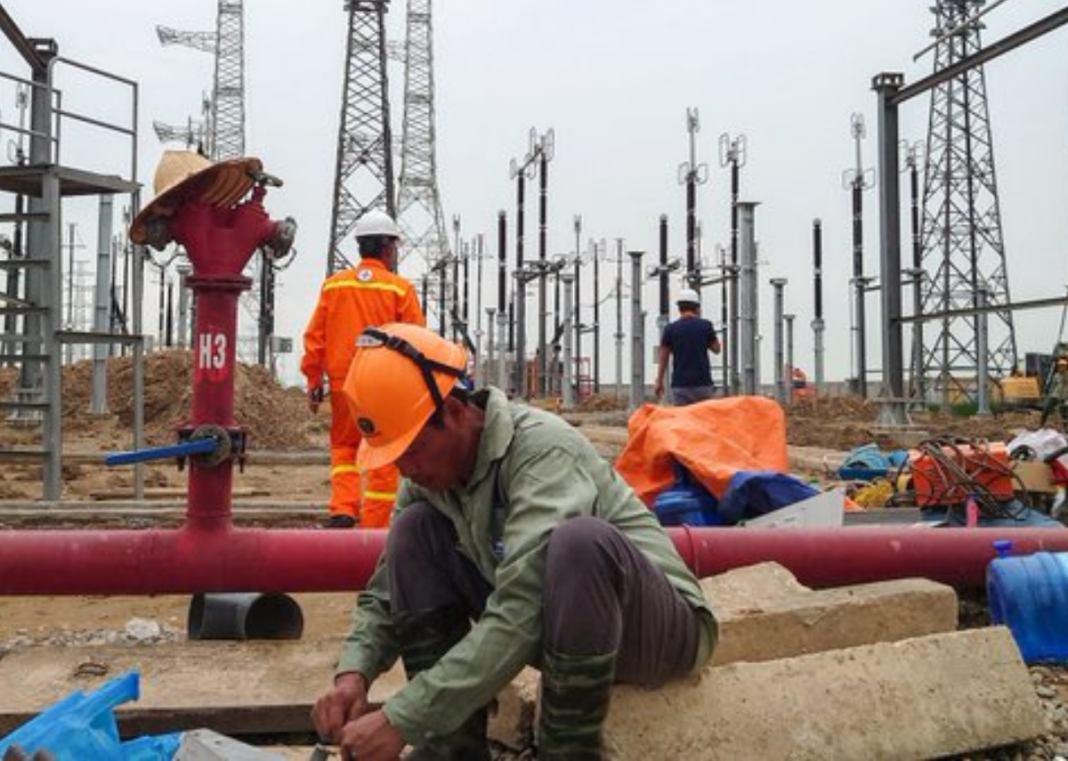
On the supply side, EVN has outlined a broader operational strategy for managing the recurring heat-driven strain. The company has said it will review the status of each power-generating unit, urge units to troubleshoot problems, and take advantage of short-term repairs during periods between heatwaves, while closely monitoring cooling water temperatures to maximise electricity generation during peak hours. It plans to coordinate closely with other electricity companies, including state gas distributor PVGAS, to ensure fuel supply and flexibly switch between domestic gas, LNG, and oil to maximise generation as load increases, while seeking to optimise system-wide costs. WHBLWHBL
On the grid side, NSMO is coordinating with transmission units, corporations, and operations management bodies to review operating methods, promptly address equipment faults, and arrange on-duty staff and backup materials to ensure the highest possible availability of the transmission and distribution system. WHBL
A Pattern of Escalating Demand
Vietnam’s grid has faced recurring summer strain for several years, but officials say the pattern has intensified. Vietnam Electricity Group has previously urged Hanoi residents to conserve power as temperatures exceeded 38 degrees Celsius, driving surges in electricity demand earlier in the year, in what officials described as an unusually early nationwide heatwave with temperatures already exceeding 40 degrees Celsius. Regional Media News
The structural challenge facing Vietnam’s power sector extends beyond any single heatwave event. EVN has said the country needs to add roughly 4,000 to 5,000 megawatts of new generation capacity annually to keep pace with demand growth, though power projects often require years to complete permitting, land clearance, and construction procedures. Climate change is compounding the difficulty of that task. The possibility of El Niño conditions could reduce water availability for hydropower generation, while prolonged heatwaves are driving electricity consumption higher, putting pressure on both supply and demand simultaneously. The transition toward renewable energy is also adding operational complexity, as wind and solar’s growing share of the electricity mix makes forecasting generation and balancing the grid more difficult due to their intermittent nature. The Korea HeraldThe Korea Herald
Regional and Global Impact
Vietnam’s appeal for energy conservation comes as extreme heat affects multiple regions simultaneously, illustrating the global scale of the current heat event. France, Britain, and several other European countries have this week issued red and orange heat alerts, with British grid operators separately requesting additional generating capacity from power producers and France suffering heat-related power outages affecting tens of thousands of households. The near-simultaneous strain on grid systems across Southeast Asia and Western Europe underscores how summer heat events are increasingly testing electricity infrastructure across multiple continents within the same window, raising the stakes for utilities and regulators managing both immediate demand spikes and longer-term capacity planning.
For Vietnam specifically, the recurring strain carries economic significance beyond households’ comfort. Large manufacturing operations, including major textile and footwear producers with significant export exposure, depend on stable power supply to maintain production schedules. Disruptions or mandated conservation measures affecting industrial users can have knock-on effects for export-oriented manufacturing, a sector central to Vietnam’s economic growth model and its position within global supply chains, including as a manufacturing alternative for companies seeking to diversify away from China.
Background
Vietnam Electricity, known as EVN, is the country’s state-owned electricity utility and the dominant operator of the national grid. The National Load Dispatch Centre, NSMO, oversees the technical operation and balancing of Vietnam’s power system, coordinating between generation sources and demand across the country’s three main regions. Vietnam has experienced a pattern of escalating summer electricity demand records in recent years, driven by a combination of rising average temperatures, rapid economic growth, expanding industrial capacity, and increasing household adoption of air conditioning. In May 2023, Vietnam similarly urged conservation measures, including reduced public lighting and shifted manufacturing schedules, during a previous severe heatwave, with industry data at the time showing more than 11,000 companies had agreed to cut consumption where possible.
What Happens Next
EVN and NSMO are expected to continue monitoring demand and adjusting generation strategy, including further reliance on LNG and oil-fired plants, as the heatwave persists. Authorities are likely to continue appealing to households and industrial users to reduce consumption during peak hours if temperatures remain elevated. Vietnam’s longer-term challenge of adding sufficient new generation capacity to keep pace with demand growth remains unresolved, with EVN’s stated target of 4,000 to 5,000 megawatts of new capacity annually continuing to face delays tied to permitting, land clearance, and construction timelines.