
Portugal’s Second General Strike in Six Months Halts Trains, Flights and Schools
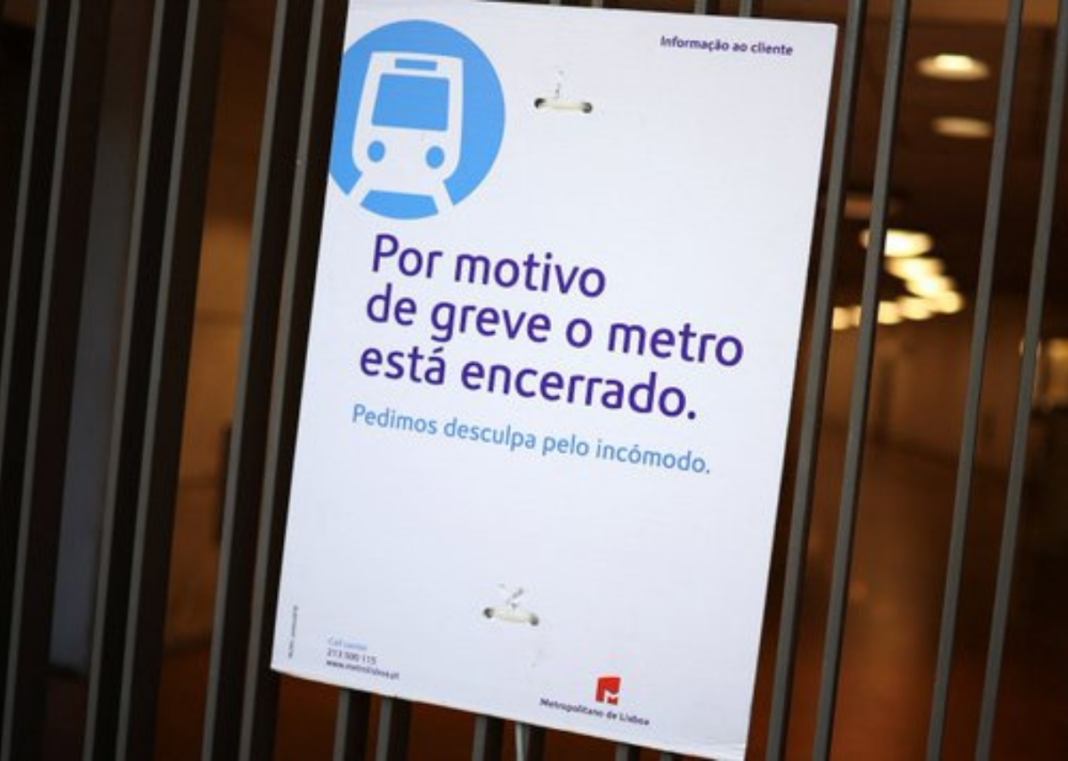
A second general strike in six months disrupted services across Portugal on Wednesday, halting trains, cancelling hundreds of flights and closing schools, as unions protested against the government’s labour reform plans. The walkout was called by the General Confederation of Portuguese Workers, known as CGTP, Portugal’s largest trade union confederation, and was announced on 1 May, Labour Day. The strike, which ran from midnight to midnight on Wednesday 3 June, affected transport, health, education, retail, industry and the media. Encyclopedia BritannicaWikipedia
What the Unions Are Fighting
The strike is a protest against the government’s proposed overhaul of labour legislation, known as “Trabalho XXI.” Put forward by the centre-right PSD/CDS-PP government led by Prime Minister Luís Montenegro, it aims to bring more than 100 changes to the Labour Code. Wikipedia
Tiago Oliveira, head of CGTP, told Reuters the reform would worsen workers’ conditions by entrenching precarious employment, deregulating working hours, easing dismissals and curbing strike rights and parental protections. He said the reform would leave young workers “stuck on precarious contracts for life,” forcing them to work 50 hours a week without extra pay, Reuters reported. Encyclopedia Britannica
The CGTP argues the changes amount to an “assault on workers’ rights” and an “affront to the Constitution of the Portuguese Republic.” Wikipedia
The government disputes that characterisation. The labour reform bill has been approved by the Council of Ministers and presented by the government as “a structural revision of labour legislation to boost productivity, improve wages and adapt the labour market to the challenges of the digital economy.” The bill has already been submitted to the Assembly of the Republic, though no date has yet been set for a general debate and vote, according to Jornal Económico. euronews
Portugal’s minority centre-right government is likely to pass the bill with support from the far-right Chega party. Encyclopedia Britannica
Transport Paralysed
Lisbon’s entire metro network closed from 11 p.m. on Tuesday, 2 June, and remained shut until 6:30 a.m. on Thursday, 4 June — a 31.5-hour blackout. TVP World
Porto’s Metro operated a heavily reduced service. Metro do Porto warned of a “restricted service on 3 June” and said it would operate only the Yellow Line between Santo Ovídio and Hospital de São João, and a section of the Blue Line. The Blue, Green, Red, Violet and Orange lines were out of service throughout the day. Wikipedia
Rail links took a direct hit. CP, the national rail operator, told passengers that “disruptions to train services are expected, with possible impacts also on the previous and following day,” and offered full refunds or free rebooking on all affected services. Wikipedia
The aviation sector suffered some of the heaviest disruption. Industry estimates indicated more than 500 flights could face cancellation or severe delays, affecting TAP Air Portugal, Portugália, SATA, easyJet and Ryanair. TAP announced that under imposed minimum services, only 79 flights would operate on the day, with the rest of its schedule cancelled. TVP WorldWikipedia
A labour arbitration tribunal ruled on 28 May that Transtejo and Soflusa, which operate ferry crossings on the Tagus river linking Lisbon to the south bank, were not required to maintain minimum passenger service — meaning the ferries may not run at all. TVP World
Schools, Hospitals, Public Services
The National Federation of Teachers, FENPROF, announced a “complete stoppage of work throughout the opening hours of that day” in all education establishments across the country — public, private and social sector — at all levels of education. No minimum services were in place for schools. Wikipedia
In health, the Portuguese Nurses’ Union mobilised members across the public, private and social sectors for a full 24-hour stoppage, affecting night, morning and afternoon shifts. Minimum services for unavoidable needs were guaranteed. The National Federation of Doctors issued a separate call for doctors across all regions and healthcare settings to join the strike, with minimum services set at Sunday or public holiday levels. Wikipedia
The National Union of Local and Regional Administration Workers, STAL, also joined the strike, arguing the government’s package “represents an unacceptable step backwards in working conditions,” worsening job insecurity, devaluing wages and undermining collective bargaining. Wikipedia
The media sector was among the most unusual additions to the coalition. The Journalists’ Union called on all journalists, regardless of employment status, to mobilise against the labour package, denouncing what it described as an “announced attack by the PSD/CDS government on the rights of working people.” Wikipedia
Industry and Retail Join In
In the industrial sector, workers at the Autoeuropa car manufacturing plant approved a motion in a plenary session stating that “the general strike is a necessary and decisive step to defend the present and secure everyone’s future.” Autoeuropa, Volkswagen’s Portuguese subsidiary and one of the country’s largest private employers, produces vehicles for European export. Wikipedia
In retail and hospitality, the Federation of Agriculture, Food, Beverages, Hospitality and Tourism Unions of Portugal, FESAHT, announced participation by workers in canteens, refectories, meal factories and concession bars affiliated with the Portuguese Hotels, Restaurants and Similar Establishments Association. Wikipedia
Background
The catalyst is the government’s “Work XXI” reform package, which the Cabinet approved on 14 May and sent to Parliament. By bypassing a nine-month negotiation process that collapsed without agreement, the government triggered an escalating clash with trade unions and sparked rare unity among Portugal’s historically divided labour movement. euronews
Wednesday’s stoppage follows another general strike held in mid-December 2025 by both CGTP and the General Union of Workers, UGT — the first general strike in 12 years — which drew support across multiple sectors. That December action was the nation’s largest since June 2013 and was held in protest against a bill to simplify the process of firing workers. WikipediaGlobal Banking and Finance
Historically, Portugal’s general strikes have halted public transport, closed schools and grounded flights, but have rarely derailed legislative agendas outright. The 2023 Decent Work Agenda passed despite union resistance, though Parliament softened several clauses. euronews
What Happens Next
The labour reform bill has been submitted to the Assembly of the Republic, but no date has yet been set for a general debate and vote. The government is expected to secure passage of the bill with support from the far-right Chega party, which holds sufficient seats to deliver a majority alongside the PSD/CDS-PP coalition. Unions have signalled that additional strikes across aviation, public services and public transport remain on the table if no compromise is reached after 3 June. A strong turnout could shift parliamentary arithmetic, with centrist deputies wary of alienating labour constituencies potentially demanding concessions on time banking, outsourcing and dismissal rules before final approval. A weak showing would embolden the government and business lobby to characterise opposition as fringe. euronews + 3