
Bank of England’s Taylor Says Rate Hike Only Justified in Worst-Case Iran Scenario as Recession Risk Rises
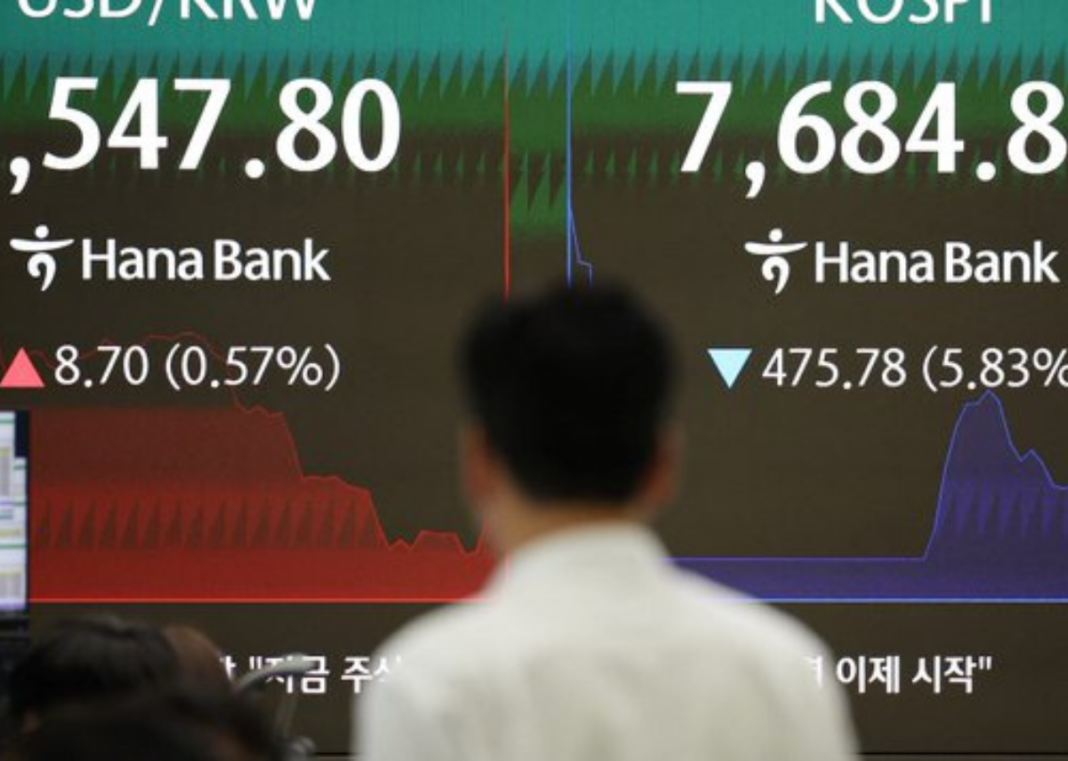
Bank of England Monetary Policy Committee member Alan Taylor said on Monday that the current interest rate of 3.75 percent is sufficient to control inflation under most plausible scenarios stemming from the Iran war, and that raising rates would only be warranted if the conflict produced the most severe economic outcome the Bank has modelled. Taylor, one of the MPC’s most consistently dovish members, delivered the remarks in comments published Monday — the same day South Korea’s KOSPI index fell more than 8 percent on renewed fears of Federal Reserve rate increases, adding an acute global markets backdrop to the Bank’s own policy deliberations.
“I feel comfortable where we are unless we get the worst-case scenario,” Taylor said, adding that he wants to see evidence that the recent inflationary pressures are temporary and beginning to fade. Wikipedia
Taylor downplayed the likelihood of that worst-case scenario materialising, where inflation would reach 6.2 percent by the first quarter of 2027, stating that those risks are far from certain. who
Taylor, one of the Monetary Policy Committee’s most dovish members, said keeping rates on an extended hold remains appropriate as the UK faces heightened recession risks from the Middle East conflict. The economy is showing signs of weakness, with contracting private sector activity, soft inflation data, and a weakening jobs market that is helping prevent a repeat of the 2022 inflationary spiral, Taylor noted. who
Current rates stand 100 basis points above the 3 percent neutral rate, Taylor said. That framing — positioning 3.75 percent as already meaningfully restrictive — gives him grounds to argue that additional tightening would risk choking a fragile economy for a marginal gain in inflation containment. who
The MPC published three Iran war scenarios in its April Monetary Policy Report that have structured much of the subsequent public debate about the Bank’s likely path. In the worst-case scenario, inflation could hit 6.2 percent in the first three months of 2027. Even under the best-case scenario, inflation would reach 3.6 percent by the end of 2026. Taylor’s comments on Monday place him firmly in the camp that considers the worst-case outcome unlikely to materialise, and therefore the existing rate level adequate. who
That view places him in broad alignment with Bank of England Governor Andrew Bailey, who signalled in late May that the Bank was in no rush to raise rates while the Iran war’s outcome remained uncertain and UK growth stayed weak. Bailey said it was tolerable for inflation to stay above the Bank’s 2 percent target during the current crisis, but that would change if a more permanent increase in prices began to take effect. NBC News
The MPC’s most recent formal decision, taken at its April 30 meeting, reflected a clear majority in favour of holding. The Monetary Policy Committee voted 8-1 in favour of holding rates, with one member voting to increase rates to 4 percent. In its deliberations and forecast, the MPC sent the message that higher inflation is on the way and higher rates are likely this year. That single dissenting vote for an immediate hike shows the committee is not unanimous in Taylor’s dovish direction, and Monday’s strong US payrolls data — which rattled markets globally and raised the prospect of Fed tightening — adds new pressure from the external rate environment. NBC News
The labour market data published on Monday added immediate context for the MPC’s dilemma. The REC-KPMG Report on Jobs showed permanent hiring fell at its fastest pace since July 2025 in May, extending an unbroken 44-month contraction in placements — precisely the kind of demand-side weakening that Taylor cited as an argument against rate hikes. At the same time, IDR’s pay settlements data showed the median award holding steady at 3.5 percent for a second consecutive month, with the proportion of employers settling at 4 percent or more rising to 33 percent — a signal that wage pressures have not yet fully dissipated.
Regional and Global Impact
Taylor’s remarks arrive as UK mortgage holders face tangible consequences from the rate uncertainty. Analysis by Moneyfacts suggests that for a typical £250,000, 25-year mortgage, the increase in costs translates to a rise in monthly repayments of nearly £300 from £1,445.50 before the war to £1,727 — an annual increase of £3,380. Major lenders including NatWest, Barclays, TSB and Santander have been trimming fixed mortgage rates in June, but experts warn those reductions could slow or reverse if the MPC signals a rate increase at its June 18 meeting. globalsecurity
For financial markets, the Monday juxtaposition of Taylor’s dovish hold signal and the global rate scare triggered by US payrolls data creates a conflict: the Bank of England’s internal guidance points toward a prolonged hold, but the external environment — rising US Treasury yields, a sharply higher dollar, and a global tech sell-off — is moving in the direction of tighter global monetary conditions regardless of what individual central banks choose to do. Pantheon Macroeconomics expects interest rates to be hiked twice in 2026, followed by three cuts in 2027, a forecast that diverges significantly from Taylor’s implied preference for an extended hold at the current level. who
Background
Before the outbreak of the conflict involving the United States, Israel, and Iran, Taylor consistently argued that lower borrowing costs could help support economic growth as inflation gradually eased. Since tensions in the Middle East escalated, Taylor and most MPC members have opted to keep interest rates unchanged. The Bank cut rates from 4.75 percent to 3.75 percent across a series of reductions through late 2025 and early 2026, before the Iran war reversed the benign inflation backdrop that had made those cuts possible. The MPC will announce its next interest rate decision on Thursday, June 18, 2026. Taylor’s public comments ahead of that meeting represent pre-decision guidance that markets will weigh alongside the incoming data on wages, employment, and inflation published before the vote. WikipediaCBS News
What Happens Next
The Bank of England’s Monetary Policy Committee will announce its next rate decision on June 18. Before that meeting, the Office for National Statistics will publish official UK earnings data and the next CPI inflation reading, both of which will be critical inputs for MPC members deciding whether to hold at 3.75 percent, raise, or — given Taylor’s preferred direction — eventually move toward further cuts. The US Federal Reserve’s response to Monday’s payrolls-driven market turbulence will shape the global rate environment within which the Bank of England makes its decision. Oxford Economics believes the Bank of England will hold interest rates at their current level for the rest of 2026 and well into 2027, a forecast that Taylor’s Monday comments are consistent with, though not all MPC members share his degree of comfort with the current rate level. CBS NewsNBC News