
South Korea’s KOSPI Crashes 8.3% as Strong US Jobs Data Revives Federal Reserve Rate Hike Fears
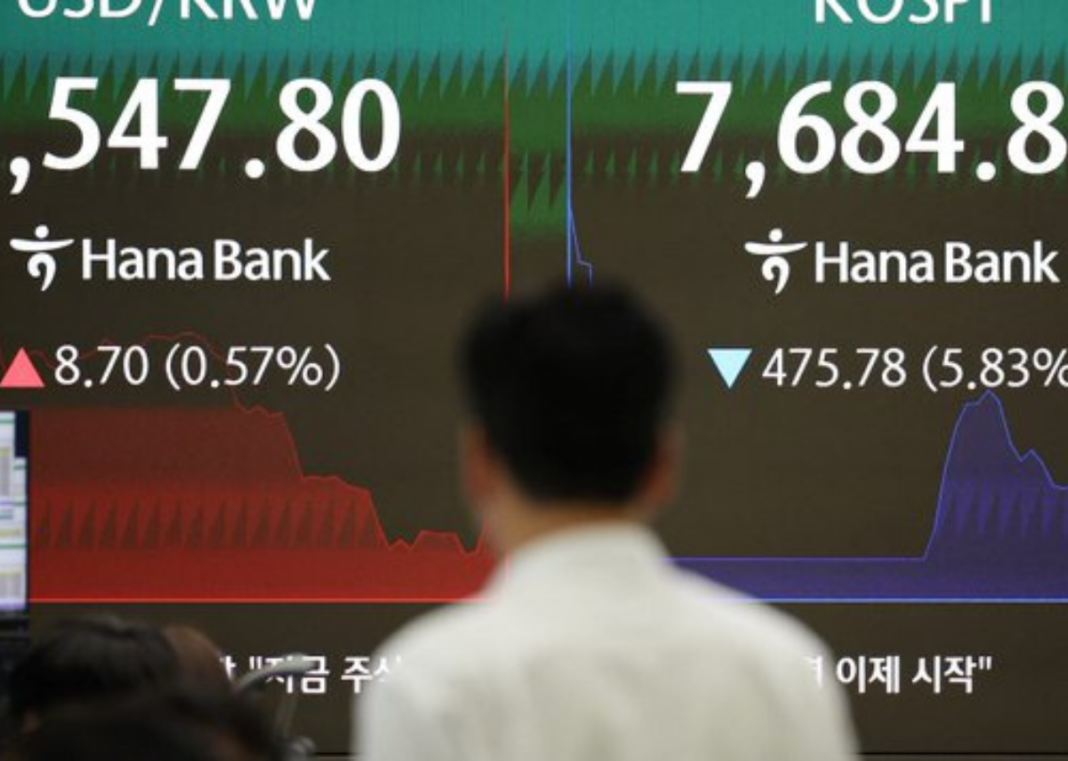
South Korea’s benchmark KOSPI index plunged 8.3 percent to close at 7,484.41 on Monday, triggering circuit breakers and recording its steepest single-day fall since March 4, after stronger-than-expected US non-farm payrolls data for May revived fears that the Federal Reserve could resume raising interest rates and triggered a sharp sell-off across the tech-heavy index. The index is now 15 percent below the peak of 8,801.49 hit on June 2. U.S. News & World Report
Circuit breakers were activated at 0003 GMT, halting trading for 20 minutes for the first time in three months. It was the third time they were triggered this year, and the ninth in history. NBC News
Chip heavyweight Samsung Electronics tumbled 10.2 percent, and peer SK Hynix dropped 7.7 percent at the close, though SK Hynix recovered some ground during the session. The two chipmakers have been the driving force behind the index’s world-beating surge, buoyed by record profits. Their market capitalisations this year alone have jumped more than 150 percent and 200 percent respectively, now accounting for over half of the benchmark and propelling them into the $1 trillion club. U.S. News & World ReportNBC News
US non-farm payrolls for May significantly beat expectations, fuelling concerns that the Federal Reserve might resume rate hikes. The 10-year Treasury yield climbed back above 4.5 percent, with the high-interest-rate environment directly pressuring risk asset valuations. NPR
A second trigger came from the semiconductor sector itself. Broadcom’s AI chip sales guidance failed to meet the market’s elevated expectations, triggering a massive sell-off across the semiconductor sector after its shares plunged in after-hours trading on Friday. The combination of a macro shock from the payrolls data and a sector-specific shock from Broadcom’s guidance miss proved particularly damaging for a market as heavily concentrated in chipmakers as South Korea’s. NPR
The KOSPI’s heavy concentration in semiconductor stocks, particularly Samsung Electronics and SK Hynix, amplified losses. High retail margin debt heightened vulnerability to margin calls. NPR
Not every index constituent fell. E-commerce firm Naver was a rare outlier among index heavyweights, rising 9.2 percent on a deal with Nvidia, while Hyundai Motor dropped 8.7 percent despite an agreement with the US AI chipmaker to expand their partnership. U.S. News & World Report
The Nvidia connection provided SK Hynix with a partial lifeline as the session progressed. Shares of SK Hynix, a major supplier of advanced chips to Nvidia, cut losses to 3.2 percent after Nvidia Chief Executive Jensen Huang said the company remains its “biggest partner” while unveiling new deals during his trip to South Korea. NBC News
Foreigners were net sellers of local shares worth 355 billion won, equivalent to $231.40 million, extending their selloff to 21 consecutive sessions. U.S. News & World Report
South Korea’s president moved quickly to address the market panic. In a press conference marking his first year in office on Monday, President Lee Jae Myung, who has rolled out a range of policies to boost the domestic stock market since taking office in June 2025, said the market was “still undervalued.” South Korean financial authorities pledged intervention in response to the scale of the sell-off, without specifying the form or timing of any measures. NBC NewsNPR
One analyst counselled against reading the decline as a structural reversal. “Increased volatility is inevitable, but it is unlikely that the rout will go on for several days, given that the KOSPI’s valuation pressure has been lowered by recent correction and earnings momentum remains robust for semiconductor stocks,” Han said — a reference to the analyst identified by Reuters as Han, without a further institutional affiliation provided. NBC News
Regional and Global Impact
Monday’s sell-off exposed the structural vulnerability of a market that has risen 83 percent year-to-date: concentration risk. With Samsung Electronics and SK Hynix together accounting for over half of the KOSPI’s total weight, any shock to global semiconductor sentiment — whether from the Fed rate outlook, a US chipmaker’s guidance miss, or a shift in AI capital spending expectations — transmits directly and disproportionately into the index. The 21-session consecutive run of foreign net selling indicates that international institutional investors began reducing exposure to Korean equities well before Monday’s acute sell-off, suggesting a more sustained reassessment of the market’s valuation rather than a one-day reaction.
For global technology markets, the KOSPI’s collapse is one of the first major indicators of how the AI rally’s most concentrated beneficiaries respond to a simultaneous rate-hike scare and earnings-guidance disappointment. Despite Monday’s losses, the KOSPI is up 83 percent year-to-date — a figure that illustrates both the scale of the preceding rally and the distance the index could still fall if the current correction deepens. NBC News
Background
In 2025, the KOSPI rose 76 percent for its biggest gain since 1999 and the top performance among major global markets that year, driven almost entirely by the AI-related demand surge for advanced memory chips — products in which Samsung Electronics and SK Hynix hold dominant global market positions. The Federal Reserve has held rates steady through 2026 as it assessed the inflation effects of the Iran war on the US economy. May’s non-farm payrolls data, released Friday, showed the US labour market running hotter than economists had forecast, reducing the probability of rate cuts and raising the possibility — for the first time in months — of a resumption of tightening. Circuit breakers on the Korea Exchange are triggered when the KOSPI falls more than 8 percent from the previous day’s close, halting all trading for 20 minutes. Monday’s activation was the ninth in the exchange’s history. NBC News
What Happens Next
South Korean financial authorities have pledged market intervention but have not publicly specified what instruments or scale of support they intend to deploy. President Lee Jae Myung’s characterisation of the market as “still undervalued” signals the government’s intention to support prices rather than allow a free correction, though the effectiveness of verbal intervention has limits when foreign selling is running at 21 consecutive sessions. The Federal Reserve’s next policy meeting will determine whether the market’s rate-hike fears are validated or dismissed. Jensen Huang’s ongoing visit to South Korea and the Nvidia partnership announcements with both SK Hynix and Hyundai provide a degree of positive news flow for the market to absorb alongside the sell-off. Samsung Electronics and SK Hynix’s next quarterly earnings releases will be the next fundamental test of whether the semiconductor earnings momentum that underpinned the rally remains intact.