
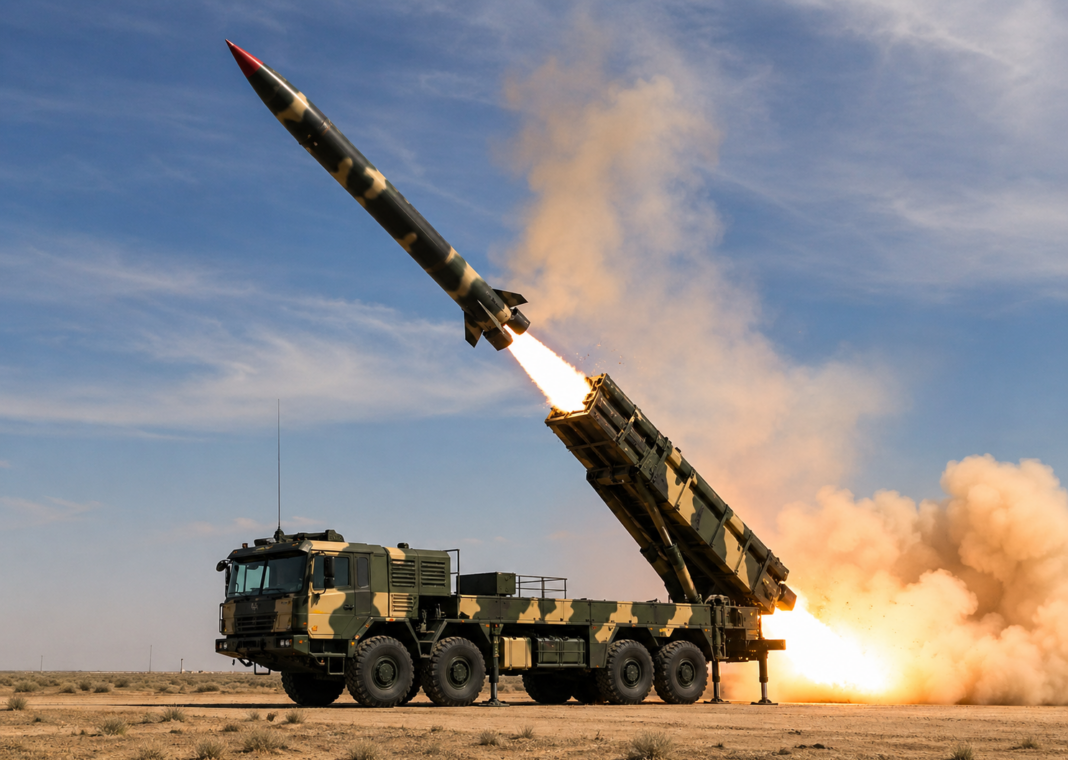

Pakistan just wrapped up a training launch of its homegrown Fateh-II missile system, pushing ahead with efforts to upgrade its conventional firepower. The Army led the drill, which fit into a regular military exercise. These drills gauge whether new tech, troops, and procedures actually work under real-world pressure.
Officials said the launch was not meant to show off their power. It was about making sure the troops understand the system well. This is normal for any military. They test their equipment, work, on their teamwork. Keep everyone ready. The Fateh-II seems ready to be used in real situations.
Fateh-II isn’t just another rocket. It’s part of a family of guided missiles built in Pakistan to improve precision strikes. With a reach of roughly 400 kilometers, it can hit everything from command centers and supply depots to key infrastructure. That extra range and accuracy set it apart from earlier generations and give Pakistan more room to maneuver on the battlefield.
The Fateh-II is special because of its guidance technology. It has avionics that help it stay on track. Even when the other side tries to interfere with it the Fateh-II can still hit its target. This is very important, in wars, where being accurate and working properly can make a big difference. The Fateh-II shows that Pakistan wants weapons that work well when things get tough. The Fateh-II is an example of this it has the guidance technology that Pakistan needs to make sure its weapons can perform in complicated situations.
Beyond just the hardware, the exercise checked how well different teams coordinated—from spotting targets and running the numbers, to actually firing and then reviewing what went down. Army leaders said the drill hit all its marks, showing both the missile and the teams behind it are ready.
Senior officers watched the whole thing and walked away pleased. They pointed to how vital continuous training and homegrown innovation are when it comes to keeping defenses strong. Making more gear at home should cut down reliance on imported tech, letting Pakistan rely more on its own strengths.
The timing matters, too. South Asia’s security landscape is always shifting, and every new military capability gets noticed. Pakistan described this as just another exercise, but everyone knows these launches hint at progress and reinforce deterrence. Experts see the Fateh-II as another step toward high-tech, targeted warfare—moving past old-school, less accurate artillery.
Still, each new weapon adds another layer to the delicate balance in the region. Stronger defenses can discourage threats, but they also underline the importance of communication and transparency, so nobody jumps to the wrong conclusion or overreacts. When countries talk openly about these activities, there’s less room for misunderstanding.
The Fateh-II is just one part of Pakistan’s broader push to modernize its military. That includes new tech like real-time data systems and improved command-and-control networks. All of it aims to keep Pakistan’s defenses solid as new challenges emerge.
Bottom line: the Fateh-II’s successful test wasn’t just routine. It marks real progress for Pakistan’s defense industry and training programs, and points to bigger shifts in regional security and the way wars are fought today.
In a picture the successful test launch of the Fateh-II missile system shows Pakistan is getting better at using modern technology to improve its defense. This is a sign that the country is moving in the right direction. It also reminds us that being ready and prepared is very important in todays world where being fast, accurate and working together makes a difference in military effectiveness. We also need to make sure that new technology is used responsibly and that we talk to our neighbors and are open, about what we’re doing. This will help keep things in South Asia. So the Fateh-II missile system and other advancements are a step but we need to be careful and manage things wisely to keep the region safe.