
Australia’s Security Environment Is Degrading, Spy Chief Warns in Annual Threat Assessment
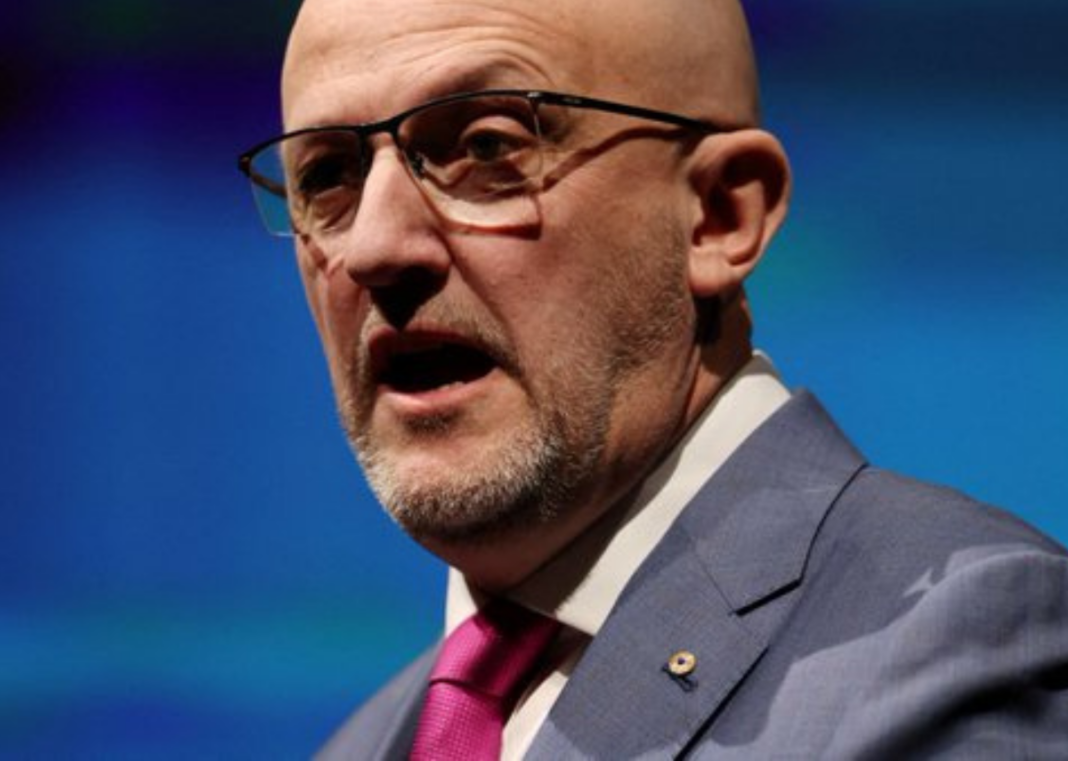
Australia faces multi-faceted threats from autocratic regimes, hackers, and antisemitic extremists that present a systemic challenge to national security, the director-general of the Australian Security Intelligence Organisation (ASIO) said in his annual threat assessment speech delivered in Canberra on Wednesday, June 24. Mike Burgess told the audience that Australia’s official terrorism threat level of “probable” no longer adequately captures what he described as “concurrent, cascading and compounding threats” facing the country.
“‘Probable’ does not tell the full story. The next level on the scale is ‘expected’, which applies when we have intelligence about a specific attack. We do not,” Burgess said. “But we do know the environment is degrading and acts of politically motivated violence are becoming more likely than ‘probable’ suggests.”
An Iranian-Directed Firebombing Campaign
Burgess used the speech to disclose new details of an investigation linking an Australian citizen living in Iran to a major antisemitic attack in Sydney. He said the individual, a senior member of Iran’s Islamic Revolutionary Guard Corps (IRGC), orchestrated the firebombing. “Iran recruited him through a complex web of Iraqi-based militia groups. Valuing his high wealth and criminal connections, the IRGC protected him and supported his illegal enterprises,” Burgess said.
He warned that Tehran continued to regard Australia as a target and could “conduct or inspire acts of arson, vandalism or even assassinations on Australian soil.” Burgess separately attributed a series of arson attacks on Jewish-owned businesses in Australia since the start of the Gaza conflict to Iranian direction, and said he held concerns that an Iranian-linked group active in Europe could carry out further attacks or an assassination inside Australia.
The Bondi Beach Attack
Burgess’s speech came six months after Australia’s deadliest antisemitic attack, a mass shooting at a Hanukkah celebration at Bondi Beach in Sydney on December 14, 2025, that killed 15 people. The attack, allegedly carried out by a father and son, has prompted scrutiny of ASIO’s resourcing and an independent inquiry into antisemitism that found a drop in the share of agency funding directed toward counter-terrorism investigations in the period before the shooting.
Burgess defended the agency’s allocation of resources, saying ASIO was countering multiple threats simultaneously and that it was extremely difficult to “simplistically pivot” from one threat to another. He described the attack as shocking but not surprising given what he called a deteriorating global and domestic security environment. “We cannot stop every terrorist, just as we cannot catch every spy. But we continue to work around the clock to keep Australians safe,” he said.
Burgess said ASIO had foiled 31 major terrorism plots since 2014 and had resolved more than a dozen major terror-related cases in the period since the Bondi Beach attack. He said the number of ASIO officers working on counter-terrorism had doubled between 2005 and 2025, and that the agency was deploying new tools, including artificial intelligence, to manage an increasingly complex caseload.
A Faster, Younger Radicalisation Pipeline
Burgess said the nature of radicalisation in Australia had changed markedly, with encrypted chat platforms now drawing people — including minors — into extremist ideology within a matter of weeks rather than the months or years such processes previously required. He said social media platforms were amplifying grievance narratives, eroding trust in public institutions, and exacerbating social polarisation. Radicalisation was increasingly occurring in online chat rooms rather than in physical gathering spaces such as prayer halls, he said, and was affecting younger individuals than in the past.
Espionage Targeting AUKUS Submarine Programme
Beyond terrorism, Burgess said foreign intelligence services were actively targeting classified information related to the AUKUS nuclear submarine partnership between Australia, the United States, and Britain. He cited a specific case in which an Australian official holding a security clearance was contacted by someone posing as a representative of a consulting firm, in what ASIO assessed as an attempt at espionage recruitment.
A Call to Overhaul the Threat-Level System
Following the address, Burgess said Australia’s terrorism threat-level system itself required review, telling reporters he is in talks with Home Affairs Department Secretary Stephanie Foster on how the framework could be overhauled. Australia’s terrorism threat level has remained at “probable” — denoting a greater than 50 percent likelihood of an onshore attack or attack planning within the next 12 months — but Burgess said the designation fails to capture the complexity of the current environment. “I do not believe the system was designed for a situation like the one we now face,” he said. “In the current climate, it is too simplistic to assume there is a single terrorism threat or a most likely terrorist threat.”
A minute’s silence was held ahead of Burgess’s address for the victims of the Bondi Beach attack. Attendees at the Canberra speech, who included senior defence officials, federal police representatives, and politicians, were shown a video compiling news footage depicting fraying social cohesion in Australia, including clashes between pro-Palestinian protesters and police, a march across the Sydney Harbour Bridge, white nationalist and neo-Nazi activity, and the aftermath of the Bondi attack.
Regional and Global Impact
Burgess’s remarks place Australia within a broader pattern of Western intelligence agencies publicly identifying state-directed proxy violence — rather than only organic domestic extremism — as a driver of attacks on home soil. His direct attribution of arson and firebombing campaigns to Iranian state direction adds Australia to the list of Western countries, including the United Kingdom and several European states, that have publicly accused Tehran of orchestrating attacks against Jewish communities and critics of the Iranian government on their territory in recent years.
The disclosure of espionage activity targeting the AUKUS submarine programme underscores the heightened intelligence stakes attached to the trilateral defence pact, which involves the transfer of sensitive nuclear propulsion technology between the United States, Britain, and Australia and has been a long-standing target of foreign intelligence interest given its strategic significance in the Indo-Pacific.
Background
ASIO is Australia’s domestic intelligence agency, responsible for countering espionage, foreign interference, terrorism, and sabotage threats within the country. Burgess has delivered a public annual threat assessment address each year since 2020, a practice that represented a departure from the agency’s previous tradition of communicating primarily through closed-door briefings. The Bondi Beach attack in December 2025 became Australia’s deadliest antisemitic terrorist incident and prompted an independent government inquiry into the state of antisemitism in the country, alongside scrutiny of ASIO’s pre-attack intelligence and resourcing decisions. The AUKUS partnership, announced in 2021, involves Australia acquiring nuclear-powered submarines with US and UK assistance and has become one of the most significant defence and intelligence-sharing arrangements in the Indo-Pacific region.
What Happens Next
Burgess said he is in active discussions with Home Affairs Department Secretary Stephanie Foster about overhauling Australia’s terrorism threat-level system, though no timeline for a revised framework has been announced. The independent inquiry into the Bondi Beach attack and the broader state of antisemitism in Australia remains ongoing, alongside a pending criminal trial of the alleged attackers. ASIO is expected to continue its investigations into the Iranian-directed firebombing campaign and the broader pattern of foreign-state-sponsored activity targeting Jewish communities and critical infrastructure in Australia.