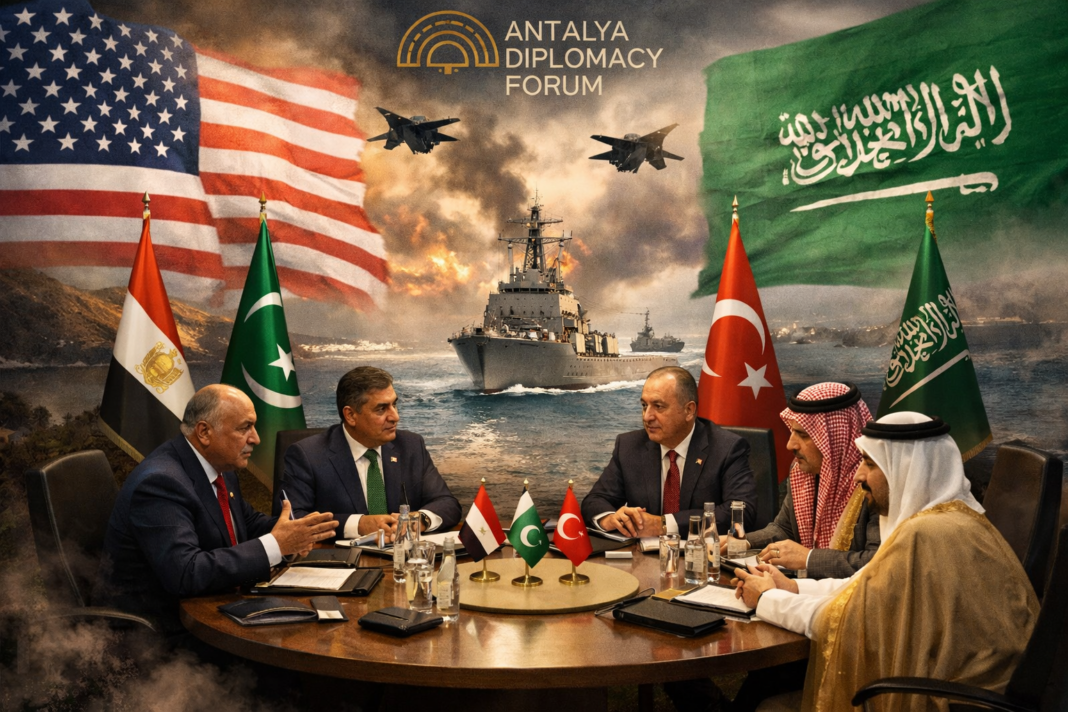

Top diplomats from Turkey, Pakistan, Saudi Arabia and Egypt are meeting today in Antalya.They are all going to the 2026 Antalya Diplomacy Forum. This meeting is very important because the Middle East is getting more tense every day.
The Turkey diplomats and the Pakistan diplomats and the Saudi Arabia diplomats and the Egypt diplomats really need to talk about what they will do
Everyone sitting at the table knows that the situation, with the Turkey diplomats and the Pakistan diplomats and the Saudi Arabia diplomats and the Egypt diplomats is very serious.
They want to deal with the problems in the Middle East and also talk to countries, in the Islamic world. The Turkey, Pakistan, Saudi Arabia and Egypt diplomats are trying to make progress with their discussions.
This year the Antalya Diplomacy Forum is happening from April 17 to April 19. It is bringing together leaders and officials from than 150 countries. The Antalya Diplomacy Forum has presidents, foreign ministers and senior diplomats attending. The Antalya Diplomacy Forum is talking about issues like global instability and conflicts that will not stop. The Antalya Diplomacy Forum is also discussing cooperation that does not feel very strong. Everyone is watching the stage at the Antalya Diplomacy Forum.. The real discussions are happening in the smaller side meetings, at the Antalya Diplomacy Forum.
So, what’s on the agenda for Turkey, Pakistan, Saudi Arabia, and Egypt? Regional security, for starters. Everyone knows the current ceasefire deals around the region aren’t exactly on solid ground. The Iran crisis still looms large. Spillover violence and attacks keep threatening crucial trade and security routes. For these four countries, the goal is less about dramatic breakthroughs and more about finding common ground—coordinating diplomatic moves, backing humanitarian initiatives, and keeping dialogue with all sides open, even as tempers run high.
This isn’t the time these countries have tried to sync their positions. They have had meetings over the past few months. These meetings were held in places like Islamabad and Riyadh. They discussed their ideas in private. Antalya is another meeting, in this ongoing effort to coordinate.
They are still working together. The idea floating between the corridors isn’t about signing new treaties—it’s about understanding what each country can bring to the table, and leaving the door open for broader regional negotiations.
The Antalya Diplomacy Forum itself has grown in the past few years. Backed by Turkey’s Foreign Ministry and President Recep Tayyip Erdoğan, it’s become an annual tradition where informal talks and side conversations often matter more than scripted speeches. The 2026 theme is “Mapping Tomorrow, Managing Uncertainties.” If those words feel a bit vague, well, that’s diplomacy for you, but they do signal a shared sense that the world is shifting fast—and not always for the better.
More than 5,000 people are attending this year, including policy wonks and heads of state, all looking for productive tension rather than dramatic deals. The forum’s strength lies in getting rivals, neighbors, and sometimes even old enemies talking face-to-face.
And the timing couldn’t be more critical. Unrest in the Middle East—not just Israel and Iran but also in the patchwork of local proxies and overlapping crises—remains a powder keg. Ceasefires in some spots are barely holding. Leaders from Turkey keep insisting on the need to turn those fragile pauses into long-term peace plans, reaching out to both Western and regional capitals to stop another explosion of violence and keep trade flowing through lifelines like the energy corridors.
Pakistan diplomats are working hard they are trying to be the people in the middle that everyone can talk to.
Saudi Arabia and Egypt are, like the ones they use their power to keep the conversations going and make sure things do not get out of hand. Together, the four countries have turned into the region’s main diplomatic “task force,” plugging away at multiple crises—sometimes quietly, sometimes out in the open.
It’s not just Antalya, either. Recent meetings in Islamabad pulled these officials together, as they tested new frameworks for regional stability. Turkey, in particular, has tried to broker dialogue even between unlikely partners, keeping lines open between Washington and Tehran to avoid more escalation around the Gulf. There’s a lot at stake—just look at the Strait of Hormuz, a lifeline for global energy.
Political analysts see today’s Antalya meeting as the start—maybe—of something bigger. Not a formal alliance, but the early stages of a regional diplomatic bloc where coordination takes priority over grand declarations. With so many global institutions coming up short, regional efforts like this matter more and more.
Turkey is using its seat in NATO and the relationships it has with countries in the region. Pakistan is like a bridge that helps with things between different countries in the Muslim world. Saudi Arabia and Egypt are very important because they are the Arab states and they have a lot of power when it comes to politics and the economy. Turkey is using its NATO seat to do this. Pakistan is playing this role of a bridge in the Muslim world. Saudi Arabia and Egypt are bringing their power to the table because they are the Arab states, with a lot of political and economic power.
The big takeaway? As world crises keep testing international institutions, it’s these regional power moves that may actually keep things from boiling over. Turkey, Pakistan, Saudi Arabia and Egypt are not offering solutions but they are trying to talk things through.
This meeting today may not have a result but it shows that countries are now really working together talking to each other directly and trying to solve problems in the Middle East.
Countries, like Turkey are actually making an effort to have these kinds of conversations like the one happening in Antalya.