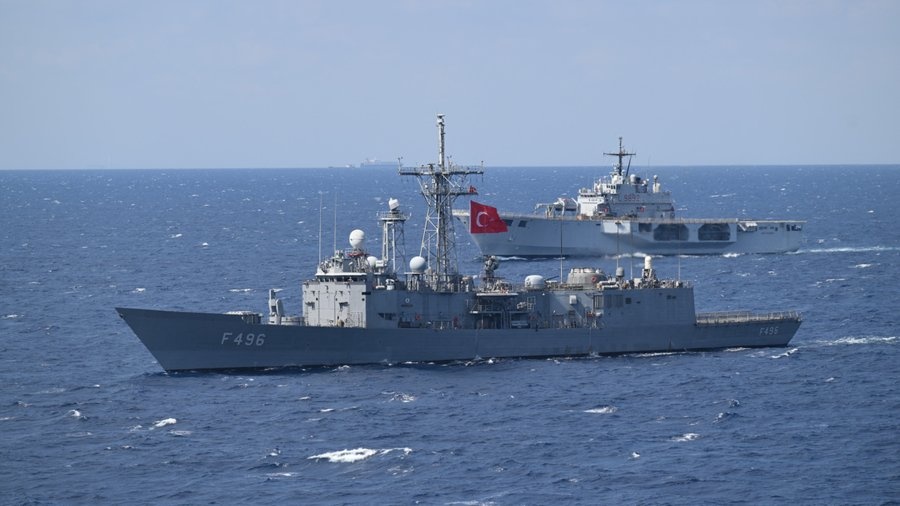

Turkeys first homegrown aircraft carrier is getting a lot of attention. It is causing people to talk about it in Ankara and other places. People who work for the government experts who know about defense and regular people all think this aircraft carrier shows that Turkey is working hard to make its military stronger and to protect itself from other countries that might be a threat. This is not just about building something it is about Turkey changing how it thinks about its place in keeping people safe in its region and in the world. Turkeys first homegrown aircraft carrier is a deal, for Turkey and its military.
Right at the core is the National Aircraft Carrier Project, or MUGEM. For the first time, Turkey’s aiming to design and build a major carrier using only its own resources and know-how. Yeah, they already launched the TCG Anadolu—a big step—but MUGEM is set to go way further. Bigger, more capable, and broader in scope. It’s all part of Turkey’s goal to stop depending on foreign defense suppliers and boost its own industry.
Construction of the ship started recently. It is getting done pretty fast. People have noticed this. It is causing a lot of talk about politics and people are getting really excited. The ship is going to be around 60,000 tons so it is a ship that’s not too big and not too small. When it is finished it will have the planes on it and also drones. Turkey has done a lot of work with drones thanks to companies like Baykar and Turkish Aerospace Industries and this is very important for what the ship is supposed to do. The ship might be one of the ones that is made mostly for using drones to fight which is a pretty new idea for a carrier, like the ship.
Why is Turkey doing this? Well, the country sits right at the intersection of Europe, Asia, and the Middle East—a tough spot, geopolitically. Disputes in the Eastern Mediterranean, fights over sea boundaries, and general regional tension all highlight one thing: Turkey needs naval power. Building a carrier lets Turkey project power way beyond its own coasts, respond fast to any crisis, and really stretch its influence far and wide.
There’s also a bigger plan—people in Ankara talk about “strategic autonomy” a lot. For years, Turkey’s been pushing to make its own drones, ships, missiles, and tech. Past arms embargoes and restrictions from foreign partners helped fuel this shift. With more homegrown capabilities, Turkey aims to ensure its military isn’t hamstrung by politics overseas.
Deterrence is a huge piece here. It’s about showing potential adversaries the risks of messing with Turkey. A carrier sends a clear message: Turkey can bring its air power to international waters with no need for help from foreign bases. That means more independence and quicker responses. For Turkey, that kind of visibility could make nearby states think twice.
There’s an economic angle, too. Big defense projects tend to breed innovation, boost jobs, and strengthen local industries. MUGEM has pulled in a broad web of subcontractors, engineers, and researchers—a real shot in the arm for Turkey’s defense ecosystem. And some of those benefits spill over into civilian sectors, like electronics and software.
But let’s not gloss over the obstacles. Aircraft carriers are seriously complex. Even seasoned naval powers struggle to build, maintain, and operate them. Questions linger about how long this’ll take, what it’ll cost, and whether the finished carrier will actually perform as intended. Integrating cutting-edge aircraft—both manned and unmanned—brings its own challenges.
Then there’s the big picture debate: Are carriers even worthwhile in modern warfare? Some say carriers are still the best for projecting power, while others worry they’re sitting ducks for advanced missiles or cyber attacks. Turkey’s focus on drones could make their carrier operations more flexible—and hopefully cheaper—but those concerns aren’t going away.
And don’t forget the regional impact. Neighbors are watching closely, probably reconsidering their own defense moves. While Turkey insists the carrier is all about defense and deterrence, others may see it differently. It’s bound to stir up more strategic competition.
Still, momentum’s strong. The pace of construction suggests Turkey’s dead-set on finishing the job. Political backing, public interest, and institutional support all show this isn’t some passing project—it’s a national priority. If Turkey pulls this off, it’ll join a pretty exclusive club of countries that can build their own carriers.
Bottom line? Turkey’s indigenous carrier project isn’t just a technical achievement—it’s a statement. Turkey’s looking to boost military strength, gain independence, and carve out a more confident role in an uncertain world. Challenges are real, but the ship shows Turkey’s intent to combine innovation and strategy, aiming for a bigger stage and stronger defense of its interests.