

Gulf States Sign Turkish Arms Deals Amid Iran Drone Threat
Kuwait, Saudi Arabia, Qatar, and the UAE have moved to procure Turkish air defence systems after Iranian long-range drones destroyed multiple radar installations across the region, accelerating a shift away from American suppliers bogged down by delivery backlogs. Now these countries want to get systems, from Turkey of the United States.
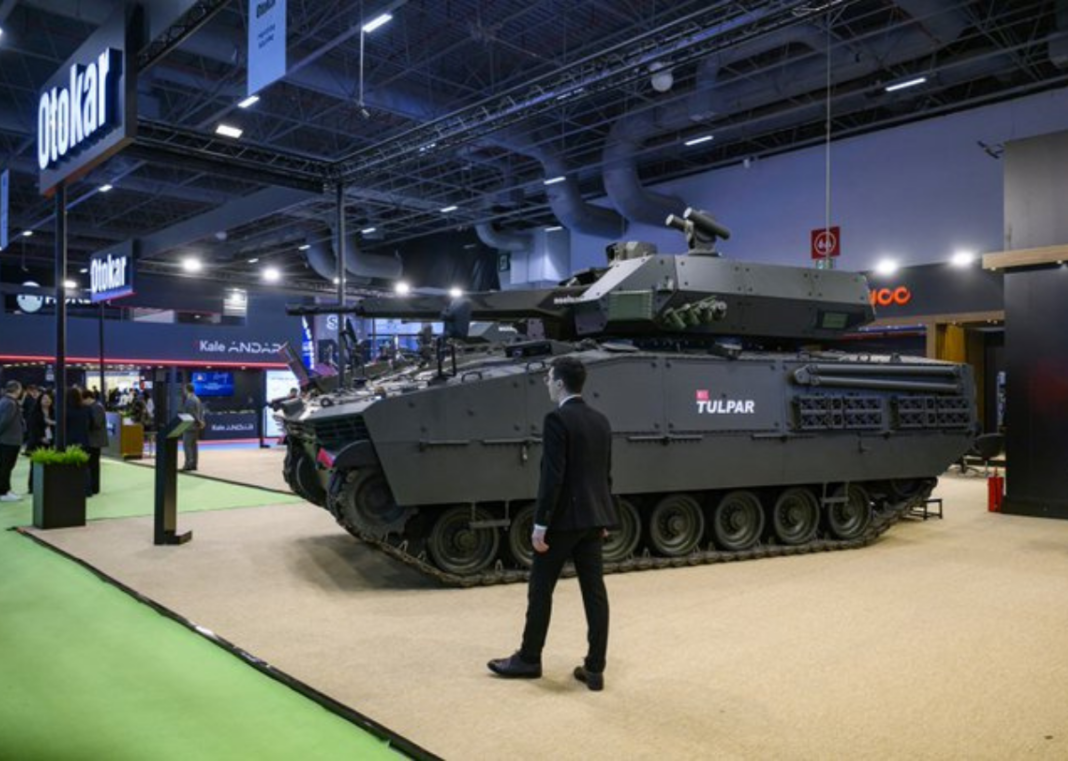
The purchases and negotiations were on full display at Saha Expo, Turkey’s international defence and aerospace exhibition in Istanbul, which closed over the weekend of May 10–11, 2026. Saha Expo is like a market for Turkey where they show off things, like planes and guns. Gulf delegations made a strong showing at the fair, with several signing government-to-government agreements with Turkish defence firms.
Kuwait’s Defence Minister Sheikh Abdullah Ali Abdullah Al Sabah signed a government-to-government sales protocol to procure military systems from major Turkish defence companies, including Aselsan, Havelsan, drone maker Baykar, armoured vehicle producer Otokar, and Yonca Shipyard. middleeasteye
A source familiar with Kuwaiti government thinking told Middle East Eye that Kuwait was particularly interested in Baykar’s medium-altitude, long-endurance Akinci drones, as well as air defence systems such as Hisar, which is designed for short- and medium-altitude threats. Kuwait is not new to Turkish military hardware. The country already purchased Bayraktar TB2 drones from Ankara in 2023. middleeasteyemiddleeasteye
Contracts in Saudi Arabia and Qatar
Two Turkish defence industry insiders said Saudi Arabia and Qatar were also particularly interested in anti-drone systems produced by Turkish companies, and that both countries signed contracts to purchase the Korkut 100/25 air defence system. Produced by Aselsan, the Korkut system is designed to counter first-person-view and tethered drones using 25-millimetre smart ammunition. middleeasteyemiddleeasteye
Saudi Arabia is going further. The insiders said the kingdom also intends to purchase newly unveiled air defence systems presented at Saha Expo, including laser-guided anti-drone systems that can be mounted on small trucks. middleeasteye
UAE Vice President Mansour bin Zayed also visited the Saha fair on Friday, inspecting products displayed by several companies. No contract details for the UAE were confirmed by press time. middleeasteye
The Pressure Behind the Pivot
The US and Israel’s war on Iran since late February has placed heavy pressure on Gulf countries, particularly Kuwait, the United Arab Emirates, Qatar, and Saudi Arabia. middleeasteye
Despite their robust air defence systems, which remain effective against ballistic missiles, these states face ammunition shortages and a serious challenge from Iranian long-range drones, which have succeeded in destroying several long-range radar systems in the region. middleeasteye
That combination — depleted stockpiles and a proven drone threat — has driven the buying surge. “The Gulf nations are on a buying spree, and they are even enquiring about systems already in use by military forces in the region,” one person familiar with Gulf thinking told Middle East Eye. “There is even an interest from Oman, which is traditionally neutral.” middleeasteye
Iraq Joins the Queue
Interest in Turkish air defence systems extends beyond the Gulf. Iraq’s deputy army chief of staff for operations, Lieutenant General Saad Harbiye, told The National that Iraq was finalising the purchase of 20 air defence systems. A source familiar with the matter told Middle East Eye that these systems were also likely to be Korkut anti-drone vehicles. middleeasteye
Where Turkey Falls Short — For Now
Turkey cannot yet offer Gulf states everything they need. One area where Turkey is still struggling to offer a credible option is in the interception of ballistic missiles. Although Ankara has several systems under development, including the Siper long-range missile defence system, it would need another four to five years of development to adapt them effectively against ballistic missile threats. middleeasteye
That gap, however, has not cooled Gulf interest — because the alternative is a long wait. One Turkish defence industry insider told Middle East Eye that Gulf countries remained interested in future Turkish systems because alternative suppliers, such as the United States, face delivery backlogs of several years for Patriot and THAAD systems and their ammunition. middleeasteye
“They can buy Turkish systems within a similar timeframe, with a potential option for localisation and joint development if the conditions are right,” the insider said. “And they increasingly recognise that it is a better offer.” middleeasteye
Regional and Global Impact
The shift carries consequences well beyond procurement ledgers. Turkey is establishing itself as a front-line arms supplier to some of the wealthiest states in the Middle East, a role that Washington has held almost exclusively for decades. For Gulf governments, diversifying suppliers reduces dependence on US delivery schedules and congressional approval processes — both of which have become unpredictable constraints.
For Iran, the picture is more complicated. A Gulf arsenal filled with Turkish anti-drone systems directly counters one of Tehran’s most effective tools in the current conflict. Iranian long-range drones have already proven capable of hitting fixed infrastructure, according to Middle East Eye. Closing that gap — even partially — changes the defensive calculus across the region.
Turkey’s deepening arms ties with Arab states also signal a broader diplomatic realignment. Ankara has cultivated relationships across the Gulf in recent years, and arms sales are among the most durable anchors of state-to-state partnerships.
Background
The US-Israeli military campaign against Iran began in late February 2026 and has drawn the Gulf into an acute security emergency even as those states have sought to avoid direct involvement. Iran has deployed long-range drones extensively during the conflict, targeting regional infrastructure. US defence firms have faced mounting delivery backlogs since the outbreak of the war in Ukraine in 2022, when demand for Patriot batteries and munitions surged globally. Turkey’s defence industry has expanded rapidly over the past decade, with companies such as Baykar gaining international recognition for the Bayraktar TB2 drone. Kuwait signed its first procurement agreement for Turkish drones in 2023, making it an early Gulf buyer ahead of the current rush.
What Happens Next
Kuwait’s government-to-government protocol with Turkish defence companies is expected to move toward firm contracts in the coming weeks, according to Middle East Eye. The government of Kuwait is going to sign some deals with defence companies very soon. Iraq is finalising the terms of its purchase of 20 air defence systems, Lieutenant General Saad Harbiye confirmed to The National. Saudi Arabia’s interest in the laser-guided truck-mounted systems shown at Saha Expo is expected to proceed to formal negotiations, two Turkish defence industry insiders told Middle East Eye. Turkey’s Siper ballistic missile defence system remains on a development timeline of four to five years before it can be offered credibly to Gulf buyers for that specific threat tier.