
Republican Hawks Slam Trump’s Iran Ceasefire Terms as ‘Nightmare for Israel’
Senior Republican senators launched a rare public broadside against President Donald Trump on Sunday over the reported terms of an emerging ceasefire agreement with Iran, warning that the deal would leave Tehran regionally dominant, allow it to retain nuclear enrichment capabilities, and permanently weaken the United States’ position in the Middle East. The criticism intensified after Trump said a memorandum of understanding to end the US-Israeli war on Iran had been “largely negotiated” and was awaiting finalisation. Trump said the agreement would include reopening the Strait of Hormuz, the vital global energy chokepoint that Iran has effectively controlled since the war began. XinhuaArab News
What Trump Said
Trump wrote on Truth Social that “an agreement has been largely negotiated, subject to finalization between the United States of America, the Islamic Republic of Iran, and the various other countries,” adding that final details would be announced “shortly.” U.S. News & World Report
Trump said he had spoken with leaders from Saudi Arabia, the United Arab Emirates, Qatar, Pakistan, Turkey, Egypt, Jordan, and Bahrain, along with Israel, before making the announcement. Space.com
Trump did not mention Iran’s nuclear programme, despite repeatedly insisting throughout the conflict that Iran would not be allowed to attain nuclear weapons. Arab News
According to a US official cited by Axios, the agreement under discussion involves a 60-day ceasefire extension during which the Strait of Hormuz would be reopened, Iran would be able to freely sell oil, and negotiations would begin on curbing Iran’s nuclear programme. Space.com
A person familiar with the framework told CNN that recent versions of the memorandum would end hostilities with Iran while gradually reopening the Strait of Hormuz and ending the US naval blockade of Iranian ports. U.S. News & World Report
Iran’s Position
Tehran’s public characterisation of the emerging agreement differed markedly from Trump’s. Iran’s foreign ministry spokesperson Esmaeil Baghaei said on Saturday that Tehran was finalising a memorandum of understanding that would serve as an initial framework agreement lasting between 30 and 60 days. According to Baghaei, the proposed 14-clause framework would cover issues including the Strait of Hormuz, the US naval blockade on Iran, and ending the war “on all fronts,” including Lebanon. Reports also suggested the possible release of frozen Iranian assets. Xinhua
Baghaei added that any mechanism concerning the Strait of Hormuz should be agreed between Iran, Oman, and the countries bordering the waterway, and that the United States “has nothing to do” with it. U.S. News & World Report
Iran’s Fars news agency reported that the Strait of Hormuz would remain under Iran’s management according to the latest exchanged text, dismissing Trump’s announcement of reopening the strait as “incomplete and inconsistent with reality.” Arab News
Iranian officials publicly insisted that nuclear issues are not part of the current negotiations, with senior figures denying Tehran had agreed to surrender its stockpile of highly enriched uranium. Xinhua
The Republican Backlash
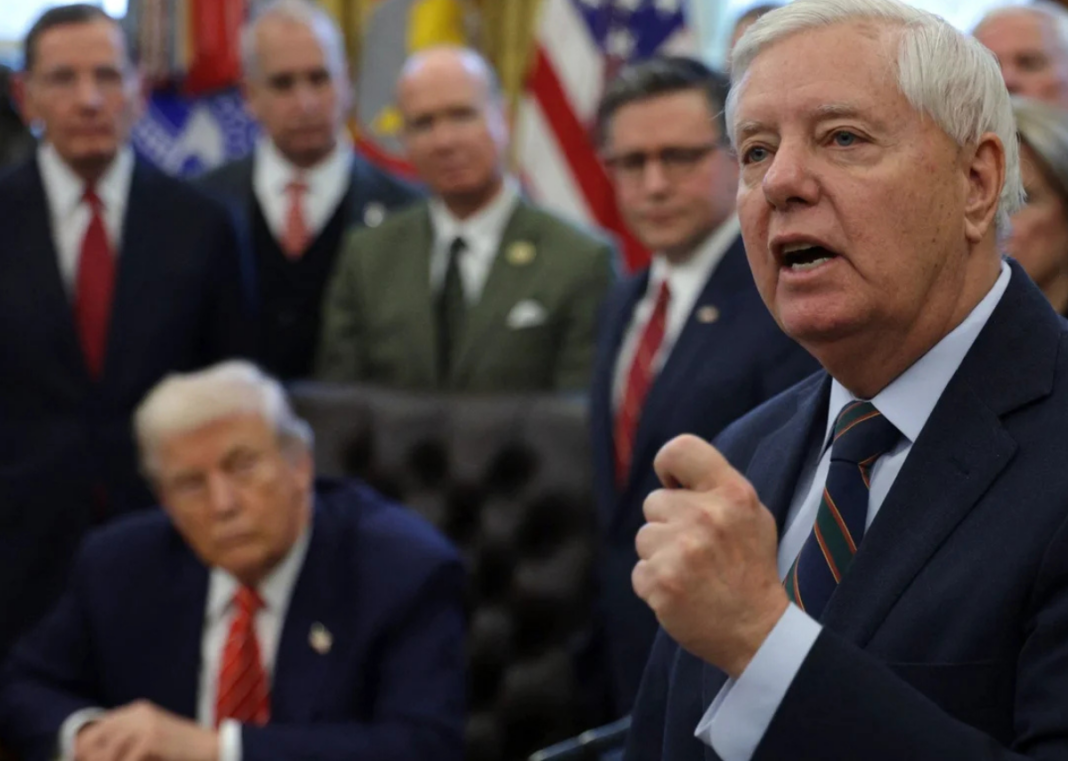
Senator Lindsey Graham of South Carolina warned that any agreement leaving Iran militarily capable and politically intact would become a “nightmare for Israel.” Writing on X, Graham said: “If a deal is struck to end the Iranian conflict because it is believed that the Strait of Hormuz cannot be protected from Iranian terrorism and Iran still possesses the capability to destroy major Gulf oil infrastructure, then Iran will be perceived as being a dominant force requiring a diplomatic solution.” Xinhua
Graham added that Iran’s perceived ability to threaten Gulf energy infrastructure would, in his words, shift the regional balance of power “in perpetuity.” Xinhua
Senator Roger Wicker of Mississippi, chairman of the Senate Armed Services Committee, called the rumoured 60-day ceasefire “a disaster,” writing that “everything accomplished by Operation Epic Fury would be for naught.” Earlier in the week, Wicker accused unnamed administration officials of pushing Trump toward “a deal that would not be worth the paper it is written on” instead of allowing the president to “finish the job he started.” Xinhua
Senator Ted Cruz of Texas said he was “deeply concerned” by the reports and wrote: “If the result of all that is to be an Iranian regime — still run by Islamists who chant ‘death to America’ — now receiving billions of dollars, being able to enrich uranium and develop nuclear weapons, and having effective control over the Strait of Hormuz, then that outcome would be a disastrous mistake.” Unlike Graham and Wicker, Cruz explicitly named Trump while also placing blame on unnamed advisers. Xinhua
The criticism was amplified by Senator Tom Cotton, chair of the Senate Intelligence Committee, who reposted Graham’s comments. Xinhua
Former Secretary of State Mike Pompeo delivered some of the sharpest language, comparing the emerging framework to the 2015 nuclear agreement negotiated under former President Barack Obama. Calling the reported terms “not remotely America First,” Pompeo argued the US should instead continue pressuring Iran economically and militarily. Xinhua
Former national security adviser John Bolton dismissed the negotiations entirely, saying talks with Tehran were “a waste of oxygen.” Xinhua
Trump Signals Both War and Diplomacy
The Republican pressure landed as Trump himself sent mixed signals. During an interview with CBS on Saturday, Trump said that the two sides were “getting a lot closer” to a deal, but also warned that if they did not reach an agreement “we’re going to have a situation where no country will ever be hit as hard as they’re about to be hit.” Over the preceding week, Trump had also posted a picture on social media of Iran covered in a US flag. Xinhua
In a separate interview with Axios, Trump said the chances of a deal were a “solid 50-50.” “I think one of two things will happen: either I hit them harder than they have ever been hit, or we are going to sign a deal that is good,” he said. Xinhua
Secretary of State Marco Rubio struck an optimistic tone on Saturday, telling reporters during his trip to India that “some progress” had been made, adding: “Even as I speak to you now, there’s some work being done.” Xinhua
Background
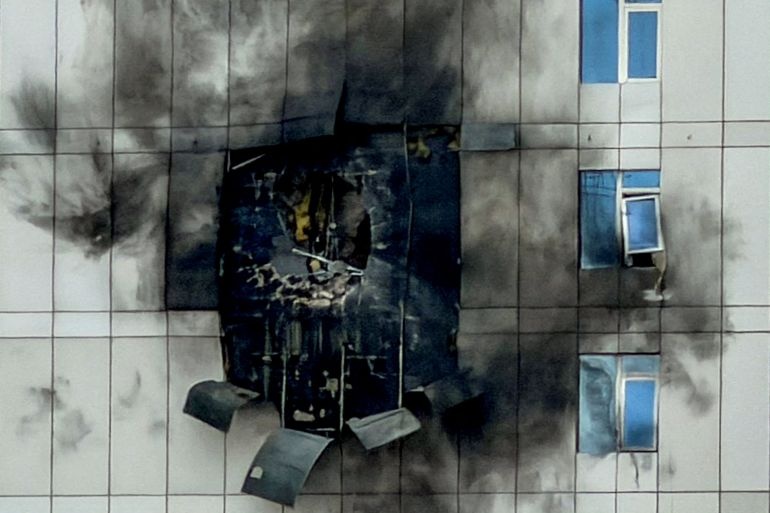
Operation Epic Fury — the US code name for its joint military operations with Israel against Iran — began on February 28, 2026. The opening salvo killed Supreme Leader Ali Khamenei and triggered hundreds of retaliatory Iranian missiles and thousands of drones across the Middle East, leaving thousands of people dead in Iran, Lebanon, Israel, and the Gulf Arab states, and displacing millions across the region. Iran announced the closure of the Strait of Hormuz on March 4, triggering what became the largest oil supply disruption in global history. An initial two-week ceasefire was brokered on April 8 following last-minute mediation by Pakistani Prime Minister Shehbaz Sharif, with Iran agreeing to allow safe passage through the strait in coordination with its armed forces. Weeks of negotiations since the April 8 ceasefire — including historic face-to-face talks in Islamabad — have yet to produce a permanent resolution or fully reopen the strait. U.S. News & World Report + 3
What Happens Next
Iranian Foreign Ministry spokesperson Baghaei said on Saturday: “Over the past week, the viewpoints have been getting closer. We must wait and see what will happen in the next three to four days.” Both Trump and mediating parties indicated on Sunday that the deal could be announced that day, though it had not been finalised and could still fall apart, according to Axios. If a memorandum of understanding is signed, a 60-day window of negotiations on Iran’s nuclear programme would follow. Whether that process would satisfy Republican hawks who have demanded complete Iranian nuclear disarmament — rather than a phased negotiating framework — remains the central unresolved question of the emerging agreement. U.S. News & World Report + 2