
Argentina’s Cabinet Chief Manuel Adorni Resigns Amid Spiralling Corruption Investigation
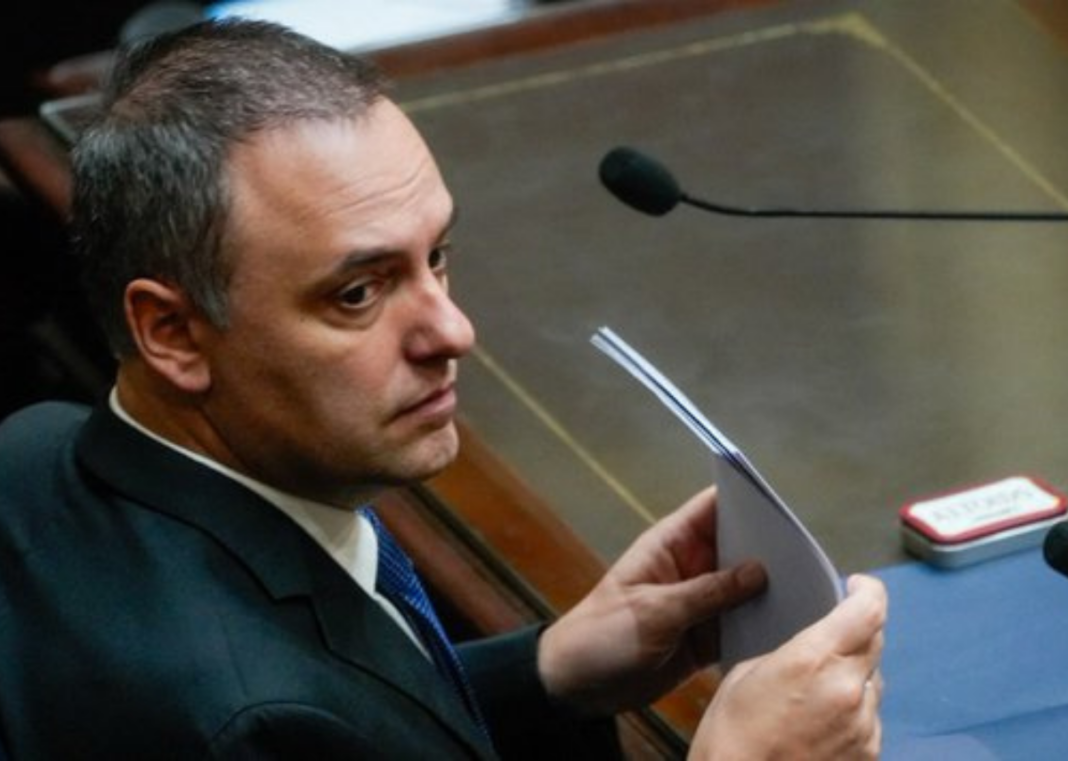
Argentine President Javier Milei’s cabinet chief, Manuel Adorni, resigned on Saturday, June 27, following a scandal that led to investigations into his spending in recent years. Adorni, who was appointed cabinet chief in November 2025, is a close confidant of Milei, who had originally named him as his spokesperson shortly after taking office in December 2023.
“For the first time since December 10, 2023, I am going against your wishes,” Adorni wrote in his resignation letter to Milei, posted on social media platform X. “I am closing this chapter. I leave peacefully and serenely, but above all, with a clear conscience.”
The Allegations
Adorni has been accused of illicit enrichment due to expenses that do not appear to match his income. According to his public financial disclosures, Adorni earned a monthly salary of around $2,600 until late last year. Local media reported that he had bought two properties since Milei took office — a Buenos Aires apartment and a weekend house outside the city — alongside a string of luxury vacations, including an all-cash first-class trip to Aruba over the Christmas period and a private jet flight to Uruguay during Carnival season.
When confronted over the gap between his declared salary and his spending, Adorni struggled to provide an explanation. For weeks he maintained he had committed no crime, telling lawmakers during an address to Congress in late April: “I haven’t committed any crime and I’m going to show that in court.” But as pressure mounted earlier this month, he admitted in an interview with the newspaper La Nación that he had saved undeclared money for years “like all Argentines,” and said he had corrected his 2023 and 2024 financial declarations to reflect roughly $500,000 that had previously gone undeclared.
“The mea culpa I do is for having dragged an involuntary mistake, and I am going to pay everything that corresponds,” he said. Adorni insisted the money had been earned legitimately, including through cryptocurrency investments, and maintained he had built his wealth before entering public office.
A Slow-Motion Political Collapse
The scandal traces back to a financial event held in New York between March 9 and 12, after it became known that Adorni’s wife, Bettina Angeletti, had travelled as part of the official Argentine delegation, prompting the opposition to submit a formal request for information to the lower house. Adorni admitted his wife had joined the trip after being “invited by the president’s office,” and attempted to justify the arrangement by arguing it had involved no additional cost to taxpayers.
The political fallout accelerated through June. On June 19, the government reassigned Adorni’s responsibility for daily press briefings to a newly appointed spokesperson, Adrián Ravier, allowing Adorni to focus solely on his role as cabinet chief — a move widely read in Buenos Aires as laying the groundwork for his eventual departure. The Senate was scheduled to vote on June 25 on a proposal to formally summon Adorni to explain the origins of his undeclared wealth, a step that could have triggered a vote of no confidence. Adorni had announced plans to appear before the upper house to deliver his first management report on July 2 — the same day he could have been called for questioning.
According to reporting in the Buenos Aires Times, both presidential chief-of-staff Karina Milei and senior adviser Santiago Caputo had withdrawn their backing for Adorni in the days before his resignation, with sources close to the matter describing his position as having become untenable. Milei had previously defended his cabinet chief publicly, telling La Nación in May: “No way will Adorni leave,” and “I’m not going to execute an innocent person.” That position shifted as the prospect of a congressional summons loomed.
The Resignation Itself
Federal prosecutors are continuing to investigate Adorni for illicit enrichment, a probe examining whether his reported expenses align with his declared income. Adorni continues to deny wrongdoing. In his resignation letter, he wrote that he and his family had endured what he described as an “unjust, painful and exhausting process,” adding: “They even said that my staying was because I was extorting you and the general presidency secretary [Karina Milei]. They also attacked my personal life, targeting my children, my wife, my family, and my friends. Placing them as my priority is precisely what I’m doing today.”
Karina Milei, the president’s sister and a close ally of Adorni’s, responded publicly on X: “We are aware of the difficult — and undeserved — time you and your family have been going through for months, and we respectfully support your decision, regretting that circumstances have led to this.” She thanked Adorni for his “tireless efforts” in “defending the ideals of freedom.”
A successor to Adorni had not been confirmed as of Saturday. Names circulating in Argentine media as potential replacements include Interior Minister Diego Santilli, Foreign Minister Pablo Quirno, YPF chief executive Horacio Marín, and Human Capital Minister Sandra Pettovello.
Regional and Global Impact
Adorni’s departure marks one of the most significant personnel losses for Milei’s administration since it took office in December 2023, removing one of the president’s most visible and trusted lieutenants at a moment when Argentina continues to implement sweeping economic reforms. The scandal is expected to intensify opposition scrutiny of the broader government, particularly given that Milei and Adorni had both built political identities around criticising the kind of personal enrichment and lack of financial transparency now alleged against Adorni himself.
For investors and markets tracking Argentina’s economic reform programme, the resignation introduces a degree of near-term political uncertainty, though the scandal centres on personal financial conduct rather than economic policy, limiting its direct bearing on the government’s fiscal and monetary agenda. Monitoring reports cited by Argentine media found a surge of negative public mentions of Adorni in recent weeks, with criticism extending beyond opposition circles to reach social media users who had previously supported the government — a signal that the episode has had some reputational cost for the administration beyond Adorni individually.
Background
Manuel Adorni, a certified public accountant and former media commentator, became one of the most recognisable figures of the Milei government after being named presidential spokesperson immediately following Milei’s December 2023 inauguration. He won election as a Buenos Aires City legislator in the 2025 midterms with just over 30 percent of the vote but chose not to take his seat, instead being appointed cabinet chief on October 31, 2025, succeeding Guillermo Francos. He held the position for only eight months before resigning. Javier Milei, a self-described libertarian economist, took office in December 2023 on a platform centred on dismantling what he characterised as entrenched corruption and fiscal mismanagement under Argentina’s previous left-leaning governments, making allegations of personal enrichment against a senior official in his own administration especially damaging politically.
What Happens Next
Federal prosecutors are continuing their investigation into Adorni’s finances, a process that will now proceed solely through the courts rather than facing the additional pressure of a congressional summons, now that Adorni is no longer a sitting cabinet official. President Milei is expected to name a successor as cabinet chief in the coming days, with Diego Santilli and Pablo Quirno among the names most frequently cited as contenders. Adorni has said he intends to demonstrate in court that he has committed no crime, and the resolution of the prosecutors’ investigation is likely to remain a point of political and media attention in Argentina in the weeks ahead.