
Venezuela Welcomes 1,600 Foreign Rescuers as Quake Toll Surpasses 900, Could Reach 10,000
Venezuela’s government said on Saturday, June 27, that 1,600 members of foreign rescue teams had arrived to help search for survivors of the devastating twin earthquakes that killed more than 900 people this week, as authorities tightened access to the worst-affected state. The death toll, which has climbed steadily since the magnitude 7.2 and 7.5 quakes struck on Wednesday evening, could ultimately reach far higher: the US Geological Survey has estimated more than 10,000 deaths were possible, which would place the disaster among Latin America’s deadliest of the past century.
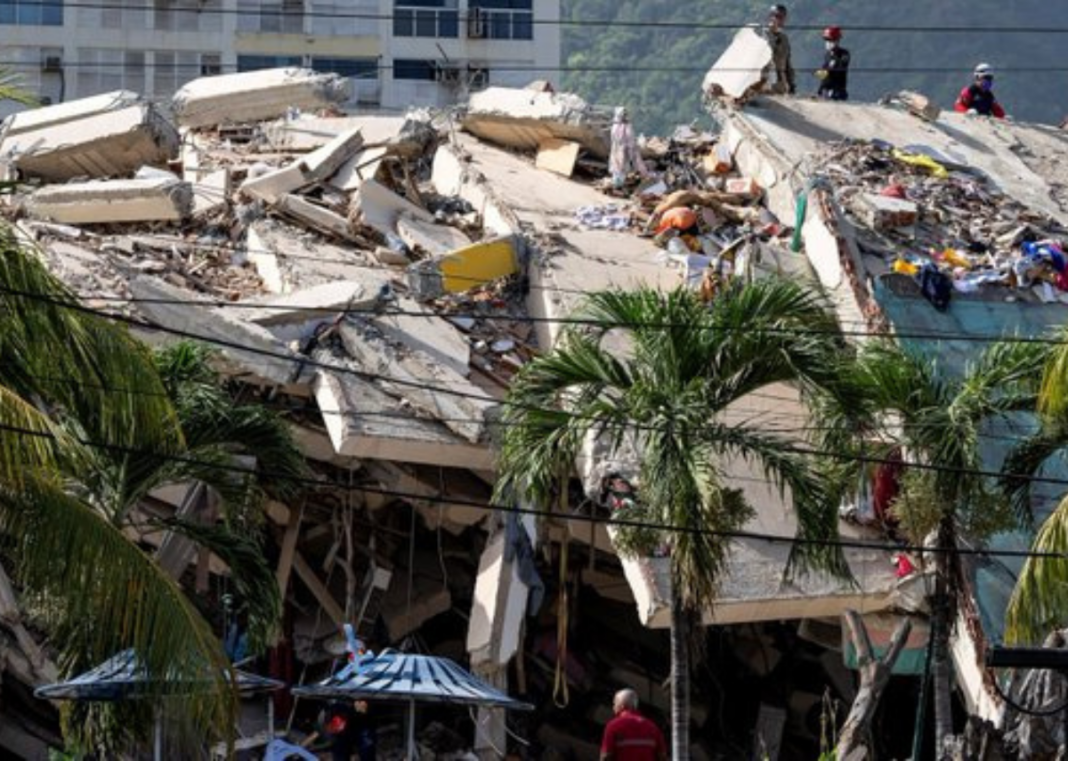
Residents and volunteers in La Guaira, a popular coastal destination for beachgoers where at least 100 buildings — many of them residential high-rises — were destroyed or damaged, have for days decried shortages of heavy equipment and a limited official presence as they worked to pull the living and the dead from the rubble.
A Fast-Scaling International Response
Venezuela’s interim President Delcy Rodríguez said in an overnight address on state television that 10 more countries were still to join rescue efforts, and that 14,000 military and police personnel were deployed in La Guaira to patrol the area and carry out sanitary measures. “In recent hours, Venezuela has received 17 flights carrying more than 1,600 members of rescue teams, and over the next 24 hours, the arrival of 25 additional flights is expected,” a foreign ministry official said.
The scale of foreign assistance reaching Venezuela in such a short period reflects both the severity of the disaster and the speed with which countries with historically limited or strained ties to Caracas have mobilised. Rescuers from Qatar have arrived, and Germany has sent two rescue teams comprising 70 people and seven dogs, beginning work in La Guaira on Friday night, its government said. A team from El Salvador is also working in La Guaira, with President Nayib Bukele hailing multiple rescues on social media, including that of a 15-year-old girl. Members of Mexico’s “Topos Tlatelolco” rescue brigade — a team formed after Mexico City’s own catastrophic 1985 earthquake — departed for Venezuela from Mexico City on Friday.
Washington’s Response
Rodríguez spoke by phone with US President Donald Trump and Secretary of State Marco Rubio on Friday, after meeting with the US military’s Northern Command and disaster experts. A senior US administration official said on Saturday that a nine-figure funding package is expected to be announced within the next day, in addition to $150 million already committed by the Trump administration. The official added that nearly 250 civilian rescuers would be sent to Venezuela.
The scale and speed of the US response is notable given recent history between the two governments. The disaster could carry political consequences for Rodríguez, who has tried to portray herself as an agent of change even though she served as vice president to Nicolás Maduro, who was ousted and arrested by the US in January. Investing.com
Access Restrictions Amid the Chaos
Officials closed the road between La Guaira and nearby Caracas on Friday evening, saying heavy traffic was preventing quick passage of emergency vehicles and official rescuers. Civilians who are not part of official rescue teams now require a credential to pass the roadblock, and Reuters witnesses were prevented from using the main road on Saturday morning by police, while an older secondary road remained choked with traffic.
The government had promised accredited journalists would be able to reach the area, though only by government bus, citing disease risk; as of Saturday noon, no such buses had transported journalists, though reporters from state media were allowed in and told state television that rescues were proceeding.
Despite the restrictions, the government has previously thanked civilians who brought aid — often delivered by motorcycle — to desperate residents, and Venezuelan state television has broadcast images of thousands of pairs of shoes, clothing, and other donated supplies being collected. Looting has also taken place at several sites in La Guaira, Reuters witnesses said.
The Scale of the Disaster
The United Nations estimated that nearly 7 million people could be affected by the disaster, putting direct damage at approximately $6.7 billion. Venezuela’s oil production was not affected by the quakes, Oil Minister Paula Henao said on Friday, adding that fuel distribution would be guaranteed; oil executives and workers said the sector had avoided major infrastructure damage — a detail with significant economic implications given oil’s central role in Venezuela’s economy and its recent reintegration into international markets.
Regional and Global Impact
The disaster has triggered one of the most rapid and broad-based international humanitarian mobilisations in the region in recent years, drawing rescue teams and pledges from countries spanning Europe, the Middle East, Latin America, and North America within days of the earthquakes. For Venezuela’s transitional government, now just five months into office following the US-led removal of Nicolás Maduro, managing a disaster of this scale — potentially among the deadliest earthquakes in Latin American history — represents both an enormous humanitarian undertaking and a defining early test of governing capacity, conducted under intense international scrutiny.
The warmth of Washington’s response, including direct calls between Rodríguez and President Trump and a forthcoming nine-figure aid package, signals a degree of diplomatic continuity in the cooperative relationship the transitional government has cultivated with the United States since January, even as the disaster itself imposes severe new strains on that government’s limited administrative and logistical capacity.
Background
Twin earthquakes measuring magnitude 7.2 and 7.5 struck northern Venezuela on Wednesday evening, June 24, with epicentres roughly 160 kilometres west of Caracas. The disaster has already surpassed Venezuela’s previous deadliest known earthquake, a 1967 event that killed 240 people in the same coastal region. La Guaira, the worst-affected state, is a densely populated coastal area near Caracas known for its beaches and as a key entry point to the capital via Venezuela’s main international airport. Delcy Rodríguez has served as Venezuela’s interim president since January 2026, when the United States removed and arrested former President Nicolás Maduro, ending more than a decade of his rule. Investing.com
What Happens Next
Venezuelan authorities expect 25 additional rescue flights to arrive within the next 24 hours, building on the 17 flights and more than 1,600 rescue personnel already deployed. Ten further countries are expected to commit rescue teams in the coming days, according to Rodríguez. The United States is expected to formally announce its nine-figure aid package within the next day, supplementing the $150 million already pledged. Search-and-rescue operations are expected to continue intensively in La Guaira and the wider Caracas area as the confirmed death toll continues to rise, with the ultimate scale of the disaster remaining uncertain given the USGS’s projection that fatalities could reach as high as 10,000.