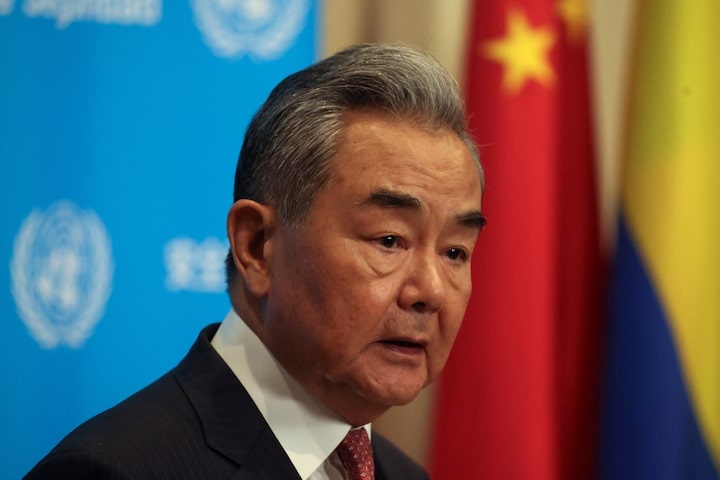

China’s Foreign Minister Wang Yi called on BRICS nations to strengthen cooperation on strategic mineral resources during a security meeting in New Delhi, India, on Tuesday. According to China’s foreign ministry, Wang urged member states to coordinate more closely on critical minerals while responding jointly to challenges ranging from artificial intelligence to health emergencies. The remarks came as global competition for critical mineral supply chains continues to intensify.
Body
Wang made the comments during a meeting of senior security officials from BRICS countries in the Indian capital. According to a statement from China’s foreign ministry reported by Reuters, he said BRICS members should work together to address global energy and food security challenges while expanding cooperation in strategic mineral resources.
“BRICS members need to take the lead in speaking up for justice and delivering fair outcomes, and elevate their standing and role in international affairs,” Wang said, according to the ministry statement cited by Reuters. He also called on the group to “hold high the banner of multilateralism” and oppose unilateralism and protectionism.
The Chinese foreign minister said member countries should coordinate responses to a range of global challenges. According to Reuters, Wang urged BRICS nations to strengthen oversight of artificial intelligence risks, combat terrorism in all forms, support political dialogue in conflict areas and work together on public health threats, including the Ebola outbreak affecting parts of Africa.
The focus on strategic minerals comes at a time when critical mineral supply chains have become a major geopolitical issue. Rare earths and other strategic minerals are essential for defense systems, electric vehicles, renewable energy technologies, semiconductors and advanced manufacturing. China remains a dominant player in the processing and refining of many of these resources.
According to Reuters, Wang’s remarks followed growing efforts by Western countries to reduce dependence on Chinese-controlled mineral supply chains. Last week, leaders of the Group of Seven agreed to strengthen coordination on critical minerals, including plans to align stockpiles and expand cooperation through the International Energy Agency.
The G7 initiative aims to reduce reliance on any single supplier of rare earths and permanent magnets. Reuters reported that member countries are seeking to lower dependence on one source to below 60% by 2030, with a longer-term objective of reaching 50% as quickly as possible.
China has defended its export control policies on critical minerals. Foreign Ministry spokesperson Lin Jian said on June 18 that Beijing’s export controls were consistent with international practices and intended to support global stability and non-proliferation obligations. “China’s efforts to standardise and improve its export control system are in line with international practices,” Lin told a regular briefing, according to Reuters.
The issue has also become a point of discussion between China and the European Union. Reuters reported that Chinese Commerce Minister Wang Wentao is scheduled to meet European Trade Commissioner Maros Sefcovic in Brussels on June 29 as both sides discuss trade relations and supply-chain concerns. The European Commission is also preparing legislation aimed at diversifying sources of critical supplies.
Wang’s comments came one day after he met Indian National Security Adviser Ajit Doval in New Delhi. According to India’s foreign ministry, the meeting reflected continuing efforts by Beijing and New Delhi to stabilize bilateral relations and expand dialogue within the BRICS framework.
Regional and Global Impact
The call for greater BRICS cooperation on strategic minerals reflects increasing competition over critical resource supply chains. According to Reuters, China has promoted closer coordination among BRICS members while the G7, European Union and other economies pursue strategies to diversify sources of rare earths and other essential materials.
For BRICS members, stronger cooperation could expand collaboration on mining, processing and supply security. Reuters reported that China views the grouping as an important platform for promoting multilateral cooperation and responding collectively to economic and geopolitical challenges.
Background
BRICS originally consisted of Brazil, Russia, India, China and South Africa. The bloc has expanded in recent years to include additional members and has sought a larger role in global economic and political affairs.
Critical minerals have become increasingly important because they are used in advanced technologies, renewable energy systems and military equipment. China dominates large portions of global rare earth processing and refining capacity.
In April 2025, Beijing imposed export restrictions on certain rare earth materials and permanent magnets. According to Reuters, those measures disrupted supply chains and accelerated efforts by Western governments to diversify sources of strategic minerals. (Reuters)
What Happens Next
BRICS officials are expected to continue discussions on economic and security cooperation ahead of future ministerial and leaders’ meetings. According to Reuters, strategic minerals, artificial intelligence governance and energy security remain key issues on the bloc’s agenda.
China is also expected to continue diplomatic engagement with major trading partners on supply-chain issues. Reuters reported that meetings between Chinese and European officials later this month will address trade concerns and access to critical materials.
Governments in the G7 and European Union are expected to advance plans aimed at diversifying mineral supplies and reducing dependence on a single source, according to Reuters.
Meta Description: China urges BRICS nations to strengthen strategic minerals cooperation as competition over critical supply chains grows globally.