
Chinese Carmakers Reach Record European Market Share in May as EV Surge Reshapes the Continent’s Auto Industry
Chinese carmakers captured a record 10.7% share of Europe’s new car market in May 2026, while total registrations across the European Union, Britain, and the European Free Trade Association rose 3.6% year-on-year to 1,152,523 vehicles, according to data published on Tuesday by the European Automobile Manufacturers’ Association. Electrified vehicles dominated the market’s growth, with battery-electric, plug-in hybrid, and hybrid registrations climbing 39.1%, 13.2%, and 8.2% respectively — together accounting for more than two-thirds of all new vehicles registered in the month. Petrol and diesel sales fell sharply, cementing a structural shift that is accelerating faster than most analysts predicted at the start of the year.
“The market continued to benefit from robust consumer demand for a range of electrified technologies across key European markets, sustained by new and revised tax benefits and incentive schemes,” the ACEA said. RTÉ
Chinese Brands’ Extraordinary Growth Rates
The headline Chinese market share figure of 10.7% — a record for a single month — reflects growth rates that no established European manufacturer has come close to matching. Leapmotor’s sales surged 465.1% in May, while Chery and BYD jumped 244.1% and 136.6% respectively. RTÉ
The five-month picture is equally striking. According to ACEA figures, BYD’s EU registrations more than doubled year-on-year in the first four months of 2026, surging 152.9% to more than 71,850 units. Chery Automobile, through its Omoda, Jaecoo and Jetour brands, grew 267.1% to more than 48,350 units, while Leapmotor, distributing through its joint venture with Stellantis, soared 558.8% to over 28,700 units. SAIC Motor, owner of the MG brand and the largest Chinese group by EU volume, added a further 10.4% to reach more than 77,000 units. Euronews
Combined, Chinese brands accounted for around 6% of EU car registrations between January and April 2026, compared with 3.2% in the same period a year earlier. Across the wider European market, including the UK and EFTA countries, Chinese brands accounted for a combined market share of roughly 7.3% over the same period, up from 3.7% a year earlier. May’s 10.7% figure across the full European market represents an acceleration even beyond that already elevated pace. Euronews
Chinese automakers accounted for more than 15% of electric-vehicle sales in Europe for the first time last month, according to analysts at Dataforce. In Italy, BYD’s Atto 2 broke into the top ten best-selling models for the month — the first time a Chinese model has achieved that ranking in the Italian market, Gasgoo reported. Bloomberg
Tesla Doubles, the Model Y Leads
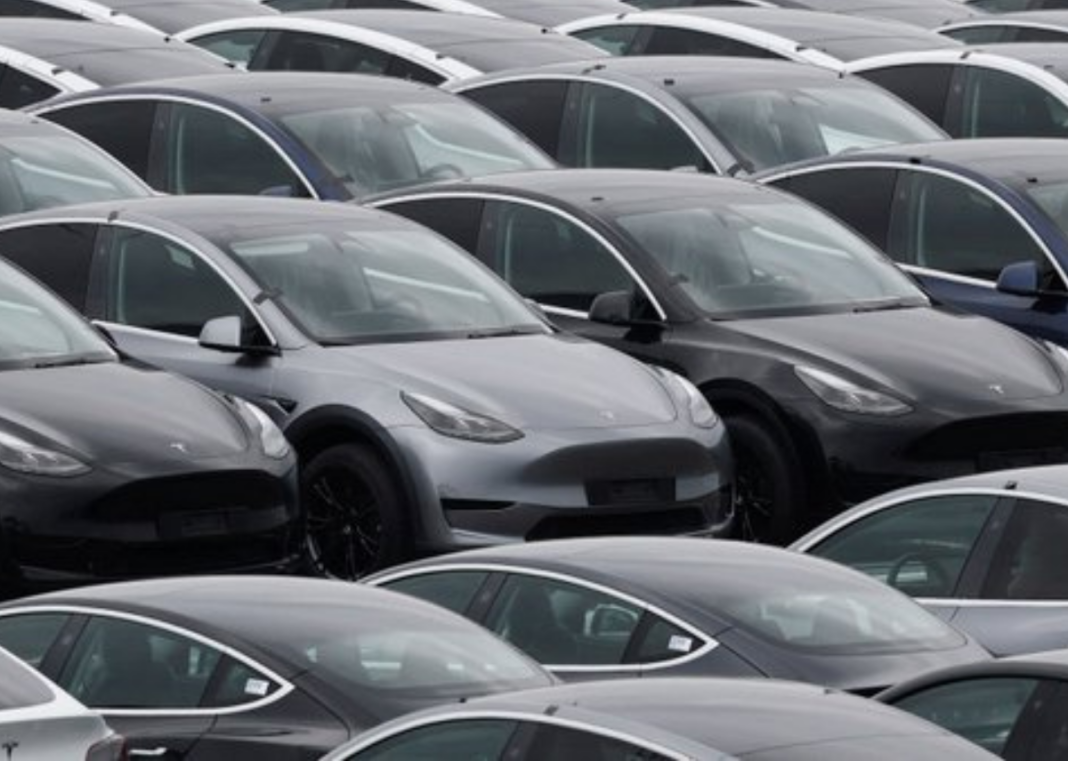
Tesla delivered one of its strongest European performances in months. Sales of the Tesla Model 3 were up nearly 200% in May compared with May 2025, according to Automotive News Europe. The Model Y remained the continent’s best-selling electric vehicle overall, with the Model 3 ranked second. Tesla’s recovery comes after a difficult start to the year in which its European sales fell sharply amid backlash over Chief Executive Elon Musk’s political activities in several European countries.
The Country-by-Country Breakdown
Performance across Europe’s major markets varied considerably. The United Kingdom recorded total registrations of 160,662 units, posting robust gains of 7.6% month-on-month and 7.1% year-on-year, with the Ford Puma as the best-selling model. Italy reached 150,210 units, down 3.3% month-on-month but up 7.7% year-on-year, with the Fiat Panda continuing its dominant streak. France recorded 128,484 units, down 7.1% month-on-month but up 3.7% year-on-year, with the Peugeot 208 topping the model charts. Spain stood at 111,894 units, up 4.7% month-on-month but down 0.8% year-on-year, with the Dacia Sandero maintaining pole position. Gasgoo
For the first four months of the year, battery-electric cars accounted for 19.7% of the EU market, up from 15.3% a year earlier, with growth mainly driven by the bloc’s four largest markets — Italy (+25.5%), Spain (+19.7%), Germany (+6.6%), and France (+2.3%). Euronews
Volkswagen Group Leads but Shows Cracks
Volkswagen Group retained its position as the bloc’s largest carmaker in the first four months of 2026, accounting for 26.7% of all new registrations, with just over one million units sold, up 2.9% year-on-year. Performance varied across the group: Skoda registrations rose 15.5% and Audi gained 8.6%, while the core Volkswagen brand slipped 3.2%, losing ground across multiple segments. Stellantis ranked second with a 17.1% market share and over 648,000 units, up a robust 7.8%, driven by a recovery at Fiat of over 32% and strong gains at Opel and Vauxhall, which together rose 22%. Euronews
The Iran War’s Shadow
Automotive News Europe noted that the Middle East conflict continues to influence the European car market. With oil prices elevated since the Iran war began on February 28, the economic case for electrified vehicles has strengthened considerably, accelerating consumer decisions in favour of battery-electric and plug-in hybrid models. The dynamic has benefited Chinese brands disproportionately, given their competitive pricing in the electric segment.
The EU’s tariffs on Chinese electric vehicles — imposed in October 2024 on top of the existing 10% import duty, reaching rates of up to 45.3% for some manufacturers — have not prevented the share surge. Chinese brands have responded by localising production through joint ventures, adjusting pricing strategies, and expanding into plug-in hybrid segments where tariff exposure is lower or less commercially disqualifying.
Background
The European Union introduced additional tariffs on Chinese battery-electric vehicles in October 2024, following an anti-subsidy investigation that found Chinese manufacturers benefited from state support that allowed them to undercut European competitors. BYD faced the lowest additional tariff at 17.8%, while SAIC faced 35.3%. The tariffs were intended to slow Chinese market penetration, but the data through May 2026 suggests they have not reversed the trend. The strong start to the year suggests that the 20% battery-electric vehicle market share recorded in January may represent a baseline for 2026, with further growth expected throughout the year. If current trends continue, battery-electric vehicles could approach 25% of new passenger car registrations in Europe by the end of 2026. European Alternative Fuels Observatory
What Happens Next
ACEA will publish June and first-half 2026 data in the weeks ahead, providing the clearest read yet on whether May’s record Chinese market share represents a structural plateau or a continuing acceleration. Whether the EU revisits its tariff structure — or whether individual member states introduce supplementary measures — will be shaped by the pace at which Chinese brands continue to absorb established-brand market share. For Volkswagen, whose core brand lost 3.2% in a growing market during the first four months of the year, the competitive response to Chinese pricing in the electric segment will be a defining operational challenge for the remainder of 2026.