
India Seen Absent From Global Sugar Markets for at Least Three Seasons as El Nino and Ethanol Expansion Drain Supply
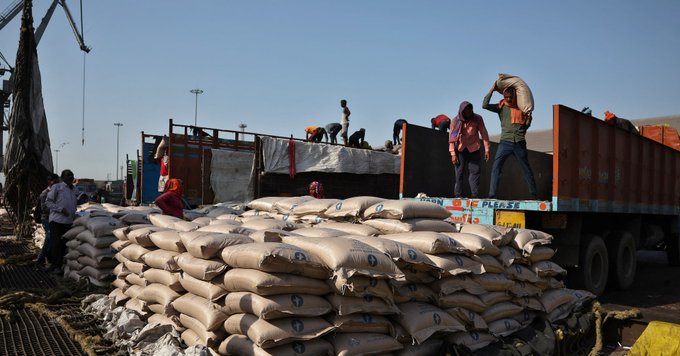
India, once the world’s second-largest sugar exporter, is expected to have little or no surplus available for export for at least three consecutive seasons as El Nino weather conditions erode cane production and a rapidly expanding domestic ethanol programme competes with mills for the same raw material, according to more than a dozen trade and industry executives, government sources, and farmers interviewed by Reuters. The twin pressures are poised to keep millions of tonnes of sugar off the world market, tightening supplies for importers across Asia, Africa, and the Middle East and supporting benchmark prices in London and New York. India exported an average of 6.8 million metric tonnes of sugar annually during the five seasons up to 2022-23, accounting for nearly 10% of global shipments. This season, exports stood at approximately 800,000 tonnes before the government halted all remaining shipments until September 30. The Japan Times
New Delhi’s Approach: Season-by-Season Denial
Mills need government approval to export sugar, and New Delhi is likely to withhold export permissions each season rather than announce a multiyear ban, government and industry sources with knowledge of the matter said. Last month, a top minister in Prime Minister Narendra Modi’s government told mills to prioritise domestic availability and not lobby for exports, the sources said on condition of anonymity because the discussions were confidential. India’s Department of Food, Civil Supplies and Consumer Affairs did not respond to a request for comment on the prospects for exports or its restrictions on exports. Yahoo!Free Malaysia Today
The approach — denying approvals one season at a time rather than declaring an outright ban — gives New Delhi flexibility to respond if domestic conditions improve, while maintaining a de facto export freeze whose duration will be determined by weather and ethanol policy developments.
El Nino Threatens the Worst Monsoon in 11 Years
El Nino conditions are forecast to weaken India’s monsoon rains this year to their lowest in 11 years. Below-average rains, coupled with June precipitation running more than 40% below average, have prompted farmers to delay planting. The Japan Times
The effects are already visible at the farm level. In Maharashtra’s Sangli district — one of the country’s most productive sugar-growing zones — farmer Sambhaji Patil said he had postponed plans to plant long-duration sugarcane varieties and shifted part of his land to soybean cultivation because of concerns over rainfall. Industry representatives expect some farmers to move toward crops requiring less water, including soybeans, pigeon peas, and pulses, which could reduce cane acreage and affect sugar availability in the 2027-28 season. Local authorities in several sugar-producing regions have also begun promoting alternative crops and limiting irrigation supplies. ChiniMandi
Regional variation exists. Rainfall in northern Karnataka and Uttar Pradesh has been closer to normal, offering some partial buffer. But Maharashtra — which accounts for the bulk of India’s commercial sugar output — remains well below seasonal averages.
Production Has Fallen Below Consumption
Industry estimates now place India’s sugar production for the current season at 27.9 million tonnes, lower than annual domestic consumption of about 28.5 million tonnes and below earlier expectations of 30.95 million tonnes. As a result, sugar inventories at the start of the next season on October 1 may decline to about 3.5 million tonnes, which traders say would be the lowest level in more than three decades. ChiniMandi
A country that was routinely exporting six to seven million tonnes annually just three years ago is now producing less than it consumes. That structural reversal underpins the government’s decision to prioritise domestic supply above all else.
The Ethanol Programme’s Growing Claim on Sugar
India’s biofuel expansion is the second major constraint on sugar availability. Industry estimates suggest ethanol demand could rise from the current 12-13 billion litres to around 30 billion litres by 2039-40, supported by higher blending levels in petrol. ChiniMandi
The competition between sugar and ethanol production is particularly acute at the mill level. The price of ethanol relative to sugar may have to rise much more than today’s levels to encourage more diversion to ethanol, particularly in northern India where sugar prices are higher than in Maharashtra. Ethanol produced from sugarcane has been stuck at 3-4 billion litres for five years, despite there being capacity to make 9 billion litres. The grains sector has instead been supplying the growth in Indian fuel ethanol demand. CZ app
The government has not increased the procurement price of ethanol made from cane juice and B-heavy molasses in almost four years. Unless those prices are raised, mills — particularly in Uttar Pradesh, where sugar commands a premium — have limited financial incentive to divert cane toward ethanol rather than sugar.
The Iran Deal’s Complicating Effect
The US-Iran memorandum of understanding signed on June 18 introduced an unexpected complication into the sugar-ethanol equation. If the recent opening of the Strait of Hormuz alleviated energy costs and eased pressure to increase ethanol production, such a scenario could arise where the government could be less willing to raise ethanol prices if oil prices fall. Lower oil prices reduce the urgency of the ethanol blending programme as an energy security measure, potentially softening demand for sugarcane-based ethanol — but the same lower oil prices would also reduce the financial incentive for mills to divert cane to fuel at the expense of sugar production. The net effect remains unclear, and analysts said the direction of oil prices in the weeks following the MoU’s implementation would be a significant variable for India’s sugar-ethanol balance in 2026-27. CZ app
India Could Eventually Become an Importer
India could eventually be forced to import sugar if El Nino-related weather disruptions sharply cut cane cultivation area and output, the government sources and industry officials said, with traders warning that supplies could tighten further in the 2027-28 season. Free Malaysia Today
Mohan Narang, Director of K.S. Commodities, a trading house in New Delhi, put the risk in stark terms. “Because of a severe El Nino and rising demand for ethanol, not only would exports from India be wiped out, but imports into India in the coming years could also become necessary,” Narang said. Yahoo!
India last imported sugar in 2016-17 and 2017-18 after an El Nino-induced drought in 2015 cut cane planting. In 2009 and 2010, India’s heavy purchases helped push global prices to nearly three times their previous levels. A return to the import market on that scale would send a significant shock through global sugar prices, particularly given how tightly balanced world supply and demand already are. Free Malaysia Today
The Global Market Impact
A prolonged absence by India from export markets would remove a key balancing supplier as weather risks and biofuel policies reshape global sugar trade flows. Dealers at major global commodity trading houses have begun warning their head offices of shrinking opportunities in India, trade sources told Reuters. Importers across Asia, Africa, and the Middle East — who have relied on India as a flexible and often low-cost supplier — will need to source volumes from alternative origins including Brazil, Thailand, and Australia, potentially at higher prices and with greater logistical complexity. The Japan Times
London white sugar futures and New York raw sugar futures have already incorporated a risk premium reflecting India’s extended absence from export markets. Whether that premium deepens will depend on the monsoon’s final trajectory and on whether the ethanol programme’s demands on cane supply grow faster than expected.
Background
India banned sugar exports entirely in October 2023, citing declining domestic stocks following a weak monsoon, lifting that restriction partially in 2024-25 before reimposing it through September 30 of the current season. The country last held inventories as low as those now projected — approximately 3.5 million tonnes entering a new season — in the early 1990s. India’s ethanol blending programme began in earnest in 2021-22 and has expanded consistently since, with the government targeting a 20% blending rate for petrol by 2025-26. Brazil, the world’s largest sugar exporter, has also been managing its own output between sugar and ethanol production, leaving global markets with less buffer than at any point since the 2010-11 supply crisis.
What Happens Next
The Indian government’s next formal decision point on sugar export permissions will come at the start of the 2026-27 crushing season in October, when the extent of El Nino’s damage to the cane crop will be clearer. Rainfall data through July and August — the critical months for cane development in Maharashtra and Karnataka — will determine whether the production estimates of 27.9 million tonnes for the current season worsen further. The government’s decision on ethanol procurement prices, which has not been updated in nearly four years, will shape how aggressively mills divert cane toward fuel in the coming season. Traders said the 2027-28 season carries the greatest risk of India returning to the import market, particularly if two consecutive below-average monsoons reduce cane acreage beyond what can be compensated by improved yields or irrigation.