

India Panel Proposes Simulator-Heavy Pilot Licence to Ease Crew Shortage Amid Training Concerns
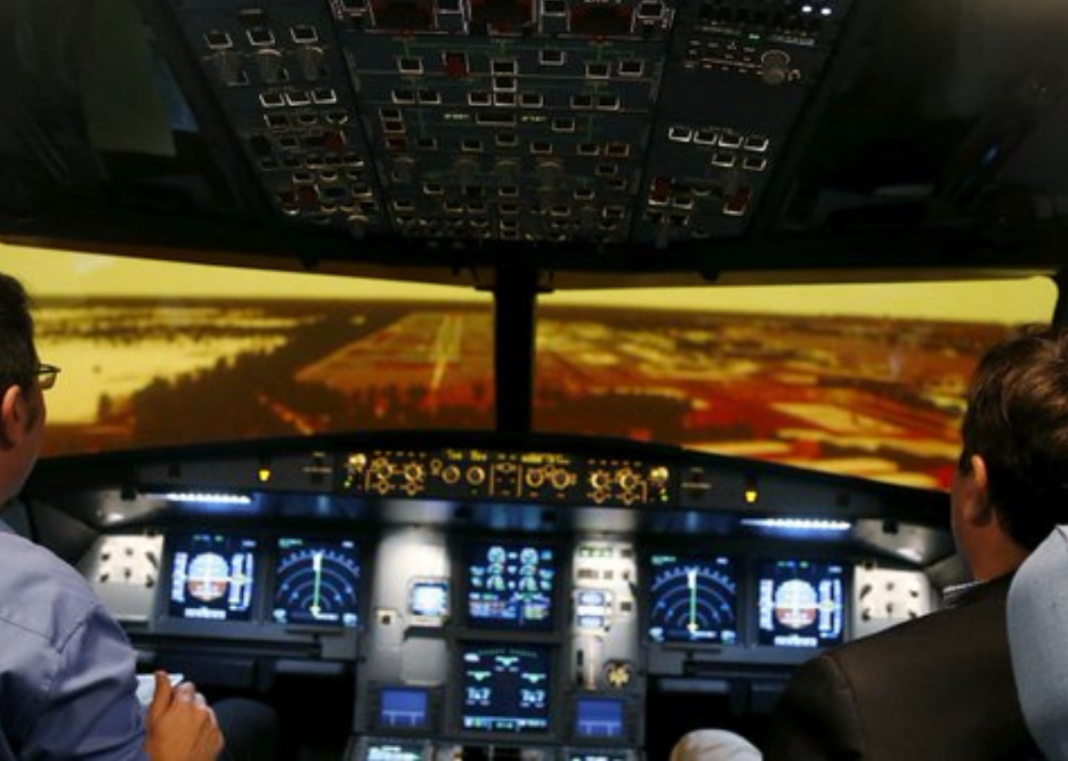
An Indian government panel has proposed a new pilot licence option that would shift a significant share of cadet training into flight simulators and reduce time spent flying real aircraft, according to a draft report seen by Reuters and published Wednesday, June 24. The committee said the move is intended to ease India’s pilot shortage, though flight schools have warned that reduced real flying time could weaken hands-on skills. LBC
The licence option under discussion is the Multi-Crew Pilot Licence, or MPL, which was introduced by the United Nations’ International Civil Aviation Organization in 2006 and has since been adopted by numerous countries across Europe, Asia, and the Middle East as an alternative to traditional pilot-training pathways. India does not currently offer the MPL route, relying instead on its existing Commercial Pilot Licence framework. LBC
What the Draft Proposes
Under the proposed plan, cadets would complete 100 to 120 hours flying training aircraft, including at least 20 hours solo — compared with at least 200 hours required under India’s existing rules. Much of the remaining practical training would instead be conducted in commercial jet simulators under the alternative route, which the draft report said “may shorten timeline for cadets.” LBCLBC
The report was prepared by a committee headed by a senior official of India’s aviation regulator, the Directorate General of Civil Aviation (DGCA), and includes representatives from IndiGo, Air India, and flight-training organisations. Airlines have been asked to respond to the plan, after which the committee is expected to submit a final report to the head of the regulator. LBCLBC
The panel’s reasoning rests on a central claim about training quality, not simply cost or speed. The government proposal argued that greater reliance on simulators could “lower operational risk” while giving cadets more focused practice in handling critical and emergency situations — scenarios that are difficult or unsafe to replicate repeatedly in a real aircraft but can be rehearsed extensively and consistently in a simulator. LBC
The draft report stated that “if implemented with strong regulatory oversight and industry collaboration,” the new licensing route “can reduce manpower shortages.” LBC
Industry Pushback on Flying Hours
The proposal has not gone unchallenged within the committee itself. The group has asked the regulator to mandate at least 150 hours in actual aircraft, rather than the 100 to 120 hours proposed in the draft — a sign that some members of the same committee that produced the report believe the initial simulator-to-real-flying ratio goes too far in reducing hands-on flight time. LBC
Flight training organisations have separately raised concerns that cutting real flying hours risks producing pilots with less developed instinctive aircraft-handling skills, even if simulator training can replicate specific emergency procedures with precision. The tension reflects a long-running debate in global aviation training circles over how much of the skill required to fly large commercial jets — particularly the physical sensations, weather variability, and unpredictability of real flight — can be substituted by simulator repetition.
The Scale of India’s Pilot Shortage
The proposal responds to a structural shortage that has built up over several years as India’s airlines have placed some of the largest aircraft orders in aviation history. Air India ordered 470 aircraft in 2023, among the largest single orders ever placed by an airline, while IndiGo operates more than 370 aircraft with several hundred more on order. Aviation consultancy CAPA India has projected total pilot demand in the country could reach 22,400 by the 2030 fiscal year, while India’s civil aviation minister has spoken publicly of a need for more than 20,000 additional pilots in the near term.
India’s existing training pipeline has struggled to keep pace. The country has approximately 34 to 35 DGCA-approved flying training organisations, collectively producing roughly 800 to 1,000 commercial pilot licence holders annually — a volume that industry analysts say falls short of projected demand even though the DGCA issues 1,200 to 1,500 commercial licences each year when other licensing pathways are included. India has also raised pilot attrition with the International Civil Aviation Organization, calling for a global code of conduct to address the recruitment of Indian commanders by Middle Eastern and Southeast Asian carriers offering higher pay and more favourable rosters.
Regional and Global Impact
India became the world’s third-largest air transport market in 2024, surpassing the United Kingdom, and continues to expand rapidly on the back of rising middle-class incomes and government-backed regional connectivity schemes. The scale of India’s pilot shortfall is part of a broader global pattern: aircraft manufacturer Boeing’s 2025 Pilot and Technician Outlook projected a need for 660,000 new pilots worldwide over the next two decades, a gap that has intensified competition between national carriers for trained crew and pushed several countries to examine alternative licensing pathways, including simulator-heavy programmes already in use in parts of Europe, Asia, and the Middle East.
If adopted, the MPL framework would align India’s pilot training regime more closely with international civil aviation standards already operating in dozens of countries, potentially easing cross-border recognition of Indian-trained pilots while also addressing the immediate domestic capacity constraint in flight training infrastructure.
Background
India’s existing pilot licensing framework requires cadets to accumulate at least 200 flying hours in training aircraft before qualifying for a Commercial Pilot Licence, a standard that predates the country’s recent period of rapid airline fleet expansion. The Multi-Crew Pilot Licence was created by the International Civil Aviation Organization in 2006 specifically to address pilot training capacity constraints by integrating simulator-based training more extensively into the licensing pathway, while still requiring cadets to demonstrate competency standards equivalent to traditional licensing routes. IndiGo and Air India, both represented on the Indian government’s review committee, are the country’s two largest carriers and are jointly responsible for the bulk of India’s current and projected pilot hiring needs.
What Happens Next
Airlines have been asked to submit responses to the draft proposal, after which the committee is expected to finalise its recommendations and submit a final report to the head of India’s aviation regulator. Any implementation of an MPL pathway would require formal regulatory approval and the establishment of specific training and oversight standards, which the committee’s own draft report identifies as a precondition for the new licence route to succeed in reducing pilot shortages without compromising safety.