

The Israeli military killed two Hezbollah members in Lebanon. They said these members crossed a line called the ” line.” This line is a security boundary.
Incident Overview
The Israeli Army Radio reported that the Israeli Defense Forces or the IDF forces killed two people who the IDF forces said were Hezbollah operatives. These two individuals had gone into an area in Lebanon that the IDF forces said was not allowed. The IDF forces thought that these two individuals, who the IDF forces called Hezbollah operatives were a danger to the IDF forces so the IDF forces had to do something about it. The IDF forces took action against these two individuals, who the IDF forces believed were Hezbollah operatives because they were, in a place where they were not supposed to be.
The “yellow line” is a term used by forces. It is a buffer zone inside Lebanon. Israel says it is to prevent Hezbollah fighters from approaching the border. Israeli officials have been talking about this line more. They say it is part of their security plans.
Hezbollah did not confirm the incident. Lebanese authorities did not make a statement. We do not know much about the people who were killed.
What is the “Yellow Line”?
The “yellow line” is not a border. It is a security boundary made by the military. It goes kilometers into southern Lebanon. Israeli forces say they control this area.
Israeli officials say this zone is to protect their communities. They say it prevents infiltration or attacks. Lebanese officials and Hezbollah supporters disagree. They say it is an expansion of military presence in Lebanon.
This zone has made civilians in Lebanon uncertain. Many live near areas where there is activity.
Background: Ongoing Israel–Hezbollah Tensions
The incident happens during increased fighting between Israel and Hezbollah. The border has seen exchanges of fire, drone activity, airstrikes and ground operations. Both sides accuse each other.
Israel has done ground operations in Lebanon. They want to remove Hezbollah infrastructure. Hezbollah has done rocket and drone attacks on Israel. The situation is volatile.
Israel has deployed divisions into southern Lebanon. They say they want to push Hezbollah forces from the border.
Hezbollah says Israeli forces in Lebanon violate sovereignty. They justify their attacks as responses to actions.
Ceasefire Tensions and Military Operations
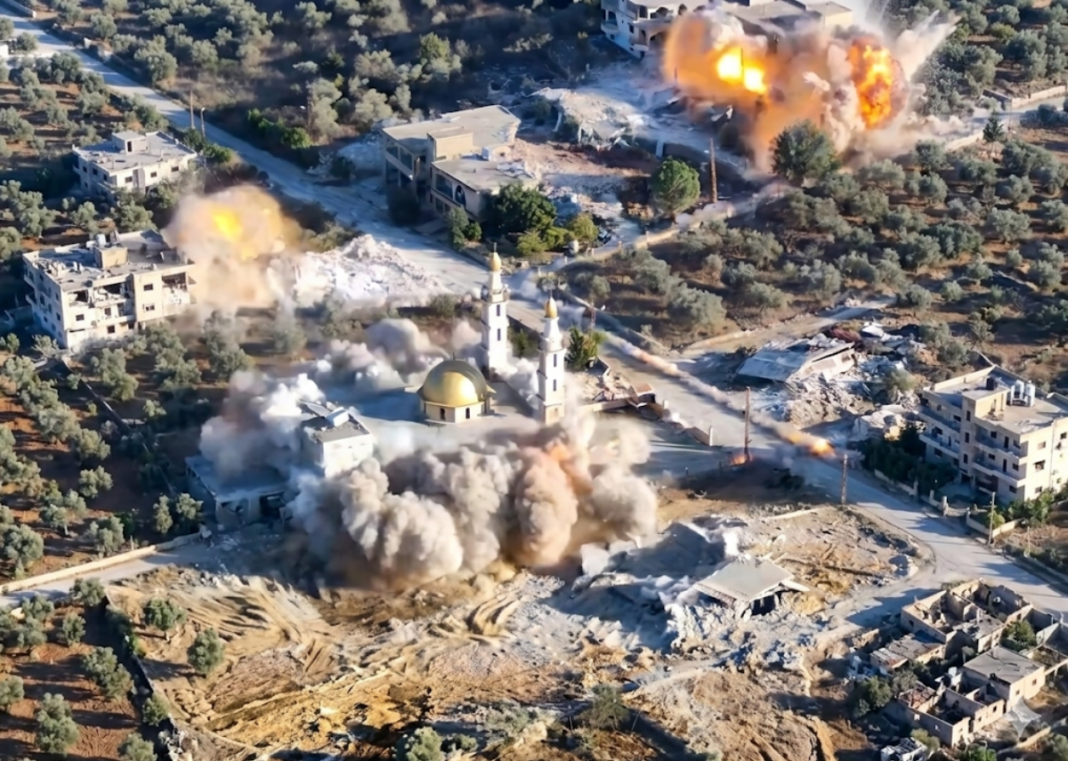
There have been ceasefire arrangements.. Southern Lebanon is still a conflict zone. Israeli forces have done targeted strikes and ground operations. They say they are against Hezbollah positions and infrastructure.
Hezbollah says it is responding to violations. The situation is fragile and uncertain. Localized fights continue despite efforts.
Israel has made a buffer- zone inside southern Lebanon. They call it the ” line.” They warn civilians and armed groups not to cross it.
Critics say this blurs the line between defense and occupation. Israeli officials say it is necessary for border security.
Regional and Civilian Impact
The conflict has affected civilians in Lebanon. Many villages near the border have seen displacement and damage. There are concerns.
International organizations are worried about safety. There have been reports of damage to areas and essential services.
Civilians are afraid. Many have. Limited their movement.
Strategic Importance of the Border Region
Southern Lebanon is an area. It has been a point of conflict between Israel and Hezbollah.
The terrain and tensions make it complex. Civilian areas are near positions. This complicates efforts to manage escalation risks.
Israel wants to prevent Hezbollah from strengthening near the border. Hezbollah views its presence as part of its resistance strategy.
Uncertainty and Limited Verification
Details about the killing of the two Hezbollah members are not fully verified. Information comes from Army Radio and IDF. Independent confirmation is not available.
This lack of verification is common in conflict zones. Narratives from opposing sides often differ.
The killing of two Hezbollah members by forces highlights the fragile security situation, in southern Lebanon. The incident shows how new military boundaries and operations are contributing to tensions.
Israel frames the action as a response.. The broader context is a complex conflict. There are disputes and competing narratives. The situation is highly unstable. Further escalations are a concern.