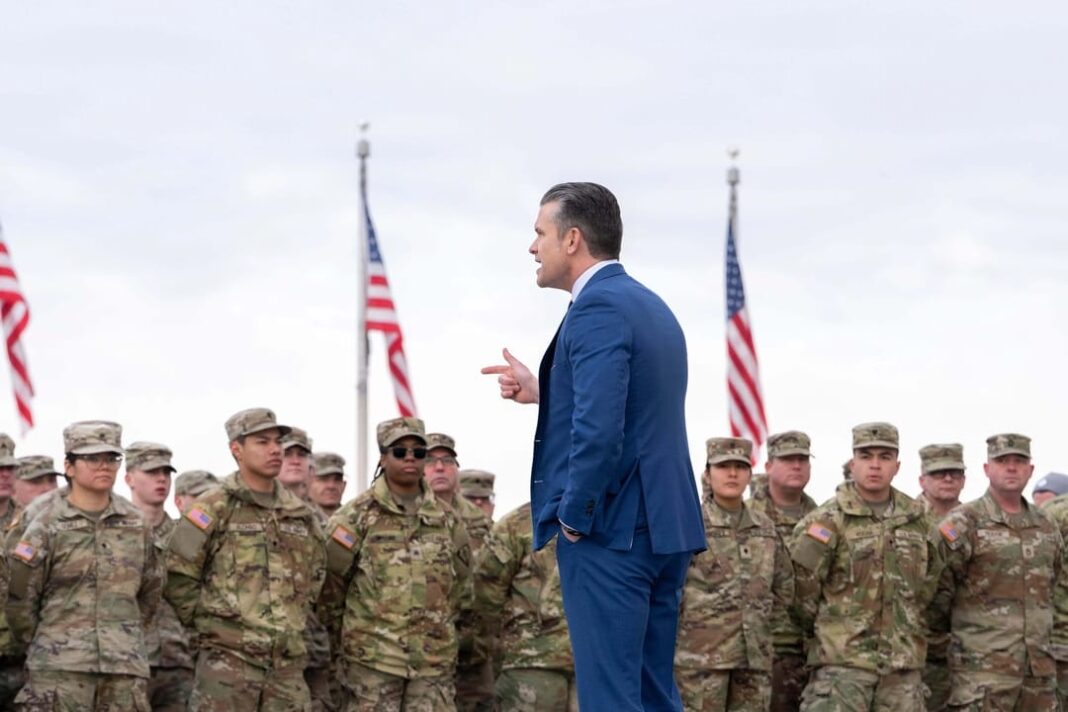

Wounded American service members and their families have accused the U.S. Army of downplaying the severity of injuries sustained during the conflict with Iran earlier this year, according to an investigation by CBS News published Wednesday, June 24. Defense Secretary Pete Hegseth told reporters in March that nearly 90% of the 400 American service members injured in the conflict had suffered only minor wounds and had since returned to duty. Several of those soldiers say their injuries were far more serious than the military’s official classifications indicate.
Chief Warrant Officer Rodney Bearman, 57, was struck by shrapnel when an Iranian drone hit his work station at the Port of Shuaiba in Kuwait on March 1. Medical records reviewed by CBS News show he also suffered a concussion, hearing and vision loss, and lung damage. The Army classified his condition as “not seriously injured.”
His wife, Amy Bearman, said the designation does not reflect what happened to her husband. “That assessment is unacceptable,” she told CBS News. She said the Army initially told her he had been treated and released back to duty, before she learned days later that he remained hospitalized and unable to return to service.
Sergeant First Class Cory Hicks, 37, sustained severe shrapnel wounds in the same blast and underwent multiple emergency surgeries at a Kuwaiti hospital. He said an Army official told his wife his injury was minor.
“They said your husband was injured, he has a minor jaw injury, and he’s going to be returned to duty,” Hicks said. He said he believes the Army and the Pentagon tried to downplay the incident. Hicks was later airlifted to Landstuhl Medical Center in Germany and then to Walter Reed National Military Medical Center in Maryland, where he remains in a soldier recovery unit with a traumatic brain injury he described as “pretty severe.” He expects to stay there for at least six more months.
The Army has pushed back firmly against the families’ claims. A spokesperson said terms such as “not seriously injured” and “combat casualty” carry specific technical definitions that families have misunderstood, and added: “The care and well-being of our Soldiers is of the highest priority. Any assertion that the Army seeks to downplay a soldier’s injuries is simply not true.”
According to Army protocol, a soldier is classified as “seriously injured” or “very seriously injured” only if they are considered at risk of dying from their wounds within 72 hours. The Pentagon also said soldiers assigned to recovery units, such as Hicks, are not counted as having returned to duty, contradicting the impression some families say they were given.
Republican Senator Shelley Moore Capito intervened on Bearman’s behalf in March. She wrote to the Army on March 26 seeking clarity on what happened to him in Kuwait and why his wife had been told he was “not seriously injured.” Major General Michael J. Leeney responded on May 13, defending the classification but stating that the designation “is in no way intended to minimize” Bearman’s “contribution and sacrifice.”
Regional and Global Impact
The March 1 strike on the Port of Shuaiba killed six American soldiers and was the deadliest attack on U.S. forces in the conflict and the most lethal strike on American troops since 2021. A CBS News investigation in April found multiple force-protection warnings had been issued ahead of the strike, and soldiers said they were left exposed despite intelligence indicating Iran was targeting their position in Kuwait. The findings prompted an investigation by Senate Democrats.
Survivors told CBS News they lacked adequate medical resources at the post, and that requests for more medical personnel and supplies had gone unanswered before the attack. Soldiers triaged themselves using makeshift bandages, braces and tourniquets, and commandeered civilian vehicles to transport wounded comrades to two local Kuwaiti hospitals, according to witnesses.
Major Stephen Ramsbottom said he believed Master Sergeant Nicole Amor, one of the six soldiers killed, could have survived her wounds had a doctor, a fixed aid station or more than one ambulance been available at the post. Amy Bearman said an honest accounting of what occurred could prevent similar failures in future conflicts. “Our hope for the investigation is that an honest assessment by the Army will prevent this from happening again to other service members,” she said.
Background
The United States launched Operation Epic Fury against Iran on February 28, with Bearman’s unit, the Iowa-based 103rd Sustainment Command, having relocated from Camp Arifjan to a tactical outpost at the Port of Shuaiba weeks earlier. The drone strike that followed on March 1 became the single deadliest attack of the conflict on U.S. personnel. More than 20 troops were wounded in addition to the six who were killed. The Army’s handling of casualty figures and medical preparedness at the site has since drawn scrutiny from lawmakers and journalists. Hegseth’s March casualty briefing set the public benchmark against which the soldiers’ accounts are now being measured.
What Happens Next
The Army has completed its investigation into the circumstances of the Port of Shuaiba attack and says findings will be released once the families of the six soldiers killed have been briefed. The Senate Democrats’ inquiry into force-protection failures ahead of the strike remains ongoing. Hicks is expected to remain at Walter Reed’s soldier recovery unit for at least six more months. Bearman continues treatment at a soldier recovery unit at Fort Bragg, North Carolina.