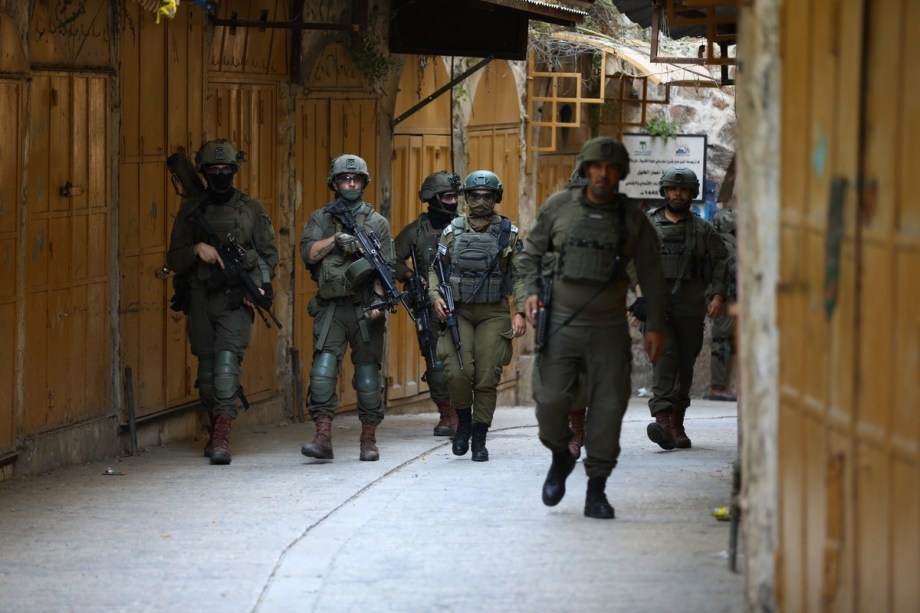

Armed Israeli settlers attacked Palestinian homes and property in at least five locations across the occupied West Bank on Saturday, June 20, according to sources cited by Anadolu Agency. The Israeli army deployed forces to several of the sites during the attacks, providing protection to the settlers rather than intervening against them, the sources said. No injuries were reported in any of the incidents.
In Turmus Ayya, a town in northeastern Ramallah in the central West Bank, armed settlers grazed sheep on land planted with olive trees near residents’ homes, Anadolu’s sources said. The same group then surrounded a house in the eastern part of the town and attempted to force entry, the sources added. Israeli army units arrived during the attempted break-in, but their role was to secure the area for the settlers rather than to stop them.
A separate attack unfolded in Sinjil, a town near Turmus Ayya, where a group of armed settlers struck the western edge of the town. Several residents confronted the group directly, according to the sources. Israeli army forces entered the area at the same time, again to protect the settlers carrying out the attack.
Further north, in the Nablus Governorate, settlers attacked the home of the Tubasi family in the village of Jalud, throwing stones at the house. The sources said the Tubasi family has been targeted repeatedly by residents of a nearby settlement outpost, indicating the Jalud incident was not isolated.
A fourth attack took place in Burin, in southern Nablus, where a group of settlers stormed the entrance to the village. The group attacked residents’ homes and fired live ammunition at Palestinian youths in the area, the sources said. No injuries were recorded despite the use of live fire.
The pattern described in each location was the same: settlers initiated the attack, and Israeli army units arrived to shield them rather than to detain them or disperse the assault. Anadolu’s sources did not report any arrests of settlers in connection with the five incidents.
Regional and global impact
The report places Saturday’s attacks within a broader rise in settler violence that has tracked alongside Israeli military operations in the West Bank since October 2023. According to Palestinian figures cited in the report, the escalation in the West Bank and East Jerusalem since that period has resulted in 1,169 Palestinians killed and 12,666 injured. The same figures put the number of arrests at 23,000 and the number of people displaced at 33,000.
Former Israeli Prime Minister Ehud Olmert has separately described the pattern of settler activity in the West Bank as a state-funded campaign, according to a related Middle East Monitor report referenced in the same coverage. The framing speaks to mounting scrutiny inside Israel itself over the relationship between the military and settler groups operating in the territory.
The recurrence of incidents in the same villages — including the repeated targeting of the Tubasi family in Jalud — points to a sustained rather than sporadic pattern of attacks in several West Bank governorates, spanning Ramallah and Nablus on a single day.
Background
The West Bank has been under Israeli military occupation since 1967, and Jewish settlements there are widely considered illegal under international law, a position the Israeli government disputes. Settler attacks on Palestinian residents, property and farmland have been documented for years by international monitors and Palestinian sources, often occurring near settlement outposts built without formal Israeli government authorization. The escalation referenced in Saturday’s report has run parallel to the wider Israeli military campaign launched after October 7, 2023. Towns named in the report, including Turmus Ayya, Sinjil, Jalud and Burin, have each been the site of previous settler-related incidents recorded by Palestinian and international sources. The Israeli military has stated in past cases that its forces are deployed to maintain order, a position Palestinian residents and rights groups dispute given the pattern of protective rather than preventive action described in incidents like those on June 20.
What happens next
No official Israeli military or government response to the five incidents had been issued at the time the Anadolu-sourced report was published on Sunday, June 21. Palestinian residents in Sinjil confronted settlers directly during the attack, a response pattern likely to continue in similar future incidents given the lack of arrests or army intervention against the assailants. The report does not indicate that any investigation has been opened into the live ammunition fired at Palestinian youths in Burin. Continued monitoring of settler activity in Ramallah and Nablus governorates is expected from Palestinian sources and international news agencies tracking the broader West Bank escalation.