
President Donald Trump announced on Saturday that an agreement to end the war with Iran and reopen the Strait of Hormuz has been “largely negotiated,” describing it as a memorandum of understanding that still requires final sign-off from Washington, Tehran, and a coalition of regional partners.
Trump posted on Truth Social that “final aspects and details of the Deal are currently being discussed, and will be announced shortly,” according to PBS NewsHour. He said he had conducted calls from the Oval Office with the leaders of Saudi Arabia, the United Arab Emirates, Qatar, Pakistan, Turkey, Egypt, Jordan, and Bahrain, and spoke separately with Israeli Prime Minister Benjamin Netanyahu, all centered on finalising terms with Tehran. The announcement came on the same day Iran described the draft as a 14-point “framework agreement” while signalling that significant gaps remain.
Iran’s Foreign Ministry spokesperson Esmail Baghaei described the emerging text as the foundation for a phased process. “We want this to include the main issues required for ending the imposed war and other issues of essential importance to us,” he said, as quoted by Iran state TV. “Then, over a reasonable time span, between 30 to 60 days, details are discussed and ultimately a final agreement is reached.”
Two regional officials and a diplomat told the Associated Press on Saturday that they hoped a final decision on a Pakistan-prepared draft could come within 48 hours, as both governments reviewed it. They spoke on condition of anonymity because they were not authorised to brief the media.
U.S. Secretary of State Marco Rubio, speaking to journalists in New Delhi on Sunday during a trip to India, signalled cautious optimism. “I do think there’s some good news on that front, but not final news,” Rubio told reporters, according to Bloomberg. On Saturday he had said “there may be news later today” and added, “There’s been some progress done, some progress made. Even as I speak to you now, there’s some work being done.”
Rubio also restated Washington’s core demands: Iran must never obtain a nuclear weapon, must surrender its stockpile of highly enriched uranium, and the Strait of Hormuz must reopen without tolls.
Iran’s position on the waterway is more guarded. Baghaei said any mechanism governing the strait should be agreed between Iran, Oman, and the countries bordering the waterway, and that the United States “has nothing to do” with it, according to CNN. He confirmed the strait is among the topics on the table, but stopped short of treating U.S. demands as the framework for resolution.
The question of Iran’s nuclear programme is also contested. Tehran insists the nuclear file will be addressed in a separate, later phase. “Our focus at this stage is on ending the war on all fronts, including Lebanon,” Baghaei said. He confirmed that lifting U.S. sanctions on Iran “has explicitly been included in the text and remains our fixed position.”
Vice President JD Vance, Middle East envoy Steve Witkoff, and senior adviser Jared Kushner have all played active roles in bridging remaining gaps, according to regional officials cited by the Associated Press. Qatar contributed by sending a senior official to Tehran to support Pakistan’s mediation, those officials said. Pakistan’s army chief, Field Marshal General Asim Munir, held direct talks in Tehran on Saturday with Iranian President Masoud Pezeshkian and parliament speaker Mohammad Bagher Qalibaf. A Pakistani security official described the result of those talks as “encouraging” progress, telling reporters that “a memorandum of understanding is being fine-tuned,” as reported by the Times of Israel.
Trump told Axios on Saturday that he planned to meet with Witkoff and Kushner later that day to review Iran’s latest proposal and reach a decision on a potential deal by Sunday.
Not all of Trump’s Republican allies are satisfied. A person familiar with the matter told NPR that Israel is “very unhappy with the emerging deal” and views it as “an economic deal that doesn’t address Israel’s security concerns.” That same source described Israel as “angry” at Witkoff, who Israel believes is “pushing a deal at any cost.” Senators Roger Wicker of Mississippi and Lindsey Graham of South Carolina, both considered Iran hawks within the Republican Party, also expressed caution, NPR reported.
Iran’s parliament speaker Qalibaf, who led historic face-to-face talks with U.S. officials last month, warned that if Trump resumed military strikes, the response would be “more crushing and more bitter” than at the start of the war, according to state TV. He spoke after his meeting with Munir in Tehran.
Regional and Global Impact
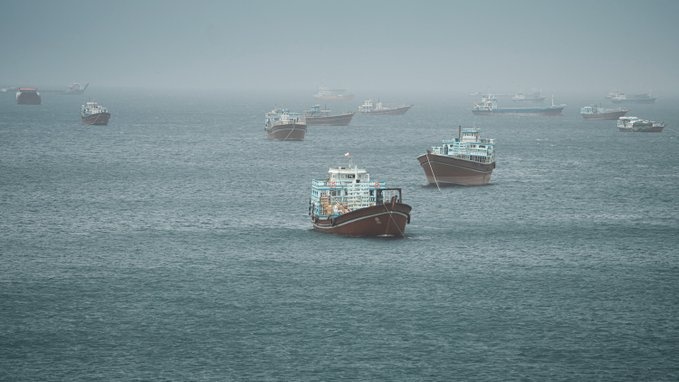
The closure of the Strait of Hormuz — through which roughly 20 percent of the world’s crude oil transits — has caused a global energy shock since the war began, according to the Council on Foreign Relations. European and Asian natural gas prices surged 63 percent and 54 percent respectively in the week following the February 28 strikes, according to analysis published by the Congressional Research Service. Within the past 24 hours, at least 33 ships including oil tankers have passed through the strait with Iran’s permission, NPR reported, though the waterway remains effectively closed to broader commercial shipping.
A finalised deal would directly affect energy markets across Europe, Asia, and the Gulf. The UAE’s Minister of State Lana Nusseibeh told Fox News in March that Iran is trying to give the global economy a “heart attack” with the closure. “What happens in the Gulf clearly doesn’t stay in the Gulf,” she said.
Iran’s semi-official Fars news agency indicated on Sunday that wide disagreements remain, particularly over the Strait of Hormuz, CBS News reported. Tehran’s position — that the strait’s governance is a matter for Iran and its neighbours, not Washington — puts it in direct tension with the U.S. demand for unconditional reopening.
Background
On February 28, 2026, U.S. and Israeli forces launched nearly 900 strikes in 12 hours targeting Iranian missiles, air defences, military infrastructure, and leadership, according to Britannica. Iranian Supreme Leader Ali Khamenei was killed in the strikes, and Iran has since appointed his son as successor. Iran retaliated by closing the Strait of Hormuz to shipping from nations it deemed “unfriendly,” according to the House of Commons Library, and launched missile and drone attacks on U.S. embassies, military installations, and Gulf Arab states. A two-week ceasefire brokered by the U.S. took effect on April 7, with Iran’s Foreign Minister Abbas Araghchi conditioning his country’s agreement on a halt to attacks. That ceasefire has since been extended pending the outcome of negotiations.
What Happens Next
Iran’s Foreign Ministry has indicated that a framework agreement, if finalised, would be followed by 30 to 60 days of detailed negotiations toward a comprehensive settlement, according to Iran state TV. Trump said he expected to make a decision on the deal by Sunday after reviewing Iran’s latest proposal with Witkoff and Kushner. U.S. and Iranian officials have not announced a date or location for a formal signing ceremony. Rubio, speaking from New Delhi, said he hoped for “good news” in the coming hours but made clear no final announcement had been made as of Sunday morning. The status of Israel’s security concerns and Tehran’s nuclear file — both excluded from the current draft — will determine whether the framework can be extended into a durable agreement.