
Iran Closes Strait of Hormuz and Vance Flies to Switzerland as Lebanon Fighting Threatens to Unravel Week-Old Deal
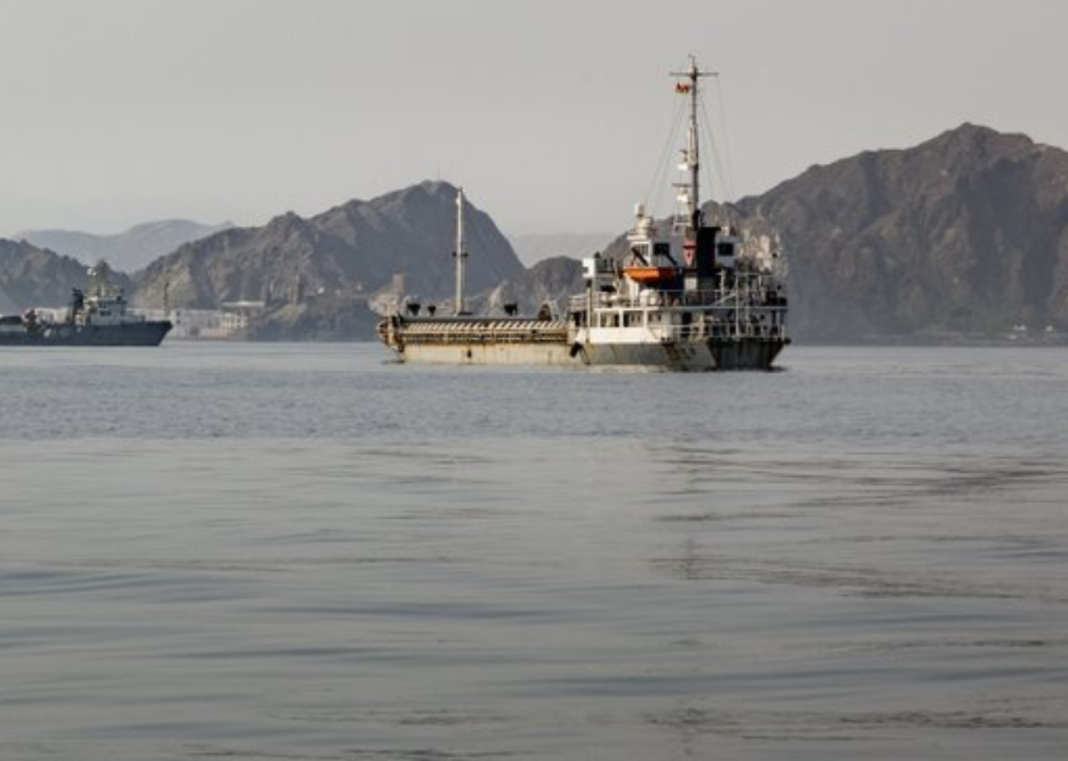
Iran declared the Strait of Hormuz closed on Saturday, June 20, blaming continued Israeli strikes in Lebanon for breaching the 14-point memorandum of understanding signed just days earlier, as US Vice President JD Vance departed for Switzerland to join the first face-to-face implementation talks between Washington and Tehran. The Islamic Revolutionary Guard Corps Navy warned vessels not to approach the waterway, with Iranian state broadcaster IRIB reporting that ships in the area had been directly contacted and cautioned that they could encounter mines or be targeted. US Central Command flatly rejected the closure, saying Iran does not control the strait and that 55 merchant ships transited the waterway on Saturday, moving more than 17 million barrels of oil.
“Technical-level talks will be held in Bürgenstock, Switzerland, on 21 June 2026,” Pakistan’s Prime Minister’s Office said, confirming that representatives of the United States and Iran, along with mediators from Pakistan and Qatar, would participate.
How the Crisis Reached This Point
The sequence of events unravelled with startling speed.
US President Donald Trump and Iranian President Masoud Pezeshkian signed the 14-point memorandum of understanding on Wednesday, June 18, in a virtual ceremony
— though Trump signed his copy at Versailles rather than in Switzerland as originally scheduled. The agreement called for hostilities to end on all fronts, including Lebanon, and for the Strait of Hormuz to remain open during a 60-day negotiating window.
The truce between Israel and Hezbollah was agreed following the deadliest flare-up in fighting between the two sides since the MoU was reached. That agreement calls for hostilities to end on all fronts, including in Lebanon, though neither Israel nor Hezbollah were parties to the memorandum.
Iran’s Tasnim News Agency, which is aligned with Iran’s powerful Revolutionary Guard Corps, warned Foreign Minister Abbas Araghchi against going to the talks empty-handed, saying that since the MoU had been violated in Lebanon, Iran had no obligation to keep the Strait of Hormuz open. Iranian negotiators have been clear: Trump signed the MoU; therefore if he cannot ensure the ceasefire in Lebanon, the rest of the MoU is in question.
The Lebanon Deadlock
The Israeli military killed at least 47 people in Lebanon on Friday, June 19, according to the Lebanese health ministry, making it the second deadliest day since hostilities between Israel and Hezbollah flared in early March. The ministry said two children were among the victims from strikes across a swathe of southern Lebanon.
A Lebanese soldier was killed in an Israeli strike overnight Saturday on the Kfar Rumman–Nabatieh road, according to an army spokesperson — the Lebanese army is separate from Hezbollah but several dozen of its members have been killed in the fighting since March. “It has become clear that the continuation of Israel’s brutal attacks is aimed at obstructing any solution that would allow for the restoration of stability in Lebanon,” the Lebanese army said in a statement.
Israel has stated several times that it will not withdraw from Lebanon. Defence Minister Israel Katz said Israeli troops would remain in security zones in Lebanon, Syria, and Gaza “for an unlimited period of time in order to protect the border and Israeli communities.”
Hezbollah said it would abide by a ceasefire only if Israel did the same. “We will abide by the ceasefire if Israel abides by it, and we have the right to respond,” Hezbollah parliamentary member Ibrahim al-Moussawi said.
Vance’s Mission and the Delegations
The US delegation in Switzerland includes Vice President Vance, Jared Kushner, and special envoy Steve Witkoff. Pakistan and Qatar are participating as mediators. Iran’s delegation is led by parliament speaker Mohammad Bagher Ghalibaf. Iranian Foreign Minister Abbas Araghchi is not in Switzerland.
“I can only be there for a day or two,” Vance told reporters before boarding his flight at Joint Base Andrews. “I think we’re going to hopefully make progress on the nuclear issue, make progress on the Lebanon ceasefire issue. Those are the two big things that I think we’re going to be focused on.”
Despite the Hormuz announcement, Vance told reporters before departing that conditions in Lebanon had actually improved. “Despite the headlines, things are actually getting better there,” he said, acknowledging that sporadic violence remains a challenge but arguing the focus is on preventing further escalation.
Trump’s Hormuz Warning
Trump said on Saturday there would be no tolls imposed in the Strait of Hormuz during the 60-day ceasefire period. “There will be NO TOLLS in the Hormuz Strait for 60 days during the Cease Fire Period,” Trump wrote on Truth Social. He added that no tolls would be imposed after the 60-day period expires unless levied by the United States if negotiations fail, describing any future tolls as reimbursement for America’s role as the “Guardian Angel” of Middle Eastern nations.
Iran has resumed crude oil exports from its main export terminal at Kharg Island after a roughly six-week pause, according to a Bloomberg report published Saturday, with loading operations restarting as implementation of the agreement gets underway. Iran has already moved about 20 million barrels of crude using tankers that remained in the region during the disruption. Some international shipping companies remain cautious about transiting the strait because of security concerns.
The 14-Point MoU’s Unresolved Core
The MoU’s second paragraph commits the US and Iran to respect each other’s sovereignty and territorial integrity and to refrain from interfering in each other’s internal affairs. However, Iran’s support for proxy groups around the region is not mentioned in the agreement, and it is unclear how a ceasefire in Lebanon would be implemented or whether it means Iran must stop funding Hezbollah.
If negotiators can get there, the next stage of talks will likely centre on Iran’s nuclear programme. In the initial framework, Tehran agreed that it “shall not procure or develop nuclear weapons,” but both sides agreed to wait on deciding what to do with Iran’s stockpile of enriched nuclear material until they entered the designated 60-day negotiating window.
Mohammad Mokhber, an adviser to Supreme Leader Mojtaba Khamenei, said Saturday that resuming oil tanker traffic through the Strait of Hormuz depends on full implementation of the MoU. “The Americans understand the language of economics and cost-benefit better than anything else,” Mokhber said. “As long as the agreement remains only on paper, energy flows in the Middle East will also remain halted.”
Background
Trump announced “major combat operations” against Iran on February 28, with massive joint US-Israeli strikes targeting military, government, and infrastructure sites. Following the announcement of a two-week ceasefire, initial US-Iran talks in Pakistan in April failed to reach a peace deal. Trump later announced the open-ended extension of the ceasefire and the continuation of a US blockade until negotiations concluded.
The Trump administration has released about 58 million barrels of oil — approximately 14% — from America’s Strategic Petroleum Reserve in a bid to ease the supply crisis caused by the war since it began, leaving the reserve with 357.1 million barrels, its smallest level since January 2024.
What Happens Next
Pakistan confirmed that technical-level talks are formally scheduled for Sunday, June 21, at the Bürgenstock Resort in Switzerland, with representatives from the US, Iran, Pakistan, and Qatar all present.
Vance said he plans to stay in Switzerland for “a day or two,” with technical teams remaining after his departure.
Whether Iran’s declared closure of the Strait of Hormuz constitutes a negotiating tactic or a genuine operational order will be tested in the hours before Sunday’s talks begin — US Central Command said Saturday that traffic continued to flow through the waterway regardless of Tehran’s announcement. The Lebanon ceasefire’s durability, and Israel’s willingness to halt operations in its self-declared security zones, remains the single most combustible variable standing between the Bürgenstock talks and a formal breakdown of the MoU.