
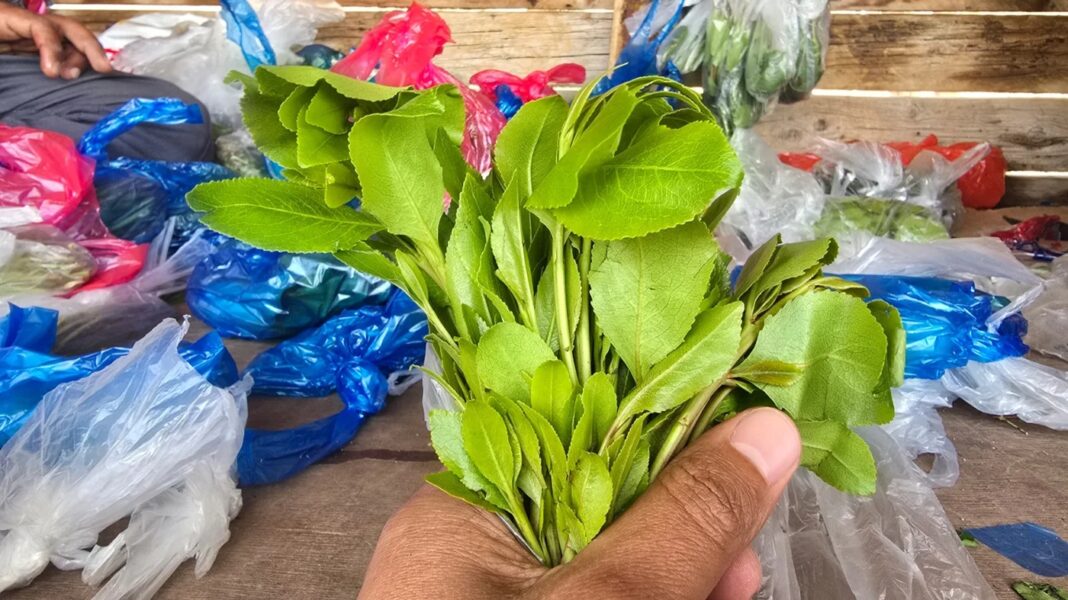

Yemeni smugglers are risking arrest, injury and death to transport qat across the Saudi border as economic collapse and years of war deepen poverty in Yemen, according to a report by Middle East Eye published on Wednesday. The report said Yemeni workers and tribal networks are using remote mountain crossings to move the stimulant plant into Saudi Arabia despite intensified border patrols and crackdowns.
Middle East Eye reported that the trade has expanded in northern Yemen near the Saudi frontier, where residents say qat smuggling has become one of the few remaining sources of income. The report cited local smugglers, tribal figures and residents who described increasingly dangerous journeys through border areas monitored by Saudi security forces.
One smuggler identified as Abu Ahmed told Middle East Eye that economic hardship had left many Yemenis with little choice but to participate in the trade. “People know the risks, but there is no work and no salaries,” he said. “If we stop, our families will go hungry.”
Qat is a mild stimulant leaf widely chewed in Yemen and parts of East Africa. Saudi Arabia bans the substance and treats smuggling operations as narcotics trafficking. According to the Organisation for Economic Co-operation and Development, qat trafficking from Yemen into Saudi Arabia has expanded during the conflict years as formal economic activity collapsed and border enforcement weakened in some areas.
Middle East Eye said smugglers often travel on foot through mountainous terrain carrying heavy bundles of qat for several hours before reaching Saudi territory. The report stated that some groups coordinate movements using tribal intermediaries and local guides familiar with military patrol routes.
Saudi authorities have tightened border security in recent years following increased instability along the frontier. Reuters reported in December that Saudi Arabia considered developments in Yemen a direct national security concern amid wider regional tensions and armed conflict involving multiple factions inside Yemen.
According to Middle East Eye, several smugglers said Saudi patrols have increased surveillance technology and deployed additional forces along major crossing routes. Some interviewees claimed smugglers had been shot at or detained during operations near the border.
A Yemeni tribal mediator identified as Abdullah al-Mahri told Middle East Eye that entire villages now depend on cross-border smuggling networks for survival. “The war destroyed agriculture, salaries disappeared and prices continue to rise,” he said. “People are searching for any way to earn money.”
The report said qat cultivation remains one of Yemen’s most profitable agricultural sectors despite criticism over water consumption and public health concerns. Reuters previously reported that qat markets continued operating even during the COVID-19 pandemic because thousands of traders and laborers depended on daily sales for income.
According to Middle East Eye, some smugglers are paid the equivalent of several weeks of ordinary wages for a single successful crossing. The report added that losses can be severe when shipments are confiscated or smugglers are injured while navigating remote mountain routes.
The humanitarian situation in Yemen remains among the world’s worst after more than a decade of conflict between the Iran-aligned Houthi movement, the internationally recognised government and multiple armed factions. Reuters reported in February that Saudi Arabia has expanded financial involvement in Yemen in an attempt to stabilise areas under allied control following tensions with the United Arab Emirates-backed Southern Transitional Council.
Middle East Eye said some smugglers accused local armed groups and corrupt officials of profiting from the trade by collecting unofficial payments along transport routes. The report did not provide evidence of direct involvement by Saudi officials in the smuggling operations.
The cross-border trade also reflects broader economic pressures facing Yemen’s northern provinces. According to Reuters, years of war have fragmented the country and weakened state institutions, leaving millions dependent on aid and informal economies.
Regional security analysts told Middle East Eye that Saudi Arabia views the smuggling routes as both a criminal and security issue because armed groups and traffickers operate in overlapping border regions. The report said Riyadh has invested heavily in surveillance systems and military infrastructure along the Yemen frontier.
Background tensions between Saudi Arabia and armed groups in Yemen have intensified since the civil war began in 2014. Reuters reported that Saudi-led coalition operations and rivalries involving UAE-backed separatist groups have contributed to continued instability across southern and eastern Yemen.
Middle East Eye reported that despite the risks, qat smuggling is expected to continue as long as economic conditions remain dire. Residents interviewed by the publication said border trade networks have become deeply embedded in local economies on both sides of the frontier.
Saudi authorities have not announced new public measures specifically targeting qat smuggling routes following the Middle East Eye report. Yemeni residents told the outlet they expect more patrols and arrests in the coming months as Saudi forces attempt to limit illegal crossings.
Aid agencies and international organisations continue to call for increased humanitarian and economic support for Yemen. According to Reuters, Saudi Arabia has pledged billions of dollars in aid and reconstruction support, though major parts of the country remain outside government control and dependent on informal trade networks.