
Palestinians in Gaza will be unable to perform the Eid al-Adha animal sacrifice for the third consecutive year, as Israeli military operations and an ongoing blockade have destroyed more than 90 percent of the enclave’s livestock sector, according to Gaza’s Chamber of Commerce and Industry. The holiday, which falls in late May 2026, is one of Islam’s most significant annual observances. For Gaza’s roughly two million residents, the tradition of sacrificing a sheep, goat, cow, or camel has become effectively impossible.
Before the war began in October 2023, Gaza imported between 40,000 and 60,000 sheep and calves each year in the weeks leading up to Eid al-Adha to meet demand for the ritual sacrifice, Middle East Eye reported. That supply chain no longer exists. Israel has blocked all entry of live animals into the enclave, while repeated airstrikes and displacement have wiped out the domestic herd.
The collapse of the sector has driven prices to levels beyond the reach of most families. A sheep that cost between $500 and $600 before the war now sells for as much as $7,000, according to Middle East Eye.
Mazen al-Jerjawi, a Gaza City livestock breeder who once sold around 200 sheep and cows each Eid season, told Middle East Eye he now runs a small restaurant, dependent entirely on frozen meat brought into the enclave under Israeli restrictions. “At this time of year, I used to sell around 200 sheep and cows. Today, I have none,” he said. “No live animals are being allowed into Gaza at all.”
Al-Jerjawi described how his herd was wiped out through a combination of Israeli airstrikes and forced displacement. Animals died when neighbouring buildings were bombed. Others were sold at whatever price he could secure when evacuation orders forced him to flee. “When I was displaced, I had to slaughter my animals or sell them quickly so they would not be left behind under bombardment,” he said. “All the livestock I once owned ended up being sold this way. I sold them for whatever price I could just to buy flour and basic necessities, which had become extremely expensive.”
Even when buyers abroad reached out to purchase animals on behalf of relatives in Gaza, al-Jerjawi said he discouraged the practice. “I tell them it’s better to buy 50 kilograms of frozen meat instead of spending all that money on one sheep,” he told Middle East Eye. “The 20,000 shekels [$7,000] for a sheep could even help pay for a couple to get married.”
Sector on the Edge of Total Collapse
The scale of destruction across the sector is extensive. According to the United Nations Food and Agriculture Organization (FAO), at least 80 percent of Gaza’s sheep and 70 percent of its goats had been killed or had died by November 2025. Gaza’s Ministry of Agriculture told Middle East Eye that the total sheep and goat population has fallen from around 60,000 before the war to just 3,000 today. Cattle and calves have nearly disappeared entirely.
Raafat Assaliya, spokesperson for Gaza’s Ministry of Agriculture, told Middle East Eye that most of the animals still alive were with nomad herders and were not available for sale. He said the inability to operate water wells had compounded the livestock crisis, removing any realistic path to recovery. “This has prevented thousands of families from carrying out the Eid sacrifice, in an unprecedented situation,” Assaliya said.
Farms, barns, feed warehouses, and veterinary clinics have all been damaged or destroyed across the enclave, according to Middle East Eye. Feed shortages forced some owners to keep animals alive on pasta and whatever they could find. The combination of airstrikes, restricted supplies, and repeated forced displacement proved fatal for the sector.
Food Insecurity Deepens
The disappearance of livestock has worsened an already severe food crisis. A UN-backed Integrated Food Security Phase Classification assessment found that around 1.6 million people — roughly 77 percent of Gaza’s population — were facing acute food insecurity by late November 2025.
Muhammed Aburiyala, a schoolteacher from Gaza City, told Middle East Eye that the Eid holiday had become unrecognisable. “It feels like we haven’t celebrated Eid for three years,” he said. “The ritual itself, and the feeling of sharing it with others, has disappeared. Without sacrifices and the ability to share, there is no Eid.”
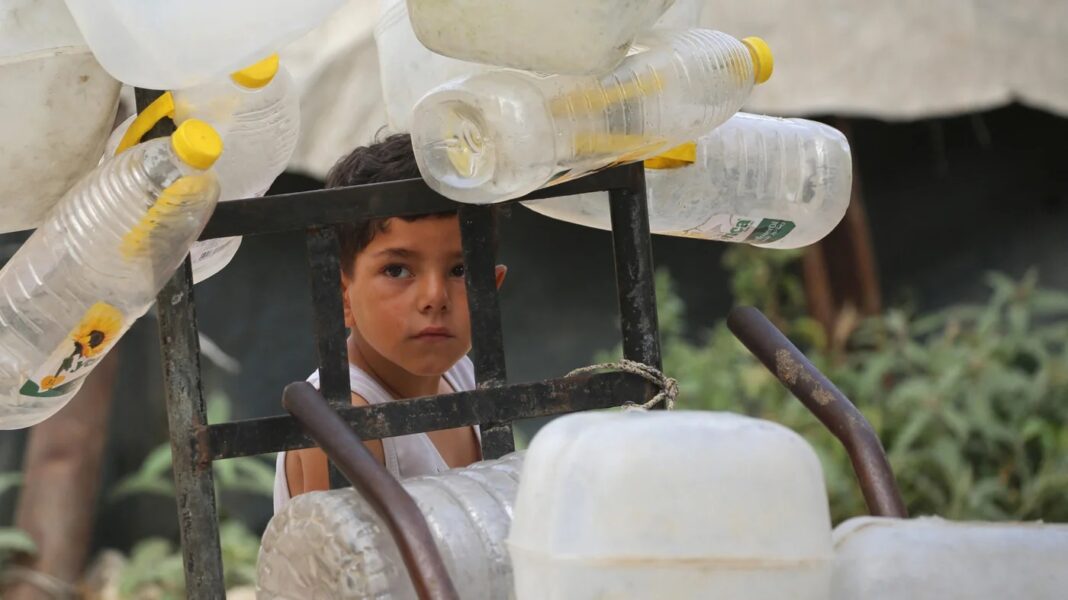
Aburiyala said the absence of animals was inseparable from broader food shortages hitting families across Gaza. “Many can barely secure daily meals, and some have not eaten frozen meat for more than a year,” he told Middle East Eye. “What enters Gaza is limited and depends entirely on the status of the crossings, which means prices remain extremely high.”
He argued the ban on livestock entry was part of a wider effort to prevent Gaza from sustaining itself economically. “If livestock were allowed into Gaza, it would sustain many professions — veterinarians, livestock breeders, farmers who rely on manure, butchers and restaurant owners,” he said. “This is not what Israel wants. They want to paralyse society and prevent it from becoming self-sufficient.”
Background
Eid al-Adha commemorates the Quranic account of Ibrahim’s willingness to sacrifice his son, and the animal sacrifice — known as udhiyah — is a central act of worship for Muslims who can afford to carry it out. Gaza’s livestock sector, before October 2023, served as one of the enclave’s few reliable domestic sources of fresh meat and dairy. Israel imposed a tight blockade on Gaza after Hamas took control of the territory in 2007, severely restricting imports, but seasonal livestock shipments had continued until the outbreak of the current war. Since October 2023, border crossings have been subject to repeated closures and restrictions, disrupting humanitarian aid and commercial supply chains throughout the enclave.
What Happens Next
Gaza’s Ministry of Agriculture has said the livestock sector has no realistic means of recovery while water well operations remain shut down and live animal imports are blocked, according to Middle East Eye. The FAO has provided cash assistance to some of Gaza’s remaining herders, but has not indicated that the programme is sufficient to reverse the sector’s overall decline. Eid al-Adha prayers are expected to proceed across the enclave, but Assaliya confirmed that the ritual sacrifice will remain out of reach for most families this year.