
Starmer Expected to Announce Resignation as Early as Monday as Labour Crisis Reaches Breaking Point
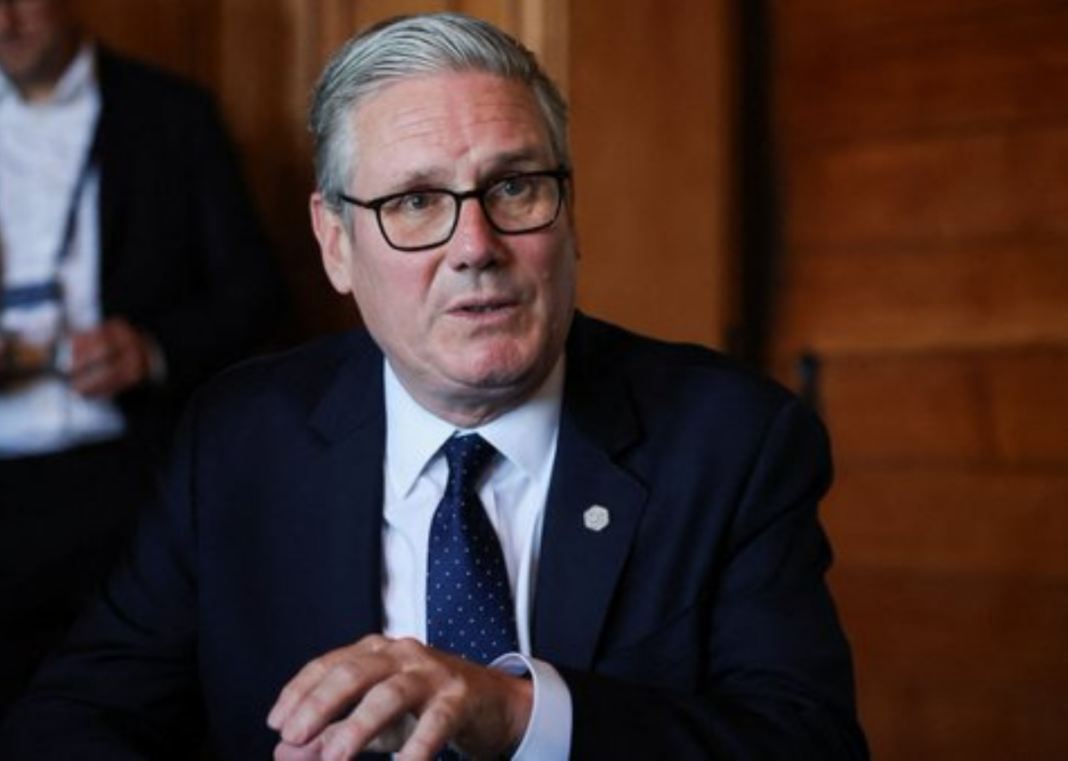
British Prime Minister Keir Starmer is expected to announce his resignation as early as Monday, June 22, and set out a timetable for his departure from Downing Street, the Observer newspaper reported on Saturday.
A government source pushed back on the claim, stating that Starmer “remained focused on getting on with the job of governing.”
The report landed one day after Andy Burnham, the former Mayor of Greater Manchester, won the Makerfield by-election by more than 9,000 votes, returning to Parliament and clearing the path to mount a formal Labour leadership challenge against the prime minister.
The Observer reported that Starmer was discussing the matter with his wife at his Chequers country residence before making a final decision, and that senior Labour figures expected a clear statement on his future as early as Monday.
How the Crisis Broke
The immediate trigger for Starmer’s reported resignation was Burnham’s victory in Thursday’s Makerfield by-election, which marked the former mayor of Greater Manchester’s return to Westminster. Burnham comfortably defeated a Reform UK candidate, and The Guardian reported that he was expected to have support from about 200 Labour MPs in a leadership challenge against Starmer.
On 14 May 2026, Josh Simons resigned as MP for Makerfield, which caused a by-election opportunity for Burnham. Burnham later stated that he would request the permission of the NEC to stand. The Guardian reported that Starmer would not seek to block Burnham from running. On 15 May, the NEC approved Burnham’s candidacy. On 19 May, Burnham was confirmed by the Labour Party as its candidate, and he went on to win the by-election by over 9,000 votes — 54.8% of the vote — securing his return to Parliament.
According to reports, more than 100 Labour MPs — around a quarter of the party’s parliamentary strength — have publicly called for Starmer to either resign or outline a clear exit timeline. Starmer concluded his position was becoming untenable after consultations with cabinet colleagues, advisers, donors and trade union leaders, as reported by The Observer.
Starmer’s Own Words
Earlier this month, Starmer rejected suggestions that he would step down voluntarily. In an interview with the BBC, Starmer said: “I’m not going to walk away.” Clarifying his intention to continue, he said: “Let me be clear that this is not about personal vanity, it is not about stubbornness, it is about a very deep sense of duty. I was elected to serve this country notwithstanding difficult circumstances — that is what I am doing.”
Business Secretary Jonathan Reynolds told Sky News on Sunday morning that he had “no reason to think” Starmer would resign on Monday. He declined to say whether he had spoken directly to the prime minister about the Observer’s report.
The Scale of the Collapse
The speed and severity of Labour’s decline since the 2024 general election has been stark.
At the 2026 local elections, Labour lost control of 35 councils and nearly 1,500 councillors — roughly 60% of seats up for election. At the 2026 Senedd election, Welsh Labour suffered a massive defeat which ended 100 years of Labour control of Wales, relegating them to third place behind the governing Plaid Cymru and Reform UK Wales, with Welsh Labour leader Eluned Morgan becoming the first sitting head of government to lose her seat in an election in British history.
According to LabourList, 158 Labour members have shown support for Starmer, 103 have called for him to resign or set out a timetable, and 143 members are either unknown or have not taken a position.
Al Carns was the Armed Forces Minister at the Ministry of Defence from September 2025 until he resigned on 11 June 2026, following Defence Secretary John Healey’s resignation earlier that day, over a disagreement with government policy.
Both are now among the names being discussed as potential leadership candidates alongside Burnham.
Who Could Succeed Starmer
Burnham is being viewed within Labour circles as a leading contender to succeed Starmer, either through a negotiated transition or a leadership contest.
Health Secretary Wes Streeting is also widely discussed as a potential candidate, and both men’s teams have kept a deliberate distance from the public pressure campaign in recent days.
During a victory rally after Makerfield, Burnham emphasised that it was “a last chance to change” Labour as it heads for electoral oblivion. Responding to what he said were requests from constituents to “do something to make life more affordable,” Burnham called for an end to “trickle down economics,” with government interventions to bring down utility bills and rail fares, public procurement of businesses, pushes for reindustrialisation, and job guarantees for people aged 16 to 18.
Not everyone is convinced that Burnham represents a decisive break.
Former Labour leader Jeremy Corbyn said that while he personally likes Burnham, “his basic economic strategy and views… seem to me to be accepting too much of the austerity that we’ve had imposed upon us.”
Liverpool Riverside MP Kim Johnson, a Burnham supporter, said: “Not looking good for Starmer, everyone waiting until next week, he needs to just stand down.”
Background
The 2026 Labour Party leadership crisis emerged amid public dissatisfaction with the government of Keir Starmer. Facing a prolonged cost-of-living crisis, as well as numerous protests, U-turns and scandals, Starmer’s popularity declined sharply. By the end of 2025, opinion polls rated Starmer as one of Britain’s most unpopular prime ministers, drawing comparisons to former Prime Minister Liz Truss.
The government faced sustained criticism from the right over immigration and tax increases, while those on the left criticised its stance on the Gaza war, welfare reform and its refusal to introduce a wealth tax.
Starmer led Labour to a landslide general election victory in July 2024, ending 14 years of Conservative government, but his approval ratings had deteriorated continuously in the months that followed.
What Happens Next
Several Labour MPs are calling for Starmer to outline a timetable for his departure and oversee a smooth transition to Burnham rather than a contested leadership battle. Burnham’s allies have urged Starmer to reflect and consult with cabinet ministers, MPs and his family.
Teams representing Burnham and Wes Streeting have largely kept a low profile, a move viewed by some observers as an attempt to avoid increasing pressure on the prime minister while he considers his options.
Whether Starmer makes a statement on Monday, June 22, or continues to resist calls to go will determine whether Labour moves toward a managed succession or a contested leadership election — with the outcome carrying consequences for a party already facing the prospect of Reform UK consolidating a commanding lead in the polls ahead of the next general election.